


To achieve maximum efficiency in high-volume Midwestern kitchens, domestic logistics must parallel commercial supply chains. The physical path of goods—from the point of arrival to the pantry, and finally to the dining surface—requires deliberate routing, climate-aware storage, and strategic staging.
The Dining Space as a Terminal Distribution Node
Spatial entertainment systems rely on unobstructed flow. The dining area must be architected not just for seating, but for the efficient staging and deployment of nourishment. Sideboards and credenzas serve as secondary staging zones, bridging the gap between active culinary prep and final consumption.
When hosting or managing a high-volume family meal, the dining surface acts as the distribution matrix. By establishing dedicated drop-zones for serving vessels and utilizing peripheral surfaces for beverage stations or supplementary courses, the primary dining table remains uncluttered. This logistical separation allows the evening light to filter through the space without highlighting operational chaos, ensuring the environment remains a focal point for connection rather than a cluttered staging ground.

Work Directly with Torlando Hakes
Skip the color choice stress. Work directly with me as your personal Color Designer to select the perfect architectural palette for your home, and get a Complementary Color Consultation when you purchase paint through us.
Implementing First-In, First-Out (FIFO) Storage Systems
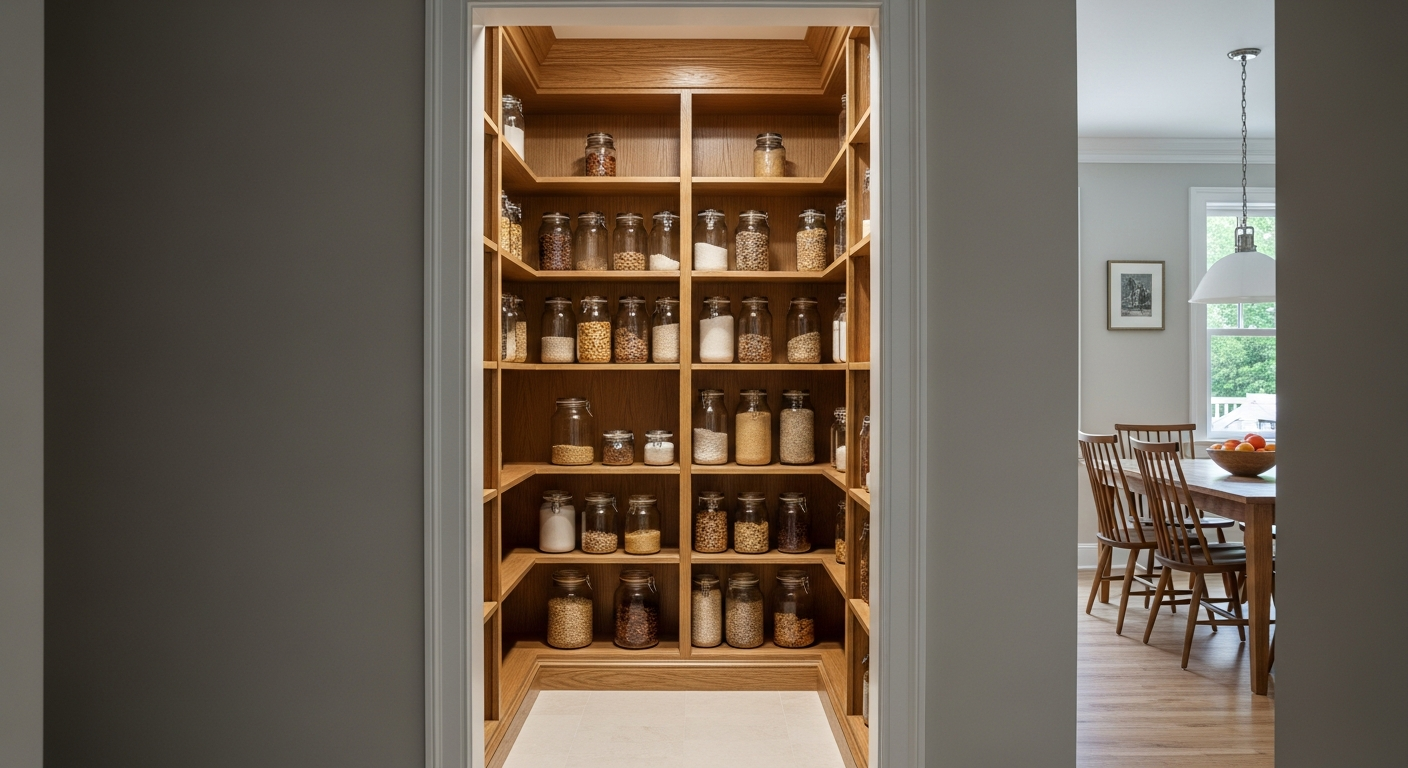
The backbone of a seamless dining experience is the inventory management system functioning quietly in the adjacent pantry. Implementing a strict First-In, First-Out (FIFO) methodology ensures that older provisions are utilized before newer stock, minimizing waste and maintaining peak ingredient integrity.
In Bloomington, the high humidity of Midwestern summers and the harsh, dry heating of winters necessitate robust preservation science. Dry goods must be decanted from their commercial packaging into airtight, modular glass or BPA-free polycarbonate containers. These containers should be loaded onto gravity-fed shelving or deep pull-out drawers. When new inventory arrives, it is loaded behind existing stock. This enforces a natural rotation, ensuring that the ingredients reaching the dining table are consistently fresh.
Proper spatial efficiency in the pantry directly impacts the dining room's functionality. By organizing provisions into distinct zones—baking, bulk grains, localized Bloomington market preserves, and daily staples—the time required to transition ingredients from storage to the dining table is drastically reduced.
Grocery Flow: From Arrival to Decanting
A smooth supply chain requires minimizing friction at the point of entry. Grocery flow should be mapped in a linear trajectory. Provisions arriving from local Southern Indiana markets should move directly to an intake zone—a durable surface positioned between the entry point and the pantry.
Here, the decanting and processing phase occurs. Outer cardboard and plastic packaging, which carry external contaminants and obscure volume visibility, are discarded. Vegetables and local produce are cleaned, dried, and routed to specific climate zones within the refrigeration unit. Dry goods enter the FIFO queue. This systematic processing ensures that when a meal is orchestrated for the dining room, the chef pulls from a pre-audited, highly visible inventory, eliminating mid-preparation supply shortages.
Micro-Agriculture: Dining-Adjacent Herb Systems
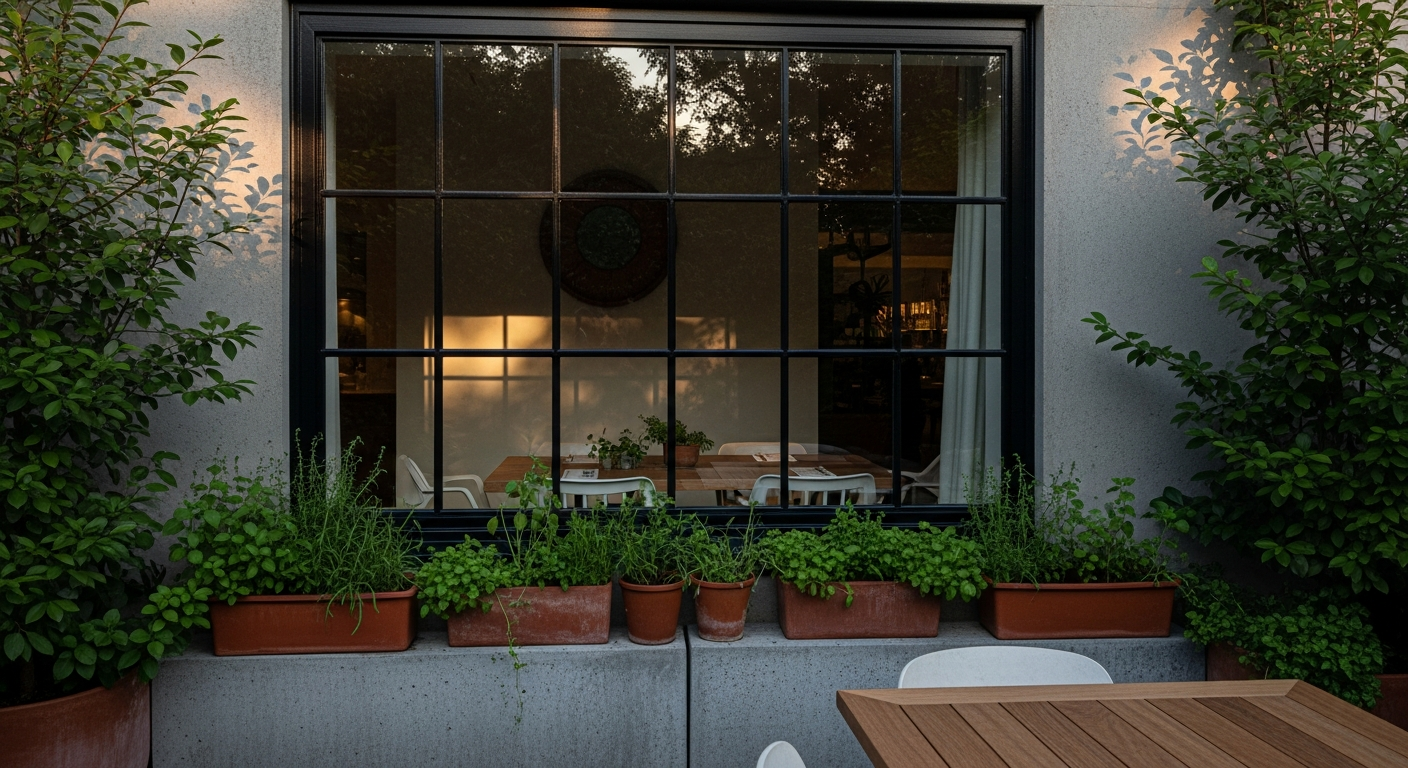
Self-sufficient herb cultivation integrates live-plant micro-agriculture directly into the domestic supply chain. By establishing a small porch garden or a window-adjacent growing system visible from the dining area, the logistics of harvesting are reduced to mere footsteps.
Bloomington’s climate requires a strategic approach to porch agriculture. Hardiness zones dictate seasonal rotation: moisture-loving basil and cilantro thrive in the humid summer months, while hardy perennials like rosemary and thyme can be engineered to overwinter with proper thermal mass and wind protection.
Positioning these modular planters near the dining area serves a dual purpose. Logistically, it allows for immediate, pre-consumption harvesting, ensuring volatile essential oils in the herbs remain intact right up to the moment of serving. Spatially, the presence of thriving, edible greenery reinforces the connection between the raw supply chain and the final nourishing experience at the table.
Optimizing the Domestic Logistics Cycle
Treating the kitchen and dining room as a cohesive logistics hub transforms daily nourishment into a highly reliable operation. The deployment of a Bloomington FIFO pantry, rigorous grocery decanting protocols, and strategic spatial entertainment zones ensures that the domestic supply chain operates without bottlenecks.
By mapping the flow of resources from the market to the staging area, and finally to the dining table, household operations achieve a rhythm of effortless efficiency. The result is a dining space that consistently fulfills its primary objective: providing a seamless, deeply nourishing environment for food and conversation.
 After
After Before
Visualize Your Space with Color Studio AI
Planning a project? Skip the paint chip guesswork. Use our Color Studio AI to instantly visualize these paint colors on your own walls, or take advantage of our aligned contractor pricing matching current Sherwin-Williams retail promotions.
Book Your Upcoming Paint Project
Craftsman Painter is now scheduling premium transformations. Secure your spot and elevate your property value.
Get an EstimateHelp Others Find Professional Color Insights
Share this story directly to your networks or copy the link to share with friends.