
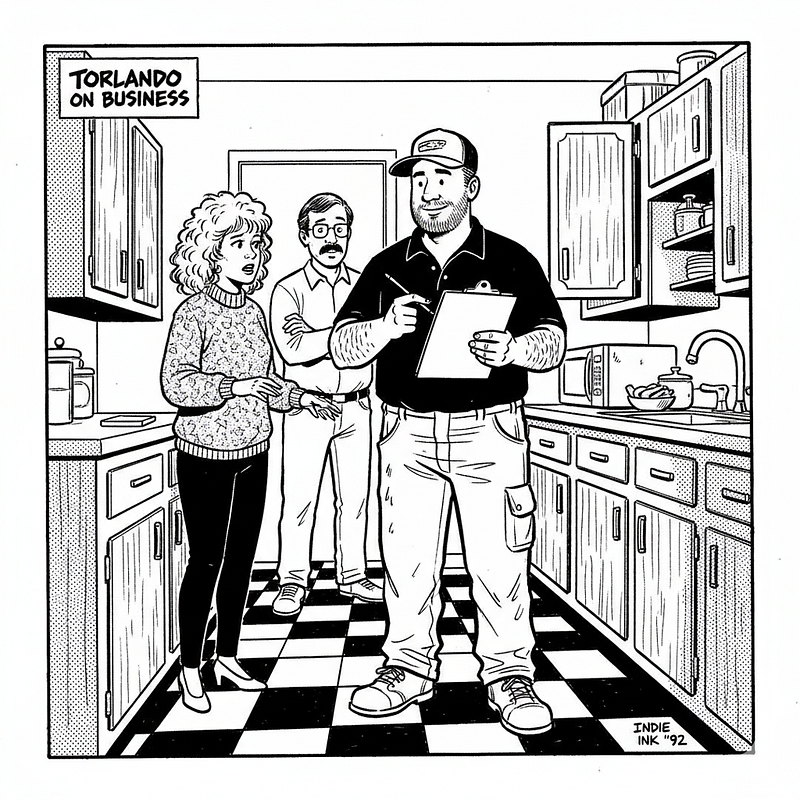
Ever been in a sales call that felt like it was going great, only to have the customer shut you down completely? You’re not alone. One of our coaching members, Danny, recently shared a story that every painter can relate to, and the lessons we pulled from it are too good not to share.
It started with a hot lead — a homeowner who needed her cabinets repainted yesterday. The previous painter botched the color, and she was stressed. Danny went to the house, ready to be the hero. But the conversation hit a wall, fast.
The customer insisted on using a specific Benjamin Moore product. Danny, confident in his team’s system, explained they exclusively use Sherwin-Williams Gallery Series because they’re trained on it and know it delivers a flawless finish. The customer’s response? “Stop. You’re not going to be a good fit. Go ahead and go.”

Work Directly with Torlando Hakes
Skip the color choice stress. Work directly with me as your personal Color Designer to select the perfect architectural palette for your home, and get a Complementary Color Consultation when you purchase paint through us.
Ouch. 😬
So, what went wrong? And how can you turn a potential confrontation into a signed contract? This playbook breaks it down with practical steps you can use today.
Step 1: Stop Pitching, Start Guiding: The Sense-Making Method
The core issue in Danny’s call was a battle of directives. The customer said, “I want Benjamin Moore.” Danny replied, “We use Sherwin-Williams.” This created a confrontation instead of a collaboration. The minute you’re telling a client what they should do instead of exploring what they want to do, you’re losing control of the sale.
The solution is to shift your role from a “pitchman” to a sense-making guide. Your customer is drowning in a sea of information (and misinformation) from Google, neighbors, and past experiences. Your job isn’t to just throw them your preferred life raft; it’s to be the lighthouse that helps them navigate the options and choose the best path.
Ask, Don’t Tell
Your expertise is your greatest asset, but it can be a weakness if you lead with it. Instead of starting with a statement, start with a question. This is the foundation of active listening.
- Instead of: “We only use Sherwin-Williams. Our team is trained on it, and it’s a better product.”
- Ask this: “That’s a great product. Can you tell me a bit about what led you to choose it? Have you read reviews or seen it used somewhere?”
This simple pivot does three powerful things:
- It shows the customer you respect their opinion.
- It gives you crucial information about their motivations and research.
- It opens the door for a collaborative conversation, not a lecture.
Be the Sense-Maker
Once you understand why they want what they want, you can help them make sense of the landscape. Lay out the options side-by-side (figuratively).
- Try this script: “Okay, so it sounds like a durable, factory-like finish is most important to you. That’s fantastic. There are a few top-tier products that can achieve that. There’s Benjamin Moore Advance, which you mentioned. There’s also Sherwin-Williams Gallery Series, which is our go-to system. Let’s quickly look at the pros and cons of each for your specific project, so you can feel 100% confident in the decision.”
Now you can objectively compare things like cure time, hardness, fumes, and cost. You’re not pushing your product; you’re helping them choose the best one. 9 times out of 10, when you fairly present the options, they will be guided to the product you recommend because you’ve built trust and demonstrated superior knowledge.
Today’s Action Step:
For your next sales call, write this question on your notepad: “What’s most important to you with this project?” Start there. Listen intently to the answer. Then, instead of presenting a single solution, present 2–3 options that address their specific needs and guide them through the pros and cons of each.
Step 2: Put Theory into Practice (The Role-Play)
Talk is cheap. To really nail this down, Danny and I did a quick role-play. He played the painter, and I played the homeowner who was unhappy with my 6-year-old cabinet paint job and weighing the options between repainting and a full remodel.
Here is a look at our conversation, which set the stage for our biggest learning moments:
Danny (Painter): (After introductions) “So, if we could just talk a little bit about your project before we get into all the counting and measuring, I’d like to hear about it.”
Torlando (Customer): “Yeah, sure. They were painted about six or seven years ago and they’re just getting worn out and chipping. It’s time to get them redone. It’s either this or replacing them, but I’m not sure yet.”
Danny: “Got it. And for you when choosing a painter for this project, what are you looking for?”
Torlando: “Communication is big. Quality is important. And, you know, we want the right deal. I’m willing to pay more if everything else is there, but I do look at price.”
Danny: “Okay. Any specific areas where you’ve noticed more wear and tear?”
Torlando: “Yeah, it’s worst below the sink, and our kitchen island doors have corners that are getting worn out. Basically, anywhere there’s an opening.”
Danny: “Got it. You also mentioned you weren’t sure if you wanted to get them painted or change them. Are you considering a small kitchen remodel?”
Torlando: “Well, yeah. I’ve got a contact for a full remodel. The question is, can a new paint job give these cabinets another 5 to 10 years of life? If it’s not going to look good and last, we might as well bite the bullet and do the bigger project.”
Danny: “Now, 5 to 10 years… is that the amount of time you guys think you might be here in this home?”
Torlando: “That’s a good question. It’s very possible we might not be here in 10 years, maybe not even 5.”
Danny: “Gotcha. And the reason I ask is because if you plan on selling in, say, two or three years, we can provide an option where the kitchen will look good for you, hold up well, and still look great by the time you sell the home. I just want to make sure we’re providing the right option for what you’re looking to accomplish here.
So, I think you’ve provided a pretty good amount of information. Um, and you know, I’ll go from here and just really have a count here. Do you guys want to do the inside of the frames or were you just thinking the doors, both sides and then your drawer faces? What do you have in mind?”
Torlando: “Yeah, that’s fine. The second option there.”
See how close Danny got? His sales instincts were spot on. He correctly identified my uncertainty and proposed a tailored solution. He was right on the verge of a breakthrough. The conversation above is a solid B+, but the following four adjustments are what turn it into an A+ that closes the deal.
Action Step 1: Set a Clear Agenda 🗺️
From the start, the customer should know the plan. This establishes you as a professional who respects their time. I felt a little lost at the beginning of the role-play.
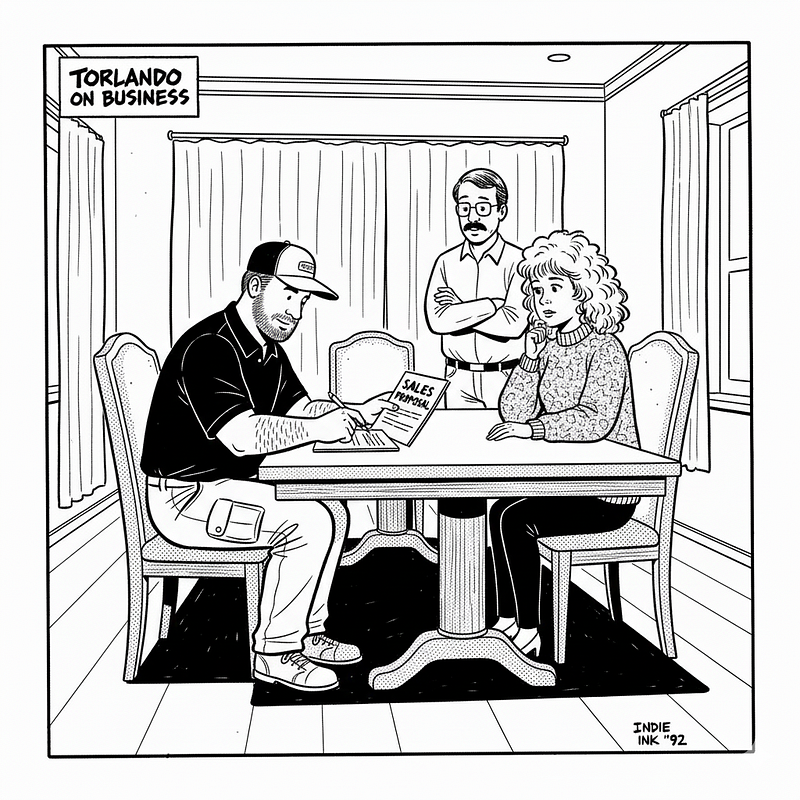
- Try this: “Hey, thanks for having me. Here’s a quick plan for our meeting: First, I’d love for you to give me a quick tour. Then, we can sit down for a few minutes to talk about your goals for the project. After that, I’ll take some precise measurements, and then we’ll sit right back down, and I’ll walk you through the options and the pricing I’ve put together for you. How does that sound?”
Action Step 2: Master the Price Anchor ⚓
When I said, “…we might as well bite the bullet and do the bigger project,” that was a golden opportunity. A full kitchen remodel can cost $20,000, $30,000, or more. By stating this, you anchor that high price in the customer’s mind.
- Try this: “That makes total sense. A full kitchen remodel is a great investment, but you’re typically looking at the $20,000 to $30,000 range. For a fraction of that, we can get these cabinets looking brand new and lasting for years. Our premium cabinet projects of this size are typically in the $6,000 to $7,000 range. Is that more in line with what you were thinking?”
- Now, your price doesn’t sound expensive — it sounds like a massive savings!
Action Step 3: Get Them Saying “Yes” ✅
In his last line, Danny told me about the option he could provide. The stronger move is to ask me if that option is what I want. Get the “yes.” The more small “yeses” you get, the easier the final “yes” to the proposal becomes.
- Try this: “Okay, so it sounds like you might not be here long-term. What if we focus on an option that makes your kitchen look amazing for the next 3–5 years and will still look fantastic if you decide to sell? That way you’re not over-investing but you get a kitchen you love. Does that sound like a good solution for you?”
Action Step 4: Demonstrate Your Expertise Early 👨🎨
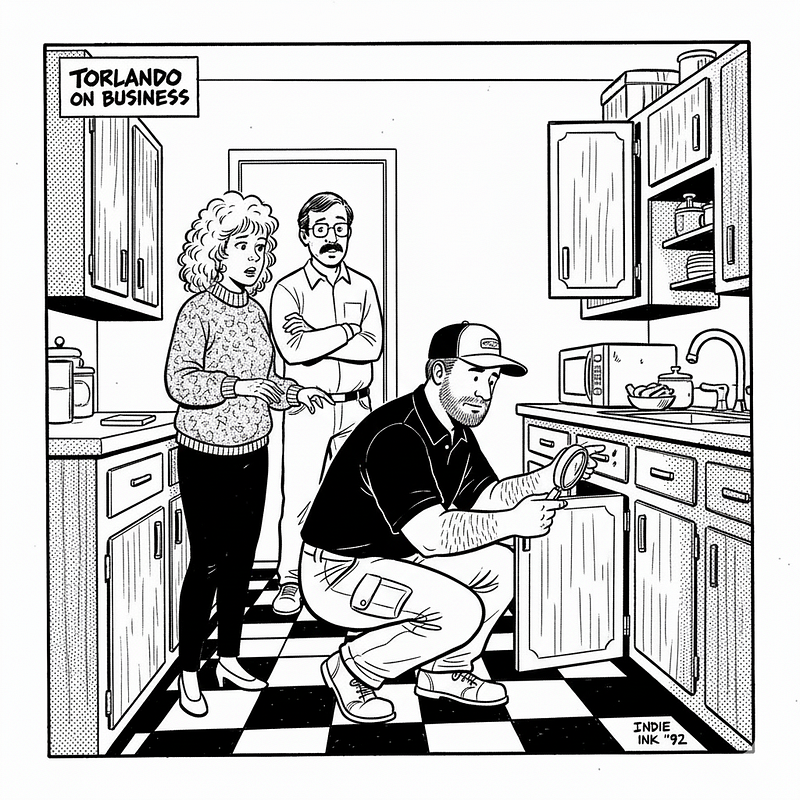
When I told Danny the chipping was worst “below the sink,” that was his chance to immediately prove your value and build trust.
- Try this: “Ah, under the sink. That’s really common due to the moisture. It tells me we need to pay special attention to the prep work in that area and use a primer with excellent moisture-blocking properties to ensure the new finish lasts. That’s a critical step a lot of painters miss. I’ll make a note of that.”
- In one sentence, you’ve shown you’re listening, diagnosed a problem, offered a specific solution, and differentiated yourself from the competition.

Your Final Takeaway
Winning tough sales calls isn’t about having the slickest pitch or using high-pressure tactics. It’s about building trust. You build trust by being a helpful, knowledgeable guide who puts the customer’s needs first.
Be the painter who listens, educates, and collaborates. When you do that, you’re not just another salesperson — you’re the only logical choice.
 After
After Before
Visualize Your Space with Color Studio AI
Planning a project? Skip the paint chip guesswork. Use our Color Studio AI to instantly visualize these paint colors on your own walls, or take advantage of our aligned contractor pricing matching current Sherwin-Williams retail promotions.
Book Your Upcoming Paint Project
Craftsman Painter is now scheduling premium transformations. Secure your spot and elevate your property value.
Get an EstimateHelp Others Find Professional Color Insights
Share this story directly to your networks or copy the link to share with friends.