

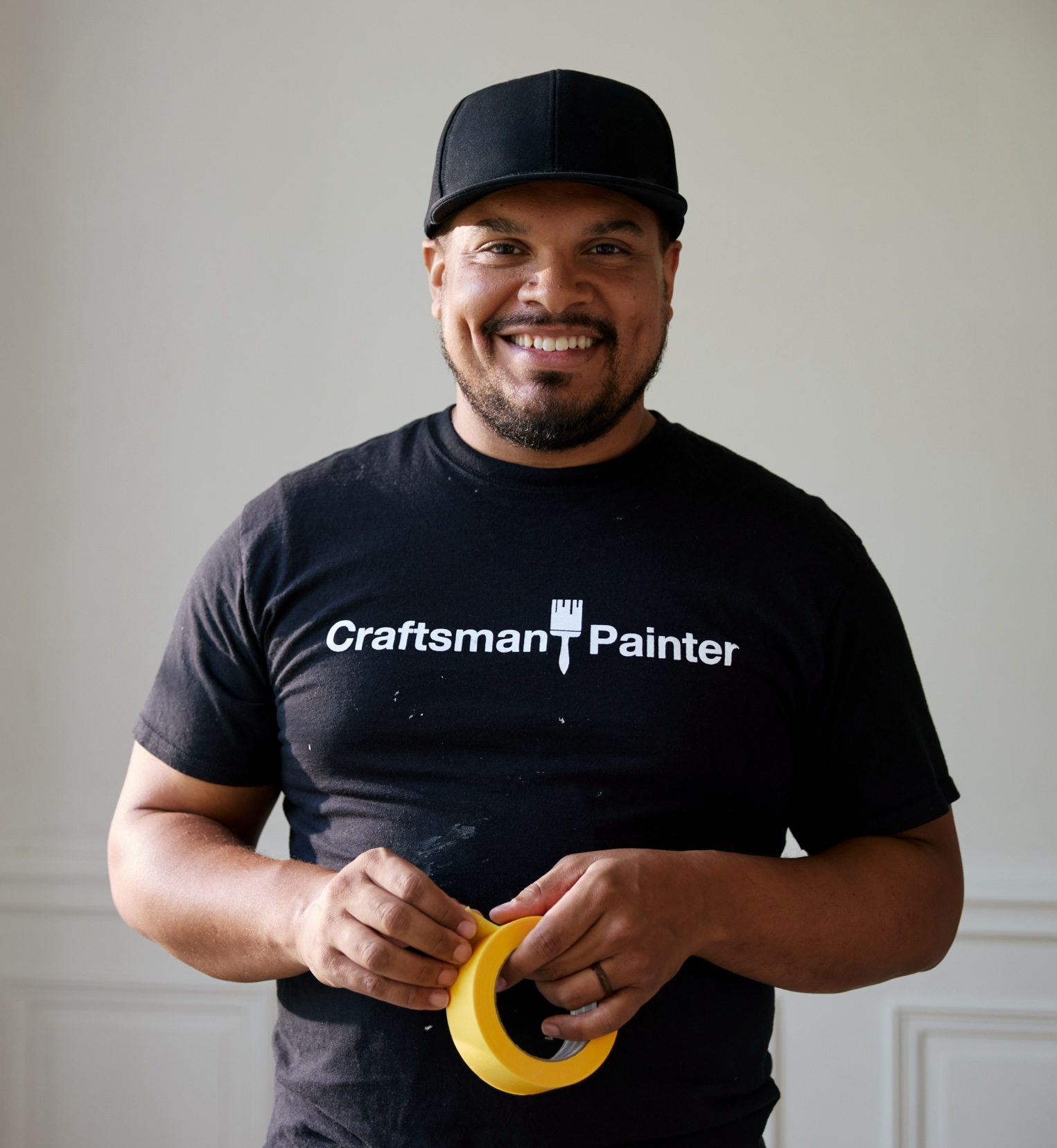
As the Lead Project Manager for your favorite premium painting company right here in Bloomington, IN, I spend my days making sure your homes look absolutely stunning. But let me tell you a little secret: a jaw-dropping, magazine-cover exterior isn't just about picking out the perfect shade of farmhouse white for the boss (or, you know, my favorite designer) to approve.
It is all about the science.
If we don't respect the chemistry of the paint and the physics of our wild Indiana weather, that beautiful topcoat won't last a single season. So, grab a glass of sweet tea, and let’s nerd out on the deep technical science of paint chemistry and surface prep for your Bloomington home!
Book Your Upcoming Paint Project
Craftsman Painter is now scheduling premium transformations. Secure your spot and elevate your property value.
Get an EstimateThe Bloomington Climate Challenge: Fighting the Freeze-Thaw Cycle
Let’s be honest, folks. Living in Monroe County means we get to enjoy all four seasons—sometimes all in the exact same week! Our summers down by Lake Monroe are hot and muggy, and our Midwest winters are freezing and wet.
For your home’s exterior siding, this is basically a year-round wrestling match. Wood is what we in the biz call hygroscopic. That’s just a fancy ten-dollar word meaning it acts like a giant sponge. When our Indiana humidity spikes, the wood absorbs moisture vapor and swells up. When January rolls in and the dry, freezing winds whip across the IU campus, that wood shrinks down tight.
If you slap a cheap layer of paint over a moving surface, it’s going to snap, crackle, and pop like a bowl of cereal. We combat this using premium paints with a high Moisture Vapor Transmission Rate (MVTR). This means the paint film is breathable. It lets the trapped moisture escape at a molecular level without pushing the paint off the wall. Science is cool, right?
Prep Day is the New Demo Day: The Magic of "Mechanical Adhesion"
I love a good Prep Day! Getting out the scrapers, the sanders, and making a glorious mess—it’s the foundation of everything we do. You see, paint doesn’t just magically stick to your historic Elm Heights Victorian or your sweet mid-century ranch. It needs mechanical adhesion.
Think of the surface of your wood or Hardie board like microscopic Velcro. If the surface is glossy, dirty, or covered in dead, degraded wood fibers, the new paint has nothing to grab onto. It just floats on top, waiting to peel.
By power-washing away the biological growth (like algae and mildew) and sanding the surface down, we are actively creating a "profile." We’re scratching up that surface at a microscopic level so the long polymer chains in the new paint have deep, physical valleys to sink their teeth into. If you skip the prep, you’re basically trying to tape a picture to a wet greasy window. It just ain't gonna hold!
Primer Chemistry 101: Building the Chemical Bridge
Now, I see a lot of folks who think primer is just cheap white paint. Well, let me tell you, that could not be further from the truth! Primer is the unsung hero of the construction site.
While sanding gives us mechanical adhesion, a premium primer gives us chemical adhesion. Primers are formulated with a high ratio of sticky resins and binders, and fewer pigments than topcoats.
When we apply a high-alkali or oil-based primer to those gorgeous, older wood homes here in Bloomington, the primer molecules literally seep into the cellular structure of the wood. As it cures, it forms strong covalent bonds with the substrate. It also locks in the "tannins"—the natural, acidic wood oils that will bleed right through a cheap paint job and leave ugly brown streaks on your siding. Primer is the bridge that holds the house and the topcoat together!
The Premium Topcoat: Acrylic Polymers and Cross-Linking
Alright, the house is prepped, the primer is cured, and it’s time for the crowning glory. But we aren’t using just any paint off the hardware store shelf. A premium exterior paint job in Bloomington requires 100% acrylic waterborne technology.
Here’s where the chemistry gets really fun. High-end acrylic paints are packed with advanced polymers. When our crew sprays or rolls this paint onto your siding, the water in the paint starts to evaporate into that Indiana air. As the water leaves, those acrylic polymer spheres are forced to crash into each other.
This triggers a chemical reaction called cross-linking. The molecules fuse together, creating an incredibly tough, flexible, and continuous plastic-like shield over your home. Because it's a 100% acrylic elastomer, it acts like a microscopic rubber band. When your siding swells in the July heat and shrinks in the February snow, this cross-linked polymer shield stretches and bounces right back, keeping your home protected and looking brand spanking new.
Let's Get to Work on Your Bloomington Home!
At the end of the day, doing things the right way takes a little more elbow grease, a lot more prep, and a deep understanding of the materials we use. We don't cut corners, because we know that true premium quality is built from the microscopic level all the way up to the final reveal.
If your Bloomington, IN home is looking a little tired, peeling, or just ready for a fresh new vibe, you know who to call. My crew and I are boots on the ground, ready to bring the absolute best in painting science straight to your front door.
Let’s make your house the best-looking home on the block. Happy painting, y'all!