
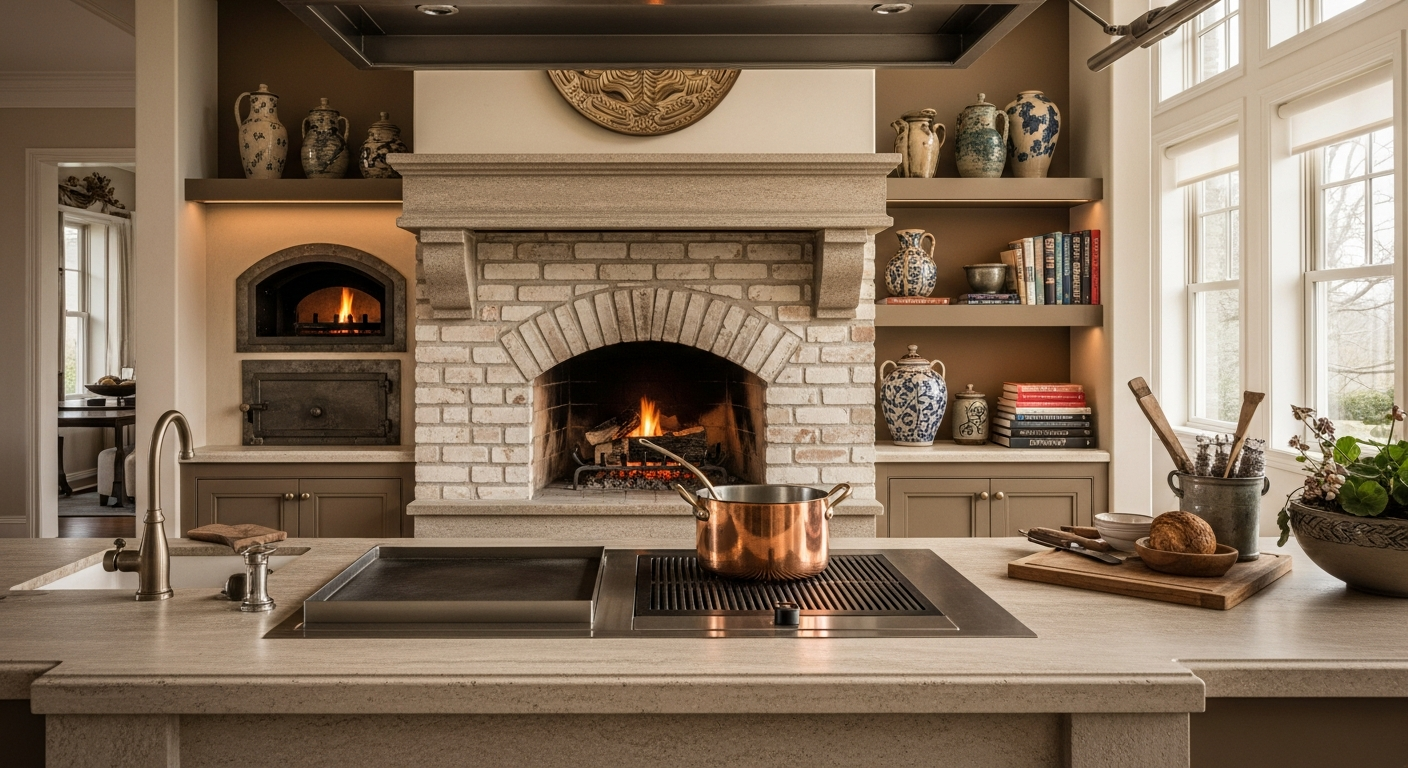

The hearth is the primal anchor of the home, an architectural feature that acts as a sensory primer for the palate. It commands the flow of spatial energy, dictating exactly how an evening of high-altitude hospitality will unfold. Understanding the physics of this space—the radiant heat, the acoustic isolation, the aromatics of woodsmoke—transforms a standard dinner into an unforgettable, ruggedly sophisticated orchestration of flavor and fire.
The Physics of High-Altitude Hospitality
Cooking at elevation changes the mechanics of everything. Water boils at a lower temperature, braises require more time to break down connective tissues, and the dry mountain air demands aggressive, intentional seasoning. But the elevation also dictates the physical state of your guests when they step through the door. They arrive carrying the cold of the San Francisco Peaks on their coats.
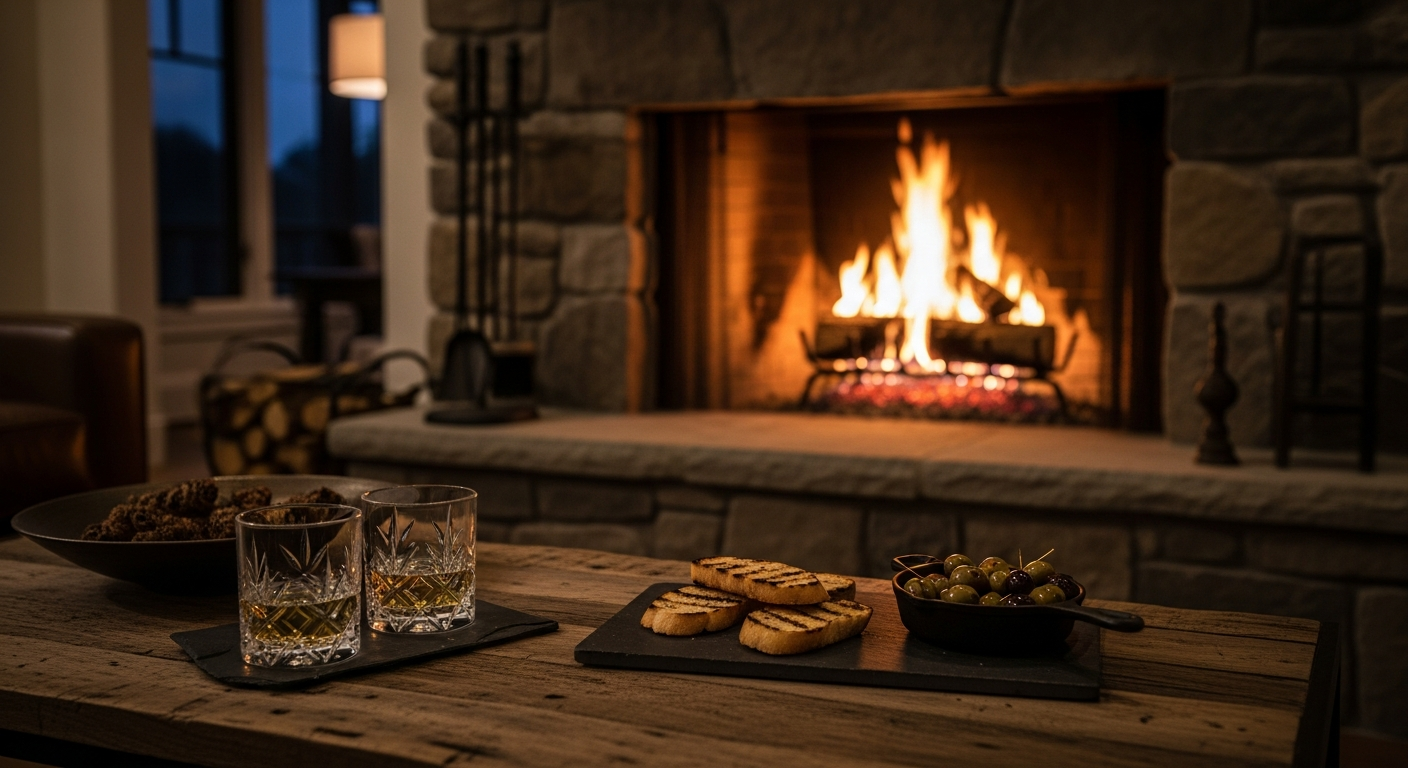
The immediate transition from biting cold to the radiant heat of a living room fireplace is a profound sensory shock. It relaxes the shoulders, dilates the capillaries, and opens the senses. Plating the opening bites by the firelight—rather than under the harsh, task-lighting of the kitchen—capitalizes on this biological shift. Serving a duck fat crostini with whipped ricotta and charred rosemary by the hearth allows the radiant heat to keep the fats soft and luscious, while the ambient warmth of the room thaws the palate, preparing it to perceive the nuances of the first pour of a complex, earthy Pinot Noir.

Work Directly with Torlando Hakes
Skip the color choice stress. Work directly with me as your personal Color Designer to select the perfect architectural palette for your home, and get a Complementary Color Consultation when you purchase paint through us.
Orchestrating the Pre-Dinner Crescendo
A flawless dinner party is a symphony of acoustics, and the hearth provides the perfect counter-melody to the kitchen. There is a deeply satisfying auditory contrast between the chaotic, percussive symphony of the kitchen—the rhythmic thud of a heavy chef’s knife against an end-grain block, the aggressive hiss of a cast-iron skillet searing a thick-cut ribeye—and the slow, hypnotic crackle of dry wood logs snapping in the living room.
By staging the cocktail hour at the hearth, a spatial boundary is drawn. The chef is allowed to operate with absolute focus, moving with fluid precision over the stove, while the guests are insulated in a cocoon of ambient light and sound. The scent of the kitchen—browning butter, blooming spices, roasting garlic—drifts slowly into the living room, mingling with the resinous, sharp aroma of burning pine. This atmospheric layering of scents builds intense anticipation. It is flavor theory applied to the air itself.
Flavor Theory and the Ambient Smoke
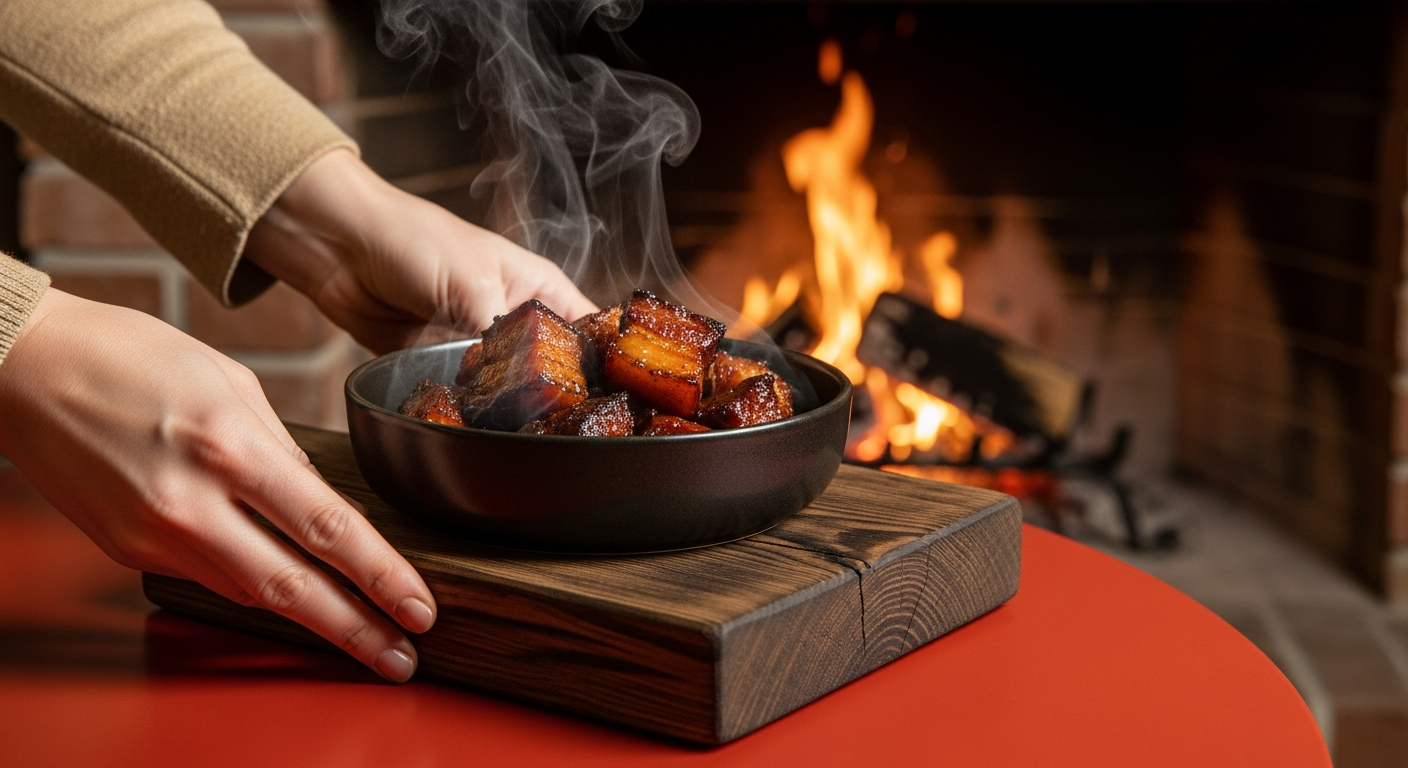
Woodsmoke is not merely a byproduct of combustion; it is an invisible, ambient seasoning. The olfactory bulb cannot separate the aroma of the room from the taste on the tongue. In Flagstaff, where the air is crisp and devoid of humidity, the scent of the hearth carries beautifully throughout the house.
When you serve food in a home anchored by a wood-burning fire, you are implicitly pairing the menu with the wood itself. The sweet, peppery smoke of juniper or the robust, earthy footprint of oak acts as a foundational base note for whatever is being served. A slow-braised venison shank, heavily rubbed with crushed juniper berries, black pepper, and thyme, echoes the environment of the room perfectly. Even a simple presentation of aged cheeses left to come to temperature near the fireside takes on a subtle, smoky complexity that cannot be replicated in a sterile dining room. The hearth bridges the gap between the wild, mountainous exterior and the refined, curated plate.
The Final Act of the Evening
Just as the hearth opens the palate, it must also close it. The conclusion of a great meal should never occur amidst the wreckage of empty plates and crumpled linen napkins at the dining table. The masterful host herds the spatial energy back to where it began.
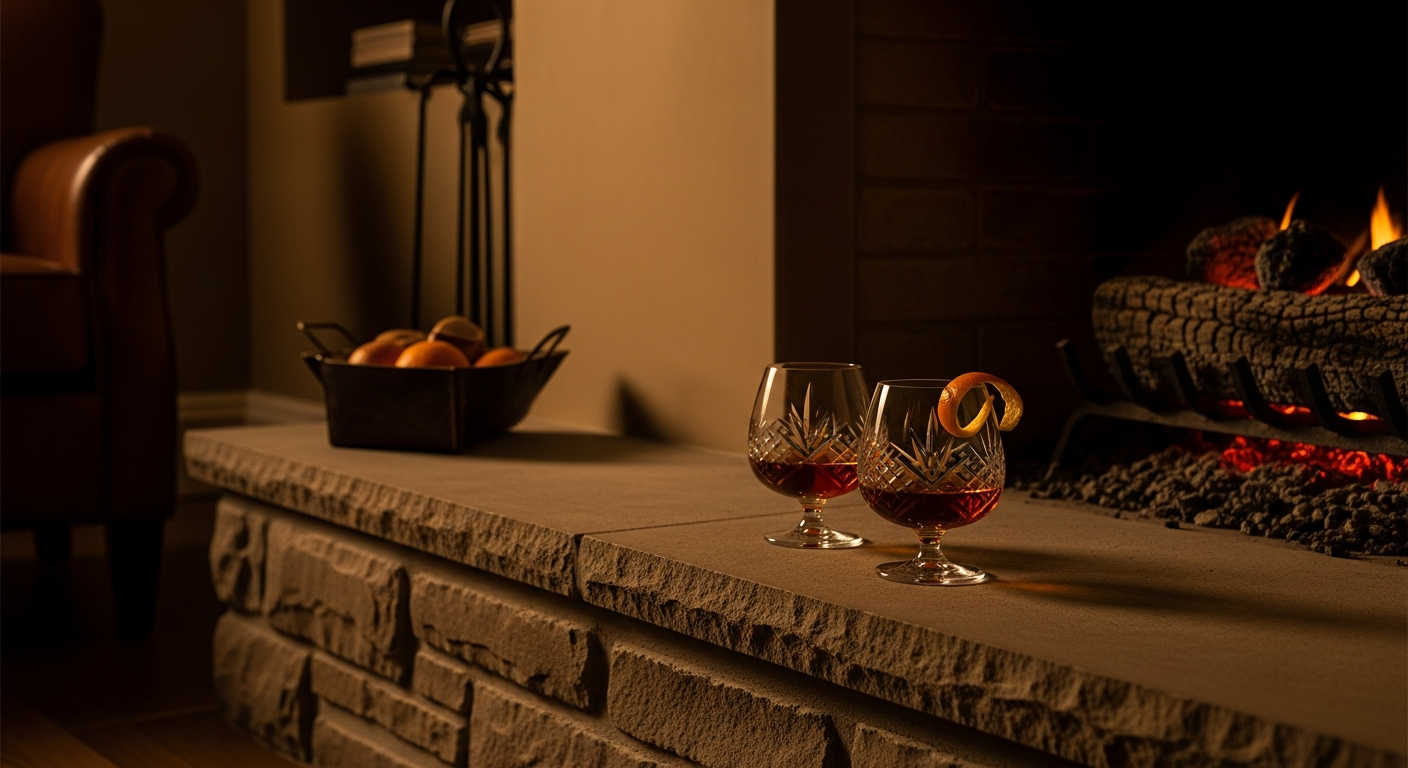
As the roaring fire burns down to a bed of glowing, ruby-like embers, the heat changes from aggressive and radiant to a soft, lingering warmth. This is the precise environment required for the digestif. Heavy, weighted glassware filled with dark, viscous spirits—perhaps an Amaro, or a heavily peated Scotch—demands the slow, reflective atmosphere of the hearth. The fats and rich proteins of the dinner have coated the tongue, and the sharp, botanical bite of the digestif cuts through, aided by the ambient warmth of the dying fire.
In the high-altitude chill of a mountain night, the kitchen may be the engine room of flavor, but the living room hearth is its soul. It is the ultimate tool in the home chef’s arsenal—a masterclass in temperature, acoustics, and primal comfort that turns a simple meal into an indelible sensory memory.
 After
After Before
Visualize Your Space with Color Studio AI
Planning a project? Skip the paint chip guesswork. Use our Color Studio AI to instantly visualize these paint colors on your own walls, or take advantage of our aligned contractor pricing matching current Sherwin-Williams retail promotions.
Book Your Upcoming Paint Project
Craftsman Painter is now scheduling premium transformations. Secure your spot and elevate your property value.
Get an EstimateHelp Others Find Professional Color Insights
Share this story directly to your networks or copy the link to share with friends.