
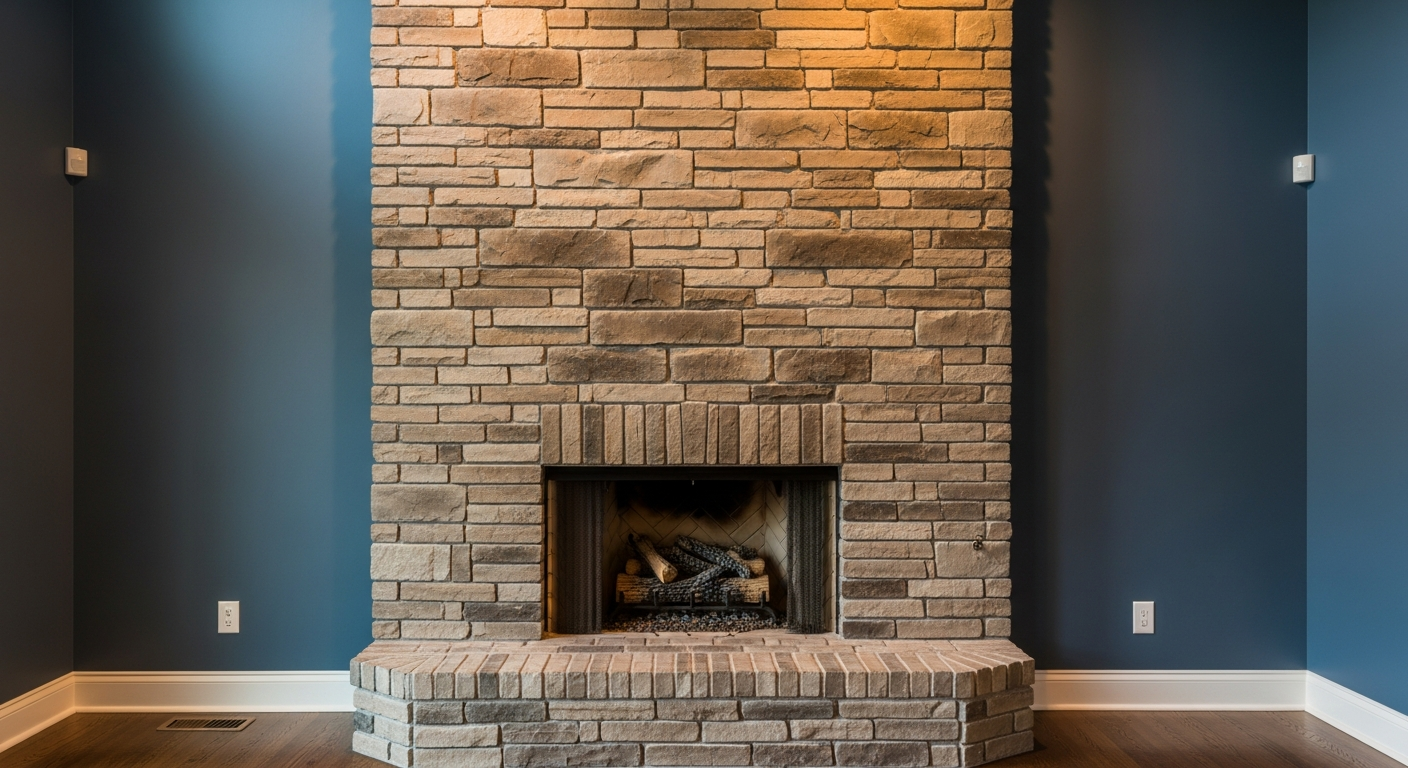

When ambient light washes across a living room chimney breast, it does not merely illuminate a space; it acts as a raking diagnostic tool, exposing the true caliber of the craftsmanship beneath. Substandard surface preparation, failing coatings, and ignored substrate mechanics become instantly visible. Mastering the hearth requires treating it not as a decorative set piece, but as a dynamic structural system demanding rigorous preparation, chemical precision, and a deep understanding of structural mechanics.
Substrate Diagnostics: The Physics of the Chimney Breast
The living room hearth is a masonry monolith traversing the building envelope. In Atlanta homes, the temperature differential between a heavily air-conditioned living room and a humid, ninety-five-degree exterior creates extreme vapor drive. Moisture moves relentlessly from high pressure to low pressure, driving ambient exterior humidity down the flue and through the porous cellular structure of brick and mortar.
This moisture transport triggers capillary action within the substrate. When historical masonry absorbs this moisture, it dissolves naturally occurring salts within the brick. As the moisture is drawn into the conditioned, dry air of the living room, it evaporates at the surface, leaving behind calcified deposits known as efflorescence.
Book Your Upcoming Paint Project
Craftsman Painter is now scheduling premium transformations. Secure your spot and elevate your property value.
Get an EstimateIgnoring this hygroscopic reality leads to catastrophic coating failure. Applying standard interior latex paint over an active, moisture-laden masonry substrate guarantees blistering, flaking, and eventual delamination. The substrate must be properly diagnosed. Moisture meters and pH testing are mandatory first steps. A high pH indicates active lime leaching, requiring a neutralizing wash before any tool touches the surface.
Preparation Mechanics: Eradicating Micro-Failures
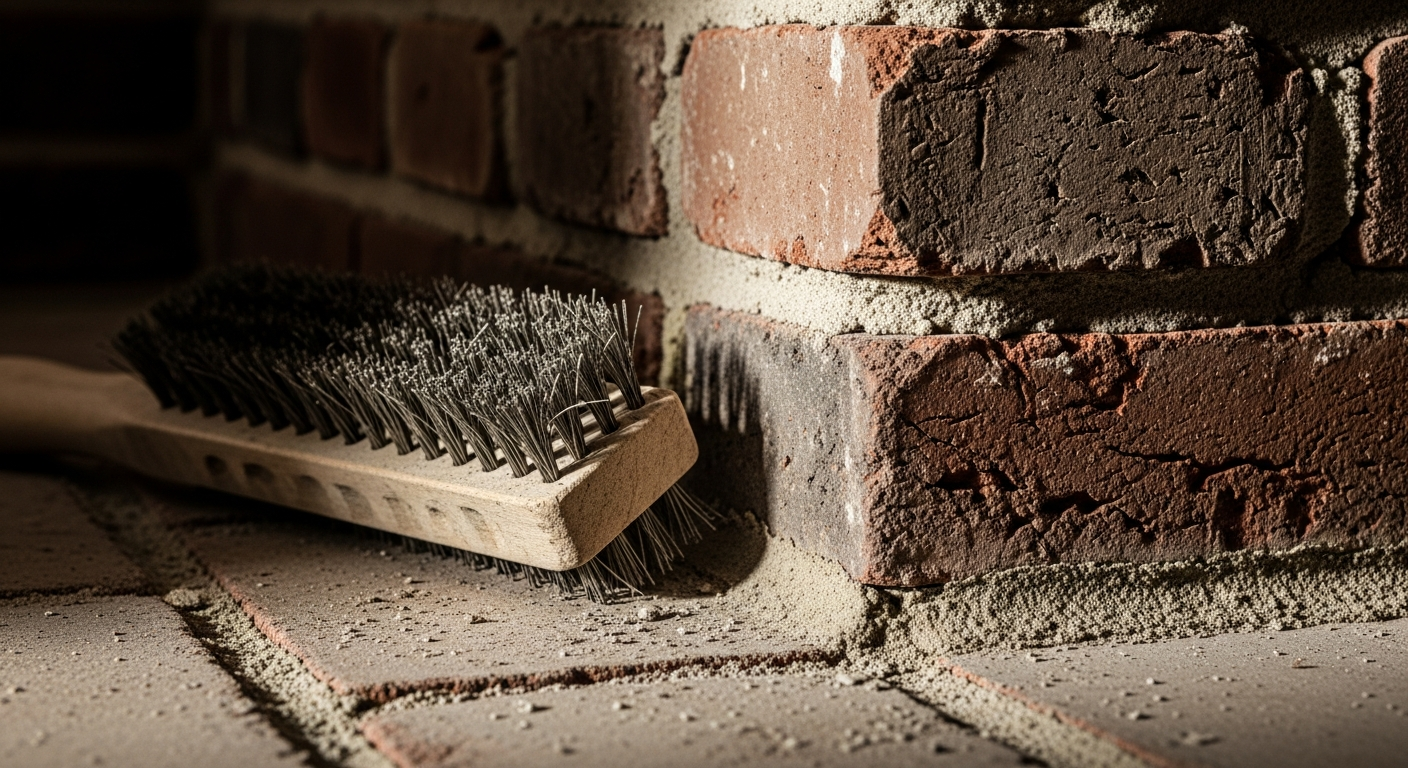
Proper preparation of a hearth substrate is an exercise in subtraction before addition. The primary objective is establishing a chemically sound, structurally stable foundation. Failing to remove compromised material creates a false surface that will inevitably shear away from the masonry under the stress of thermal expansion.
Mechanical abrasion is required. Loose mortar, efflorescence, and degraded previous coatings must be removed using stiff wire masonry brushes or carbide scrapers. Power grinding may be necessary for deeply compromised joints, followed by meticulous vacuuming to extract particulate dust that acts as a bond-breaker for applied coatings.
Repointing mortar joints requires matching the compressive strength of the original materials. Many historic Atlanta homes feature soft, low-fired brick. Ramming modern, high-strength Portland cement (Type S) into these historical joints is a critical mechanical error. When the chimney naturally expands during Atlanta’s frequent thermal cycles, the rigid, modern cement will not yield, forcing the softer historical brick to crack and spall. Instead, a softer Type N or Type O mortar must be troweled in, respecting the elasticity of the original masonry assembly.
Coating Chemistry: Permeability Over Plasticity
Once the substrate is consolidated and chemically neutralized, the coating system must be engineered to survive the micro-climate of the hearth. The default approach of utilizing standard acrylic elastomeric coatings is a structural fallacy. While acrylics offer high tensile strength and bridge hairline cracks, they form a non-permeable plastic film. Over a chimney breast in a humid climate, this plastic film traps migrating vapor, leading to hydrostatic pressure buildup that pushes the paint film directly off the brick.
The biologically and chemically correct solution for a masonry hearth is a potassium silicate coating. Silicate paints do not form a mechanical film on the surface; instead, they undergo a chemical process called silicification. The potassium silicate binder reacts with the mineral content of the brick and mortar, fusing the coating into the crystalline structure of the substrate itself.
Because silicate paints do not contain plastic resins, they are entirely vapor permeable. They allow the chimney breast to "breathe," permitting moisture vapor from Atlanta's humid exterior to pass freely through the interior living room walls without disrupting the coating. This chemistry eliminates the risk of peeling, blistering, and moisture entrapment, ensuring a finish that can last for decades under heavy thermal loads.
The Millwork Transition: Managing Differential Expansion
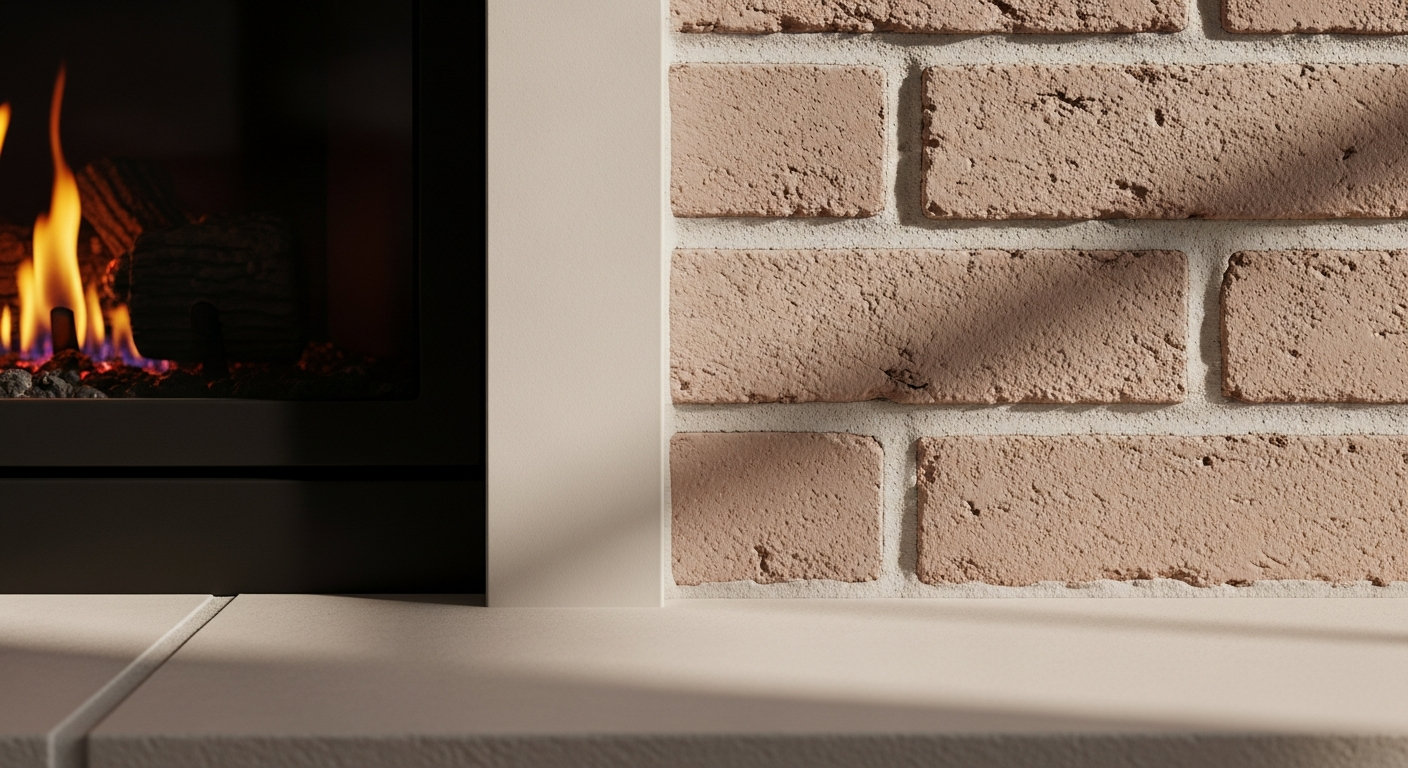
The hearth does not exist in isolation. It interfaces directly with surrounding substrates—often dense wood mantels, plasterboard, or historical lath. The juncture where the masonry chimney breast meets these materials is a critical failure zone due to differing coefficients of thermal expansion.
Wood responds primarily to changes in relative humidity, swelling in Atlanta’s muggy summers and contracting when the home’s heating system dries the air in winter. Masonry responds primarily to temperature. When these materials are flush against one another, they move at different rates and in different directions, creating tremendous shear forces.
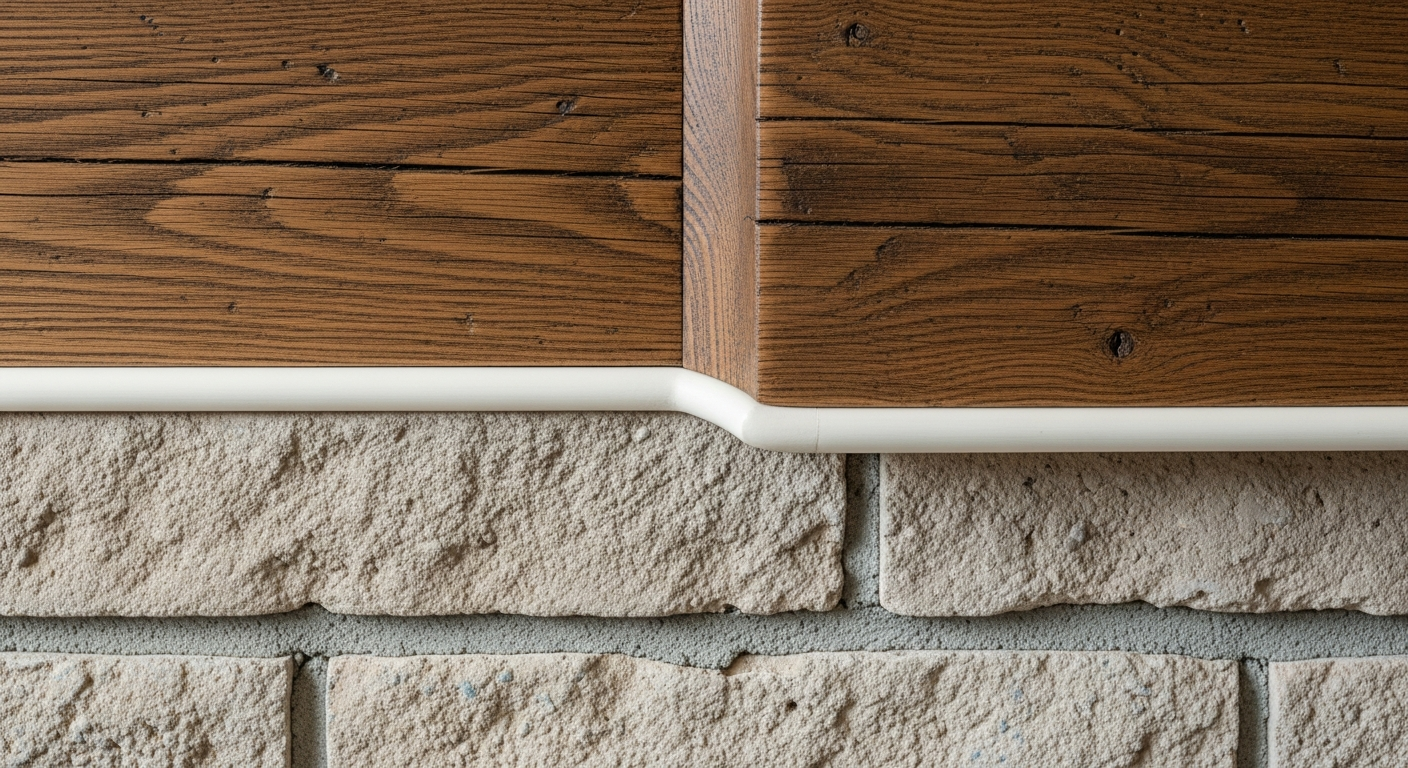
Attempting to bridge this transition with rigid spackling compounds or cheap acrylic caulks guarantees cracking. The joint must be engineered for movement. A high-modulus polyurethane sealant is required at the transition lines. Polyurethane offers superior elongation and recovery properties, maintaining an airtight, visually seamless bond while absorbing the kinetic energy of the expanding and contracting materials. The sealant must be meticulously tooled to a concave profile, ensuring a sharp, architectural line that guides the eye while disguising the structural elasticity required to keep the assembly intact.
The Physics of Permanence
The living room hearth is subjected to forces of moisture, heat, and structural movement that demand absolute technical precision. True craftsmanship in home repair is not found in superficial application, but in the invisible mechanics of substrate consolidation, chemical bonding, and the management of thermal dynamics. By respecting the physical realities of Atlanta's climate and employing structurally appropriate materials, the hearth ceases to be a liability of constant maintenance and becomes a permanent, indestructible monument to the mastery of the building trades.