
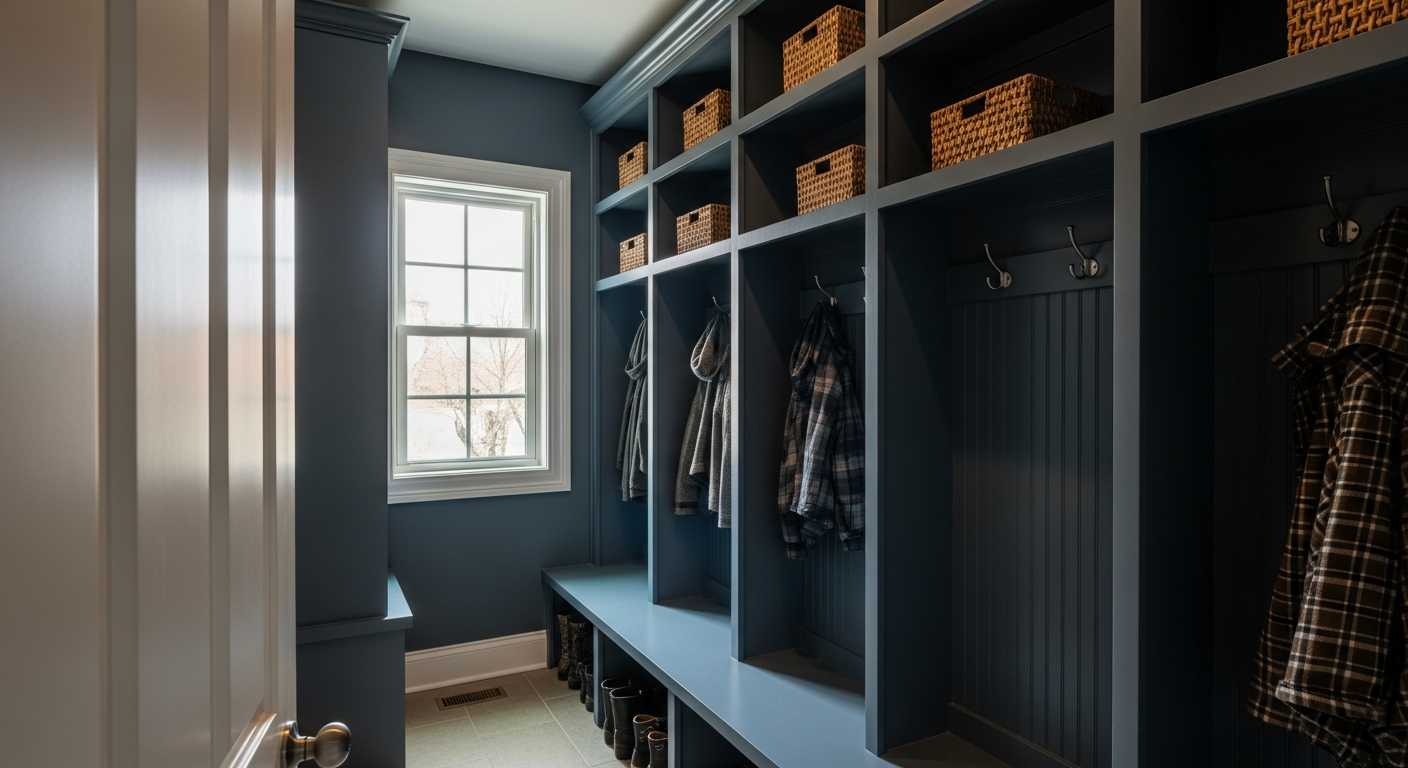

In Northeast Ohio, this threshold must perform under rigorous conditions. Akron experiences a demanding microclimate—from the biting lake-effect snows of January to the heavy, muddy thaws of early spring. Managing the transition from the slush-covered streets of the Rubber City to the dry warmth of the living space requires a structural system designed for frictionless transit, ergonomic utility, and precise spatial flow.
The Architecture of Decompression
The transition from work to home is both physical and psychological. Stepping out of a vehicle after a long commute down Route 8 requires a spatial buffer before engaging with the domestic interior. The mudroom provides this architecture of decompression. It is the boundary where professional burdens and exterior weather are systematically shed.
To function properly, this zone must eliminate operational friction. If a mudroom is cramped or poorly routed, it creates a bottleneck. Traffic jams at the entryway immediately spike the cortisol levels of inhabitants returning home. The spatial syntax of the room should dictate an intuitive sequence of actions: drop the keys, shed the heavy outerwear, remove the footwear, and step into the clean zone.
Book Your Upcoming Paint Project
Craftsman Painter is now scheduling premium transformations. Secure your spot and elevate your property value.
Get an EstimateBy designing this space with adequate physical clearance and deliberate sightlines, the architecture naturally guides the body through the shedding process, establishing a firm boundary between the public and private spheres.
Zonal Drop-Offs and Frictionless Transit
Efficient traffic flow requires distinct zones of operation. An optimized mudroom functions as a well-calibrated machine, dividing the space into a "wet zone" and a "dry zone."
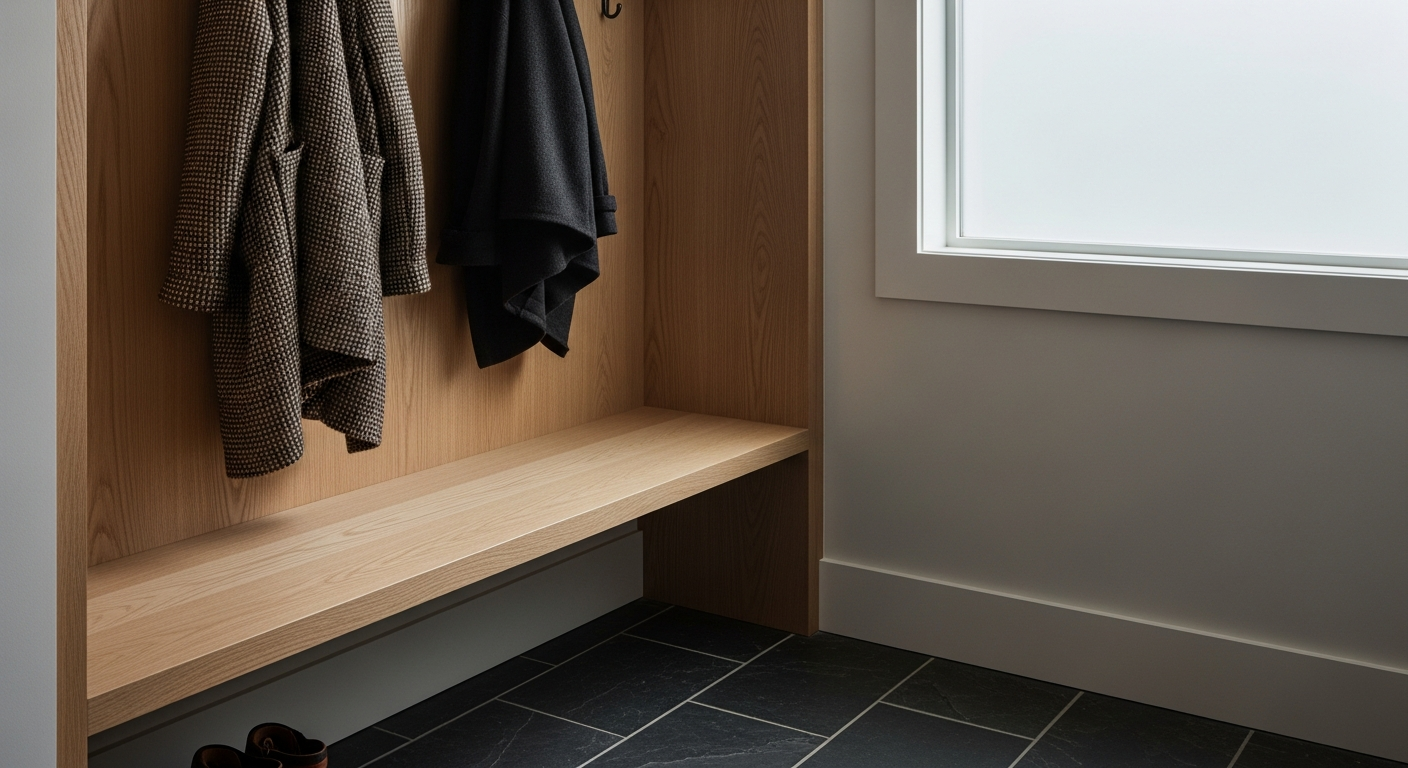
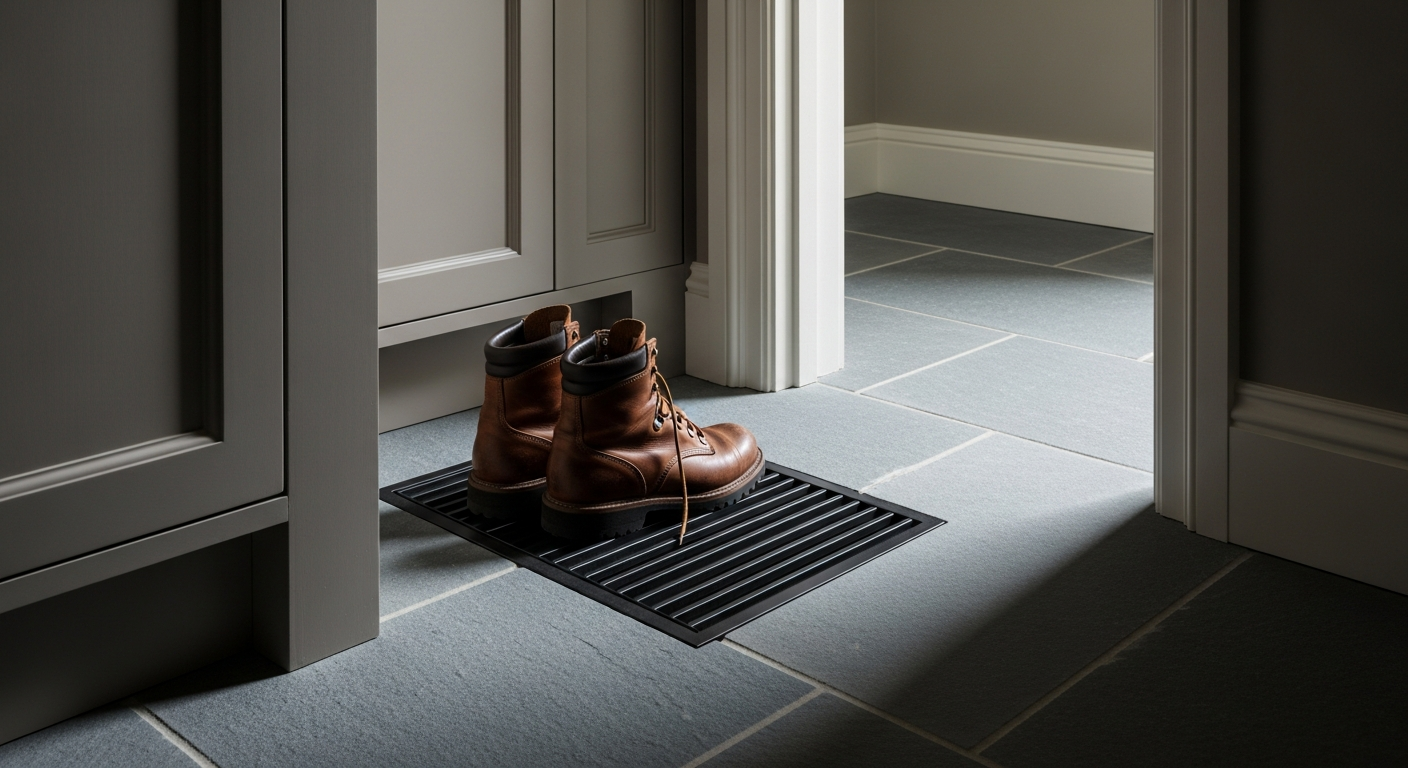
The wet zone intercepts the immediate fallout of an Akron winter or a muddy hike through the Cuyahoga Valley National Park. This area demands high-friction, impermeable flooring graded to capture moisture, preventing water from tracking into the home's primary arteries. Adjacent to this floor space, heavy-duty hooks and open, ventilated grating should be stationed to hold damp garments.
The dry zone serves as the secondary staging area. Here, the physical transition is complete. Slippers are donned, and the resident prepares to enter the main living space. By physically separating these two operational zones within the mudroom, cross-contamination of dirt and moisture is halted at the perimeter. The transit from exterior to interior becomes a seamless, unthinking physical motion.
Thermal Defense and Ergonomic Utility
A critical function of the mudroom is managing the home's thermal boundary. Every time an exterior door opens, a violent exchange of air occurs. An unbuffered entry forces the home's HVAC system to aggressively overcompensate for the sudden influx of freezing drafts or high-humidity summer air.
Operating as an enclosed vestibule, the mudroom acts as a thermal break. It captures the intruding climate, preserving the energy efficiency of the home's deeper interior. Integrating supplemental, low-voltage radiant heat beneath the flooring accelerates the drying of wet boots and damp gear while preventing the space from feeling like a sub-zero corridor.
Ergonomics play a vital role in this defensive space. Seating must be structurally robust and set at an optimal height to allow a person to pull off heavy snow boots without straining their lower back. Clearance beneath the bench should be entirely open, allowing footwear to be kicked backward out of the primary walking path, instantly clearing the floor space for the next person entering the home.
Managing the Domestic Supply Chain
Beyond managing weather and human traffic, the mudroom is the central loading dock for the home’s daily supply chain. Parcels, backpacks, hardware store supplies, and athletic gear enter and exit through this chokepoint. Without an engineered system to process these materials, the entry quickly devolves into a chaotic storage locker.
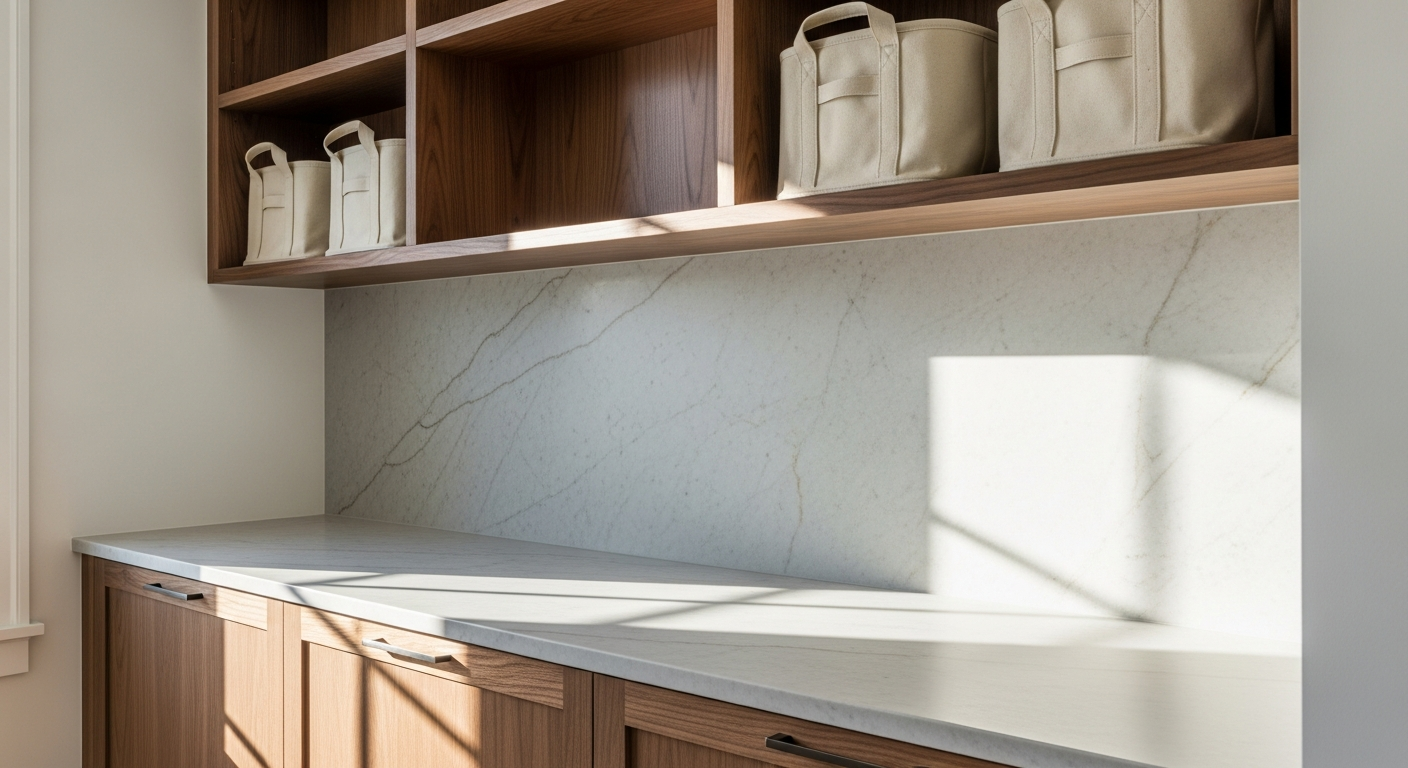
Effective logistics require horizontal staging surfaces. A built-in counter at standing height provides an ergonomic drop-zone for sorting mail, setting down heavy workbags, and staging outbound items that need to return to the car the next morning.
Vertical integration is equally necessary. Dedicated, individualized cubbies assign accountability to each member of the household. This system ensures that the tools required for daily life are staged and ready for deployment. When the outbound supply chain is highly organized, the morning departure is executed with precision, free from the frantic search for missing gear.
The Anchor of Domestic Flow
The mudroom is not a luxury; it is a structural necessity for maintaining order within the home. By treating this space as an operational system rather than a casual entryway, the transition between the unpredictable Akron climate and the domestic interior is mastered.
When spatial energy is properly managed, traffic is streamlined, and the domestic supply chain is organized, the entire home functions with a quieter, more resilient efficiency. The threshold does the heavy lifting, allowing the living spaces beyond it to remain dedicated entirely to rest, focus, and life.