
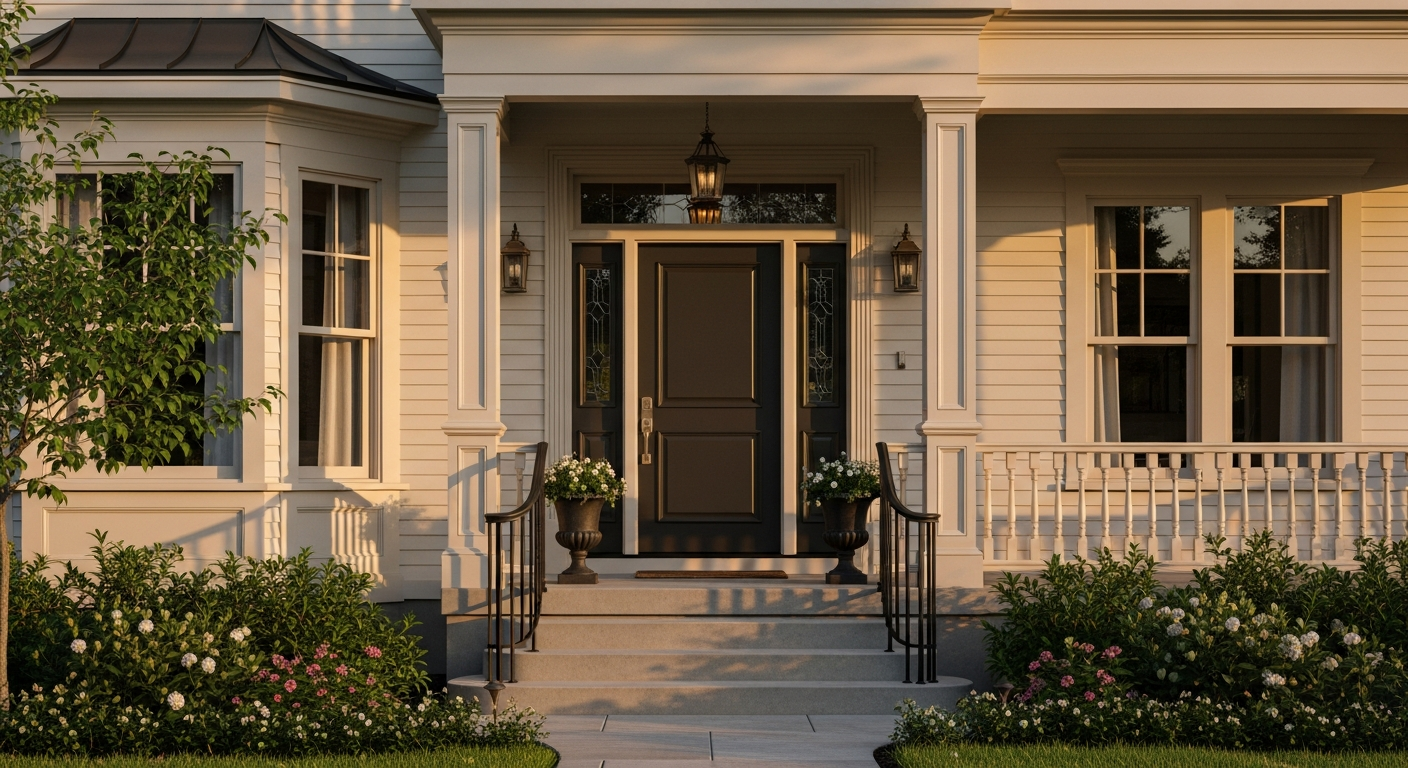

It takes a heavily engineered, battle-tested pigment to carry that kind of architectural weight. Enter Sherwin-Williams Macadamia (SW 6142). This is not a passive, builder-grade beige designed to disappear. It is an intentional, grounding force—a masterclass in visual relationships that physically alters how a space absorbs the notoriously bipolar Midwestern light.
The Psychological Weight of the Mid-Tone
Color theory dictates that a threshold must establish immediate gravity. If the entryway is too light, the space feels transient and unmoored. Too dark, and it becomes a cave that aggressively compresses the chest before a coat is even unbuttoned.
Sherwin-Williams Macadamia strikes a masterful balance with a Light Reflectance Value (LRV) of 49. Sitting dead center on the light absorption spectrum, it carries enough visual density to anchor a tall, echoing foyer while possessing the humility to step back and let the architecture speak. At an LRV of 49, Macadamia refuses to wash out or surrender to shadows. It absorbs the harsh energy of the outside world, offering a muted, earthy embrace that tells the nervous system it is time to downshift.

Work Directly with Torlando Hakes
Skip the color choice stress. Work directly with me as your personal Color Designer to select the perfect architectural palette for your home, and get a Complementary Color Consultation when you purchase paint through us.
Surviving the Bipolar Light Shift
To understand color in Indianapolis is to respect the relentless shifting of its natural light. January delivers a flat, unforgiving blue-gray overcast that turns lesser warm neutrals into the color of bruised flesh. July brings a heavy, golden humidity that bakes through west-facing windows, turning delicate creams into electric yellow.
Macadamia survives this brutal climate swing because of its underlying architectural math. It is fundamentally a warm, sandy tan, but it is anchored by a deeply buried, stabilizing green-khaki undertone.
When that cool, northern winter light hits an entryway painted in SW 6142, the green undertone catches the blue light, neutralizing it. The color tightens, appearing more structured and sophisticated. Conversely, when bathed in the aggressive, low-angle amber light of a summer evening, that same khaki base prevents the beige from overheating or turning muddy. It is a chameleon of color theory, constantly recalibrating its visual temperature to maintain harmony within the space.
Coordinates and Complements in the Airlock
Color never exists in a vacuum. It lives entirely in its relationships to the adjacent surfaces. To properly frame SW Macadamia in a threshold space, the contrasting trims and architectural elements must be executed with absolute precision.
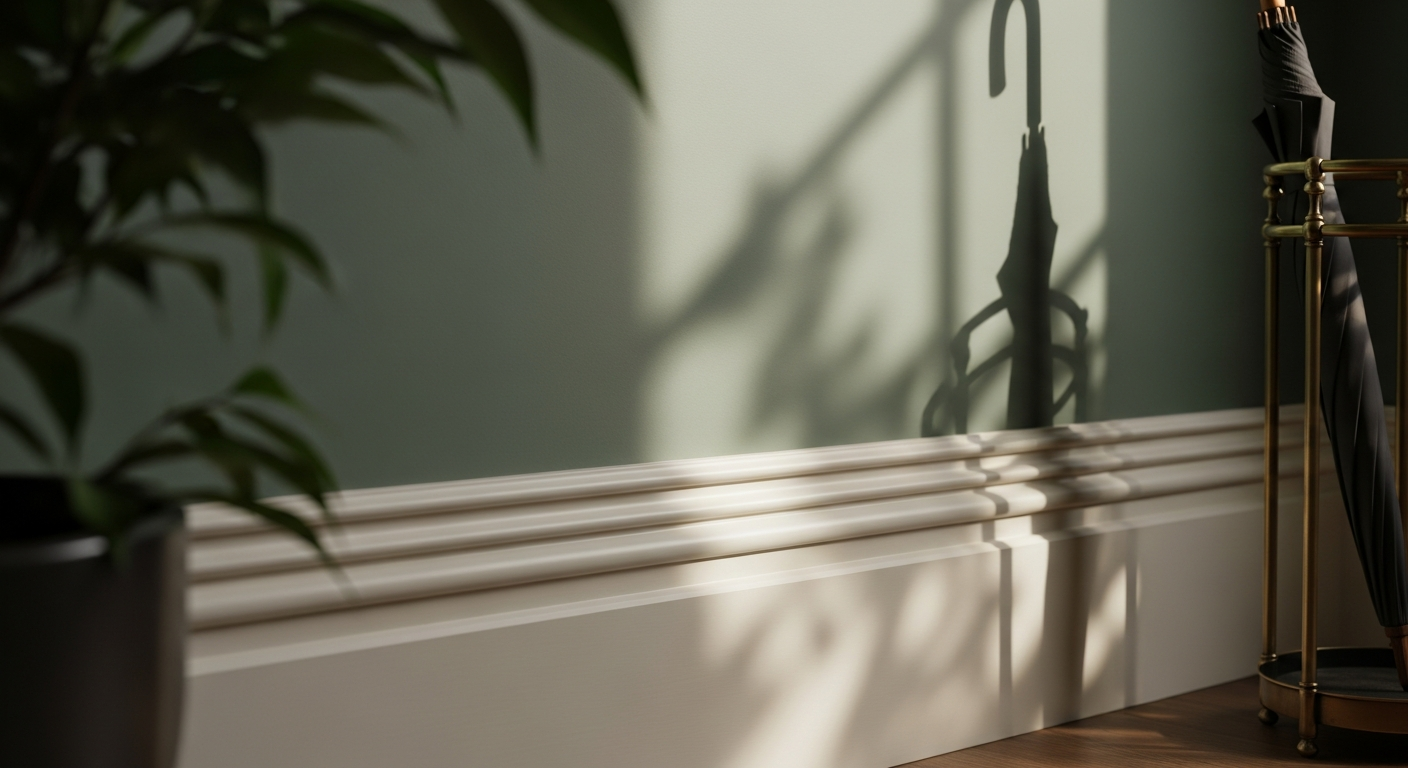
The immediate coordinating trim is Sherwin-Williams Alabaster (SW 7008). With an LRV of 82 and a subtle, warm undertone of its own, Alabaster provides a crisp, tailored boundary without the jarring, clinical shock of a pure titanium white. The transition from the grounded Macadamia walls to the creamy Alabaster crown molding creates a soft, continuous visual flow that elevates the ceiling height.
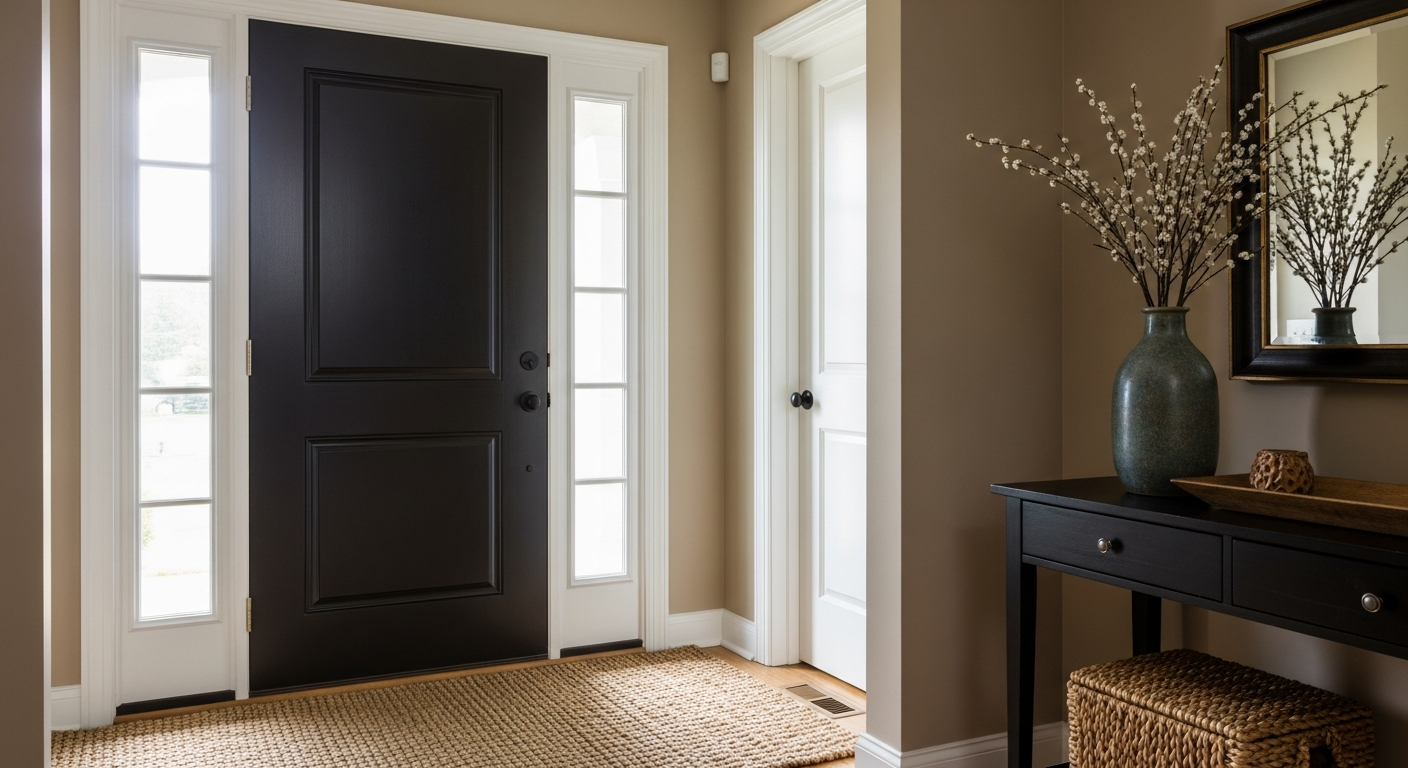
For the interior face of the front door—the literal shield against the exterior—high-contrast grounding is required. Sherwin-Williams Black Fox (SW 7020) serves this purpose with brutal elegance. A deep, heavily saturated brown-gray, Black Fox visually anchors the entryway, providing a sophisticated focal point that draws the eye and gives the sandy warmth of Macadamia something to push against.
The Masterful Transition
The entryway is the home’s opening argument. It is the space where the chaotic, gray slush of an Indiana winter or the blinding heat of a summer afternoon is left behind. Coating this threshold in Sherwin-Williams Macadamia is a deliberate act of design. It respects the complex visual relationships of the environment, masters the shifting light, and delivers a deeply resonant, sophisticated welcome. It is proof that when color theory is applied with rigor, paint transcends mere decoration and becomes the very architecture of a feeling.
 After
After Before
Visualize Your Space with Color Studio AI
Planning a project? Skip the paint chip guesswork. Use our Color Studio AI to instantly visualize these paint colors on your own walls, or take advantage of our aligned contractor pricing matching current Sherwin-Williams retail promotions.
Book Your Upcoming Paint Project
Craftsman Painter is now scheduling premium transformations. Secure your spot and elevate your property value.
Get an EstimateHelp Others Find Professional Color Insights
Share this story directly to your networks or copy the link to share with friends.