
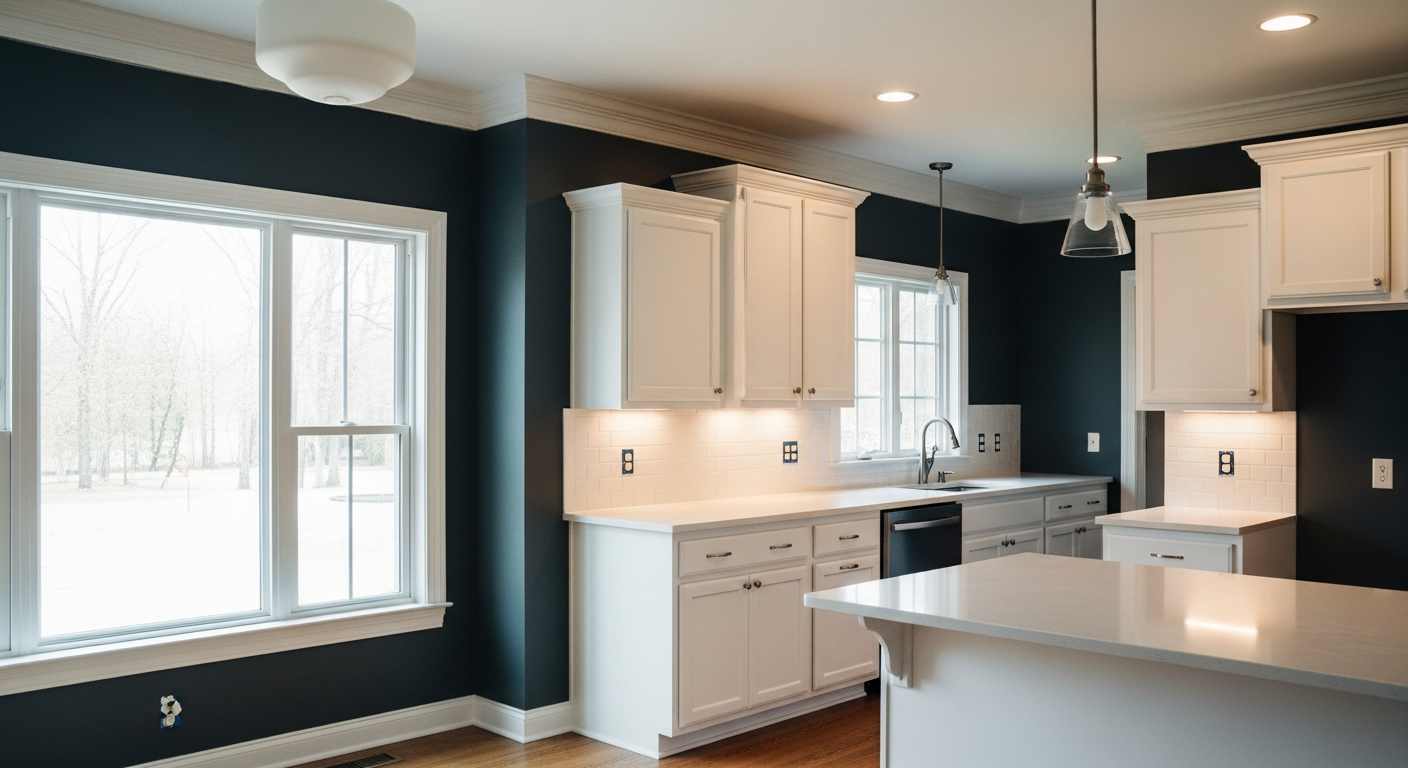

Through the rigorous, shape-and-form-obsessed lens cultivated at the Eskenazi School of Art, Architecture + Design, color is never treated as a mere decorative afterthought. It is an architectural weight. It defines spatial boundaries. And for the specific climatic realities of Bloomington, Indiana, where the light shifts violently from the heavy, humid green-filtered glare of July to the stark, unforgiving gray wash of February, one specific tone commands the kitchen with absolute, unapologetic authority: Benjamin Moore’s Bleeker Beige (HC-80).
The Anatomy of a Perfect Neutral in Southern Indiana Light
Forget the anemic, flipped-house grays of the last decade. A working kitchen requires depth, and Bleeker Beige delivers an unmistakable, grounded sophistication. Sitting comfortably in the Historic Color collection, HC-80 possesses a Light Reflectance Value (LRV) of 51.66. In the brutal world of color theory, an LRV hovering dead-center at 50 is the holy grail. It means the color absorbs just enough light to feel substantial and rich, yet reflects enough to keep a utilitarian space from feeling like a subterranean cavern.
But the true genius of Bleeker Beige lies in its undertones. A lesser beige will betray you the moment the sun dips below the horizon, suddenly flashing a sickly, fleshy pink or a muddy yellow. Bleeker Beige carries a subtle, highly disciplined gray-green undercurrent. When the lush, deciduous canopy of the southern Indiana landscape filters summer sunlight through the kitchen casements, that green undertone harmonizes effortlessly with the exterior environment. In the depths of a Midwestern winter, when the light turns brittle and blue, the gray within the beige steps forward, maintaining a stoic, elegant composure that anchors the room.

Work Directly with Torlando Hakes
Skip the color choice stress. Work directly with me as your personal Color Designer to select the perfect architectural palette for your home, and get a Complementary Color Consultation when you purchase paint through us.
Visual Weight and the Culinary Hearth
In the operational center of the kitchen—where the sink, the primary prep zone, and the range converge—visual relationships dictate how the space feels. Painting cabinetry or the immediate surrounding masonry in Bleeker Beige creates an instant gravitational pull. It is the perfect visual mediator.
Consider the interplay of materials in a high-end kitchen. Stark white cabinetry violently contrasts with the dark glass of an oven or the imposing mass of a stainless steel refrigerator, creating a visual strobe effect that induces subliminal fatigue. Bleeker Beige bridges the gap. It softens the aggressive gleam of stainless steel, warms up the cool, veined surface of a marble backsplash, and speaks a shared, elemental language with native Indiana limestone. It recedes when you need it to, yet holds the architecture of the cabinetry together with a quiet, muscular tension.

Coordinating the Coordinates
A masterful paint color is only as strong as the trims and accents that border it. To deploy Bleeker Beige effectively, the coordinating palette requires ruthless editing.
For the trim, doors, and ceilings, Benjamin Moore’s White Dove (OC-17) is the definitive pairing. White Dove carries a drop of warmth that locks together with the beige, creating a seamless, creamy transition that feels historic yet sharply modern. If the architecture demands a more aggressive, surgical line of demarcation—perhaps in a kitchen with severe, modern millwork—Chantilly Lace (OC-65) provides a crisp, unyielding border that forces the beige to read with maximum richness.
For grounding elements like a central prep island or lower base cabinets, deep, moody contrasts are essential to anchor the hearth. Benjamin Moore’s Kendall Charcoal (HC-166) introduces a dense, atmospheric gravity that prevents the room from floating away. The relationship between the muted beige upper sightlines and the heavy, slate-like charcoal below mimics the natural horizon, establishing a profound psychological calm right where the most intense culinary work takes place.
The Enduring Reality of Contextual Design
Selecting a color for the kitchen is an exercise in respecting the environment. It requires an understanding of how light behaves, how shadows pool beneath upper cabinets, and how the eye craves rest amidst the chaos of a working space. Bleeker Beige does not scream for attention. It does not rely on transient design trends to justify its existence.
It simply stands there—layered, complex, and flawlessly tuned to the atmospheric realities of the Midwest. It turns the kitchen from a mere room with appliances into an intentional, deeply rooted architectural hearth.
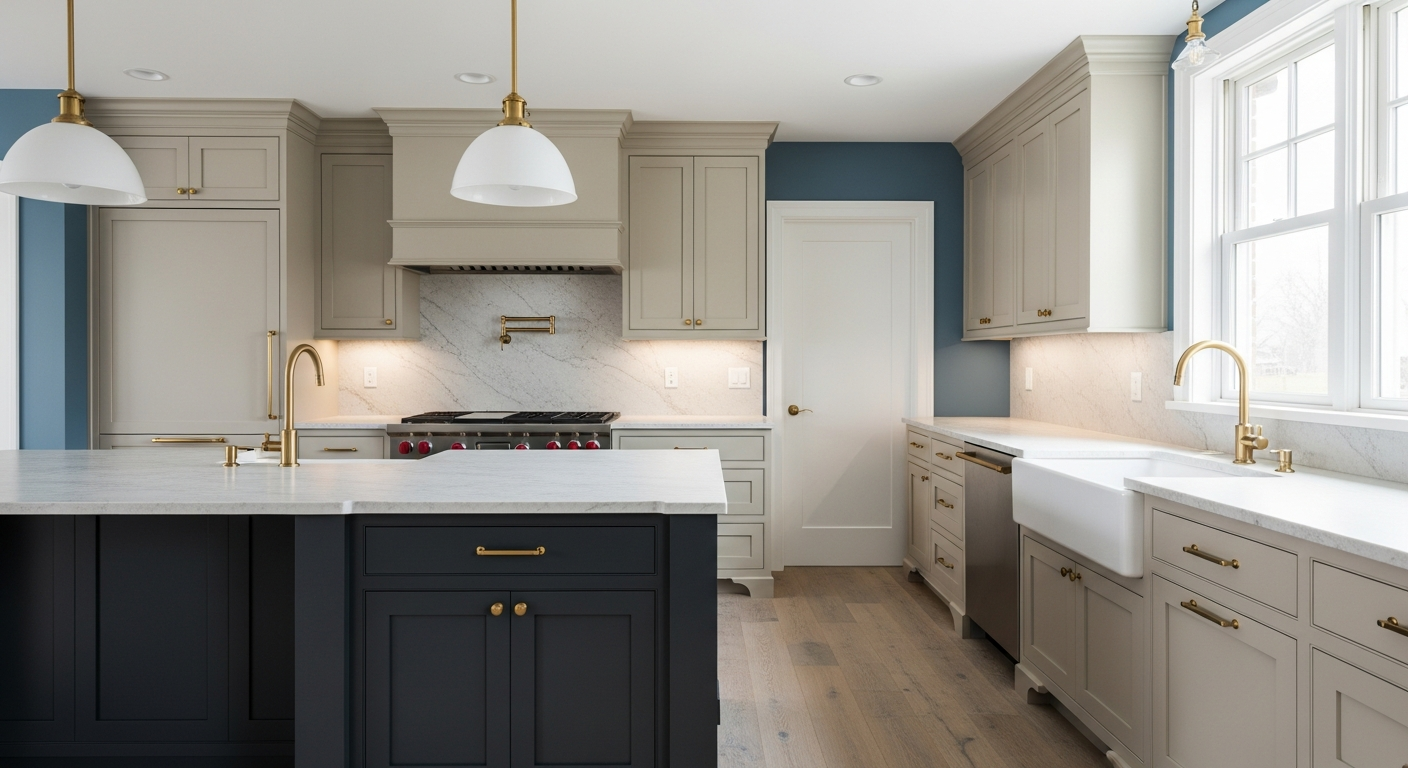
 After
After Before
Visualize Your Space with Color Studio AI
Planning a project? Skip the paint chip guesswork. Use our Color Studio AI to instantly visualize these paint colors on your own walls, or take advantage of our aligned contractor pricing matching current Sherwin-Williams retail promotions.
Book Your Upcoming Paint Project
Craftsman Painter is now scheduling premium transformations. Secure your spot and elevate your property value.
Get an EstimateHelp Others Find Professional Color Insights
Share this story directly to your networks or copy the link to share with friends.