
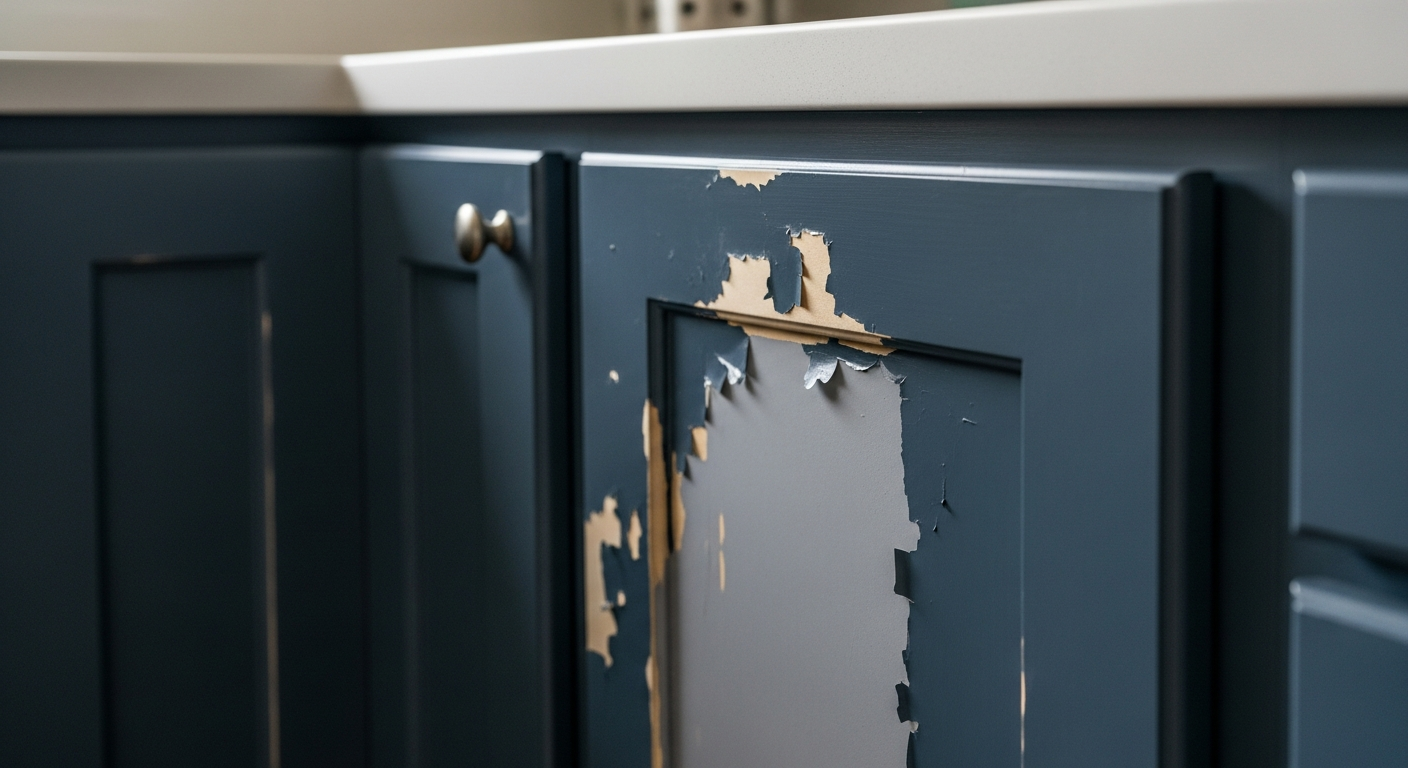
In Bloomington, Indiana, this daily abuse is compounded by a brutal regional climate. Southern Indiana is notorious for its aggressive humidity swings—shifting from suffocating, moisture-laden July afternoons to bone-dry, freezing January nights. For the substrates in your culinary hearth, this environmental volatility is a recipe for structural failure. Paint cracks at the joints, finishes delaminate near the dishwasher, and cabinet boxes warp. Surviving this environment requires more than a fresh coat of paint; it demands meticulous substrate analysis, proper chemical adhesion, and the uncompromising execution of master craftsmanship.
The Physics of Southern Indiana Humidity
To understand why kitchen finishes fail, one must look at the hygroscopic nature of the building materials. Hardwood cabinet doors, MDF panels, and wood veneers act as massive sponges, constantly attempting to reach an equilibrium moisture content with the ambient air of Monroe County.
When summer humidity infiltrates the home, wood fibers swell. When winter furnaces strip the air of moisture, those same fibers contract. This seasonal dimensional instability puts immense stress on the protective coatings covering the wood. At the structural weak points—specifically the five-piece stile-and-rail joints of traditional cabinet doors—this microscopic movement forces rigid, low-quality paints to shatter. Once the coating fractures, an entry point is created for the steam and moisture generated at the prep station, accelerating wood rot and finish delamination from the inside out.

Work Directly with Torlando Hakes
Skip the color choice stress. Work directly with me as your personal Color Designer to select the perfect architectural palette for your home, and get a Complementary Color Consultation when you purchase paint through us.
Substrate Analysis and the Myth of "Sand and Paint"
A master craftsman knows that the longevity of a kitchen is dictated before a single drop of paint is ever applied. The fundamental error in most kitchen repairs is treating a highly contaminated substrate like a standard drywall surface.
The operational center of the kitchen is coated in a microscopic, often invisible, layer of vaporized cooking oils. When airborne animal fats and seed oils land on cabinet faces, they polymerize over time into a tough, sticky resin. Attempting to mechanically sand this layer or apply paint directly over it is structurally disastrous. The oil acts as a barrier, preventing mechanical adhesion and chemically reacting with the new coating in a process known as saponification, which turns the paint into a gummy, peeling mess.
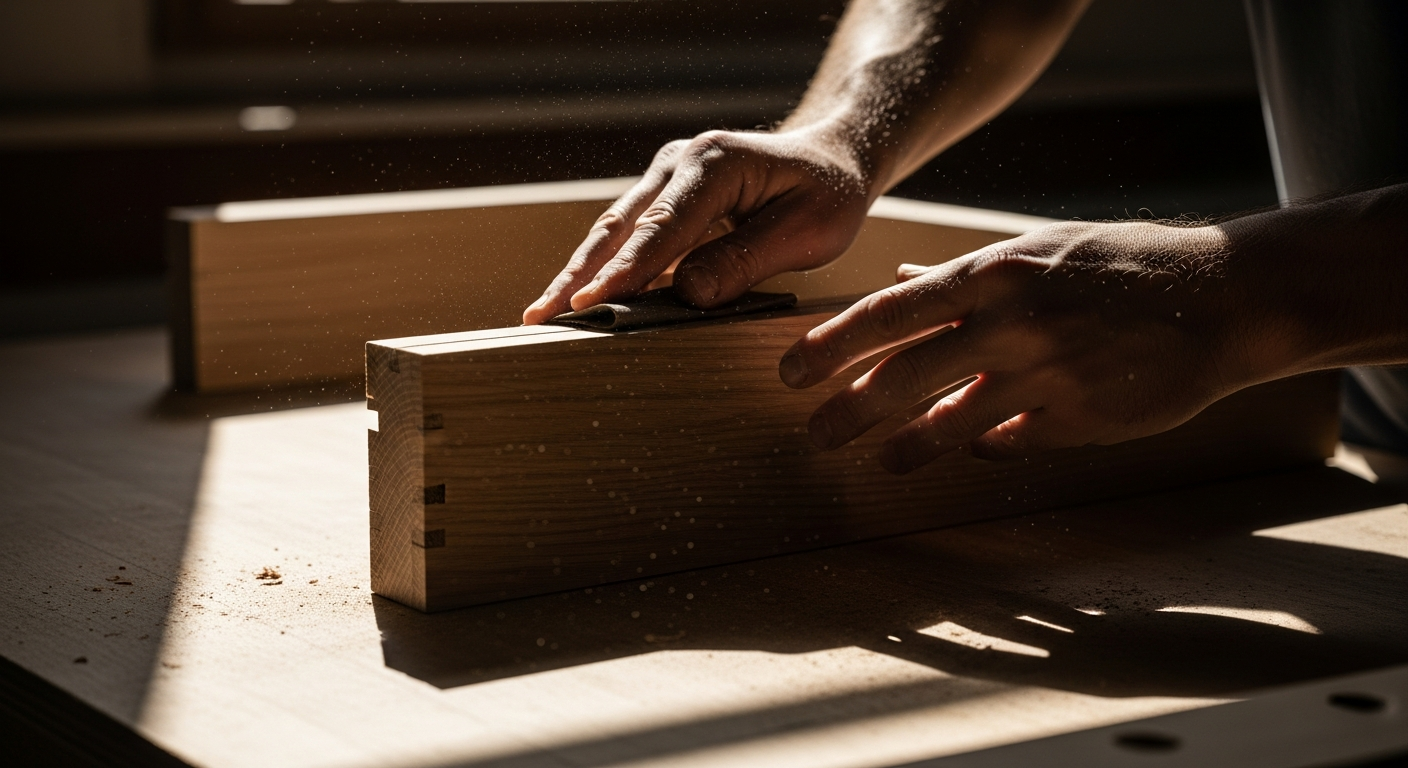
Proper surface preparation requires a rigorous chemical decontamination phase. Powerful degreasing agents must be used to break down the lipid bonds of the grease, followed by a neutralizing wash. Only when the substrate is restored to a chemically sound, uncontaminated state can mechanical profiling—scuff sanding to create a microscopic "tooth" for the primer to grip—begin.
Coating Chemistry for High-Impact Zones
Traditional latex wall paint has no place in the culinary prep hearth. Latex formulations dry through evaporation, leaving a relatively soft, flexible film that remains susceptible to "blocking" (sticking to itself) and easily scratches under the edge of a fingernail or a sliding plate.
Bulletproofing the kitchen operational center requires high-performance, cross-linking chemistry. Waterborne alkyds and two-component (2K) polyurethanes represent the pinnacle of modern coating technology. These materials do not merely dry; they cure via a complex chemical reaction. As the solvent or water base evaporates, the resin molecules aggressively bond together into a tight, impenetrable polymer grid.
This creates a hardened shell with an exceptionally high mil-thickness that resists the corrosive properties of household cleaners and the thermal shock of boiling pasta water. For substrates prone to tannin bleed—like raw oak or heavily milled pine—a specialized, high-solids bonding primer must precede the topcoat to lock down natural wood resins that would otherwise migrate through the finish and compromise its structural integrity.
Engineering the Sink Base for Ultimate Durability
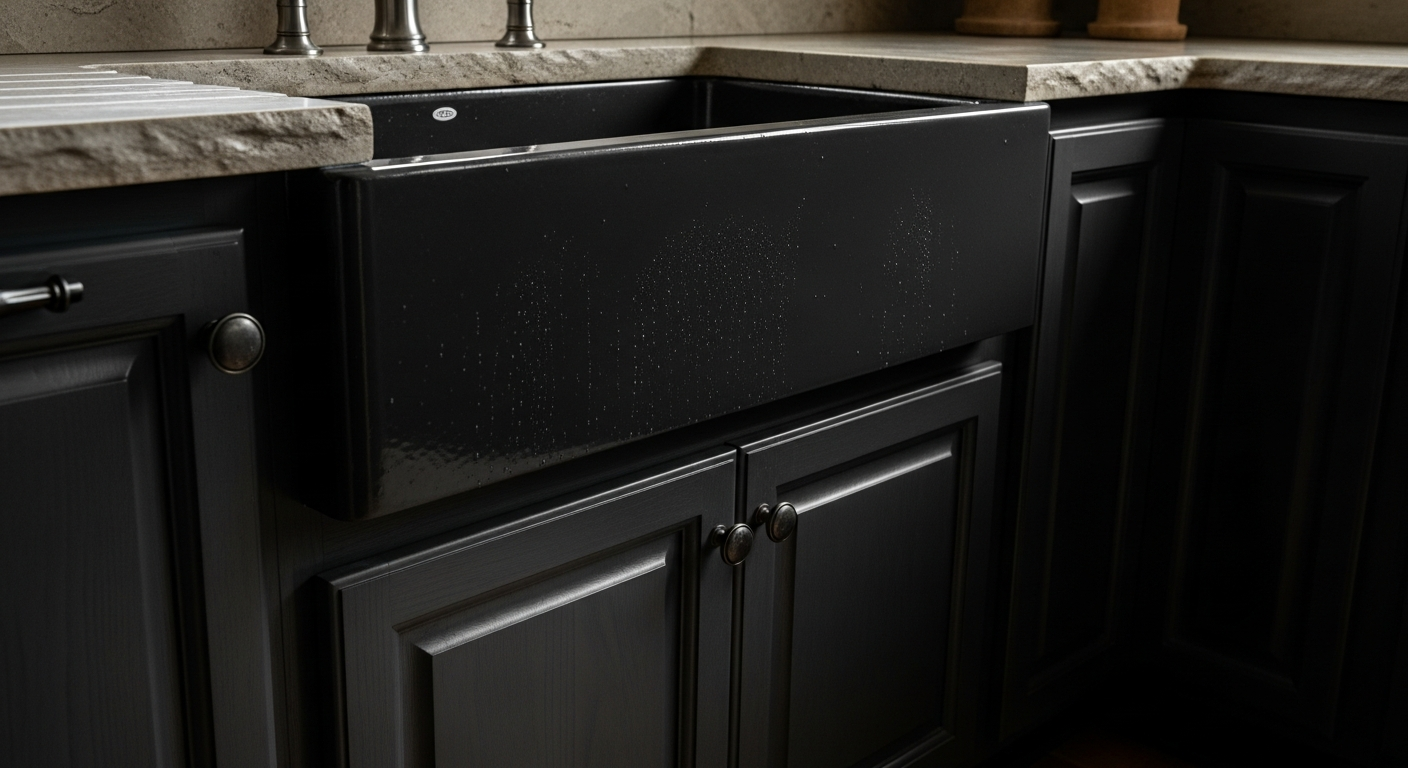
The sink base cabinet is the undisputed ground zero for moisture damage. Gravity dictates that water from wet hands, splashing dishes, and dripping countertops will inevitably travel downward, pooling at the top edges of the cabinet doors and seeping into the end-grain of the wood.
Preventing structural failure here requires preventative engineering. End-grains must be meticulously sealed with penetrating epoxies or specialized sizing to block capillary action. Furthermore, any microscopic gaps between the recessed center panels and the stiles must be systematically addressed. Master painters use high-grade, elastomeric sealants that can stretch and compress with the Bloomington climate's humidity cycles, ensuring the joints remain hermetically sealed without cracking the hard urethane shell applied over them.
True craftsmanship is not found in the superficial application of color; it is found in the invisible layers of preparation, the precise calculation of chemical bonds, and the relentless pursuit of structural durability. By respecting the physics of the environment and the chemistry of the materials, the kitchen operational center can be transformed into an impervious, functional workhorse designed to endure for decades.
 After
After Before
Visualize Your Space with Color Studio AI
Planning a project? Skip the paint chip guesswork. Use our Color Studio AI to instantly visualize these paint colors on your own walls, or take advantage of our aligned contractor pricing matching current Sherwin-Williams retail promotions.
Book Your Upcoming Paint Project
Craftsman Painter is now scheduling premium transformations. Secure your spot and elevate your property value.
Get an EstimateHelp Others Find Professional Color Insights
Share this story directly to your networks or copy the link to share with friends.