
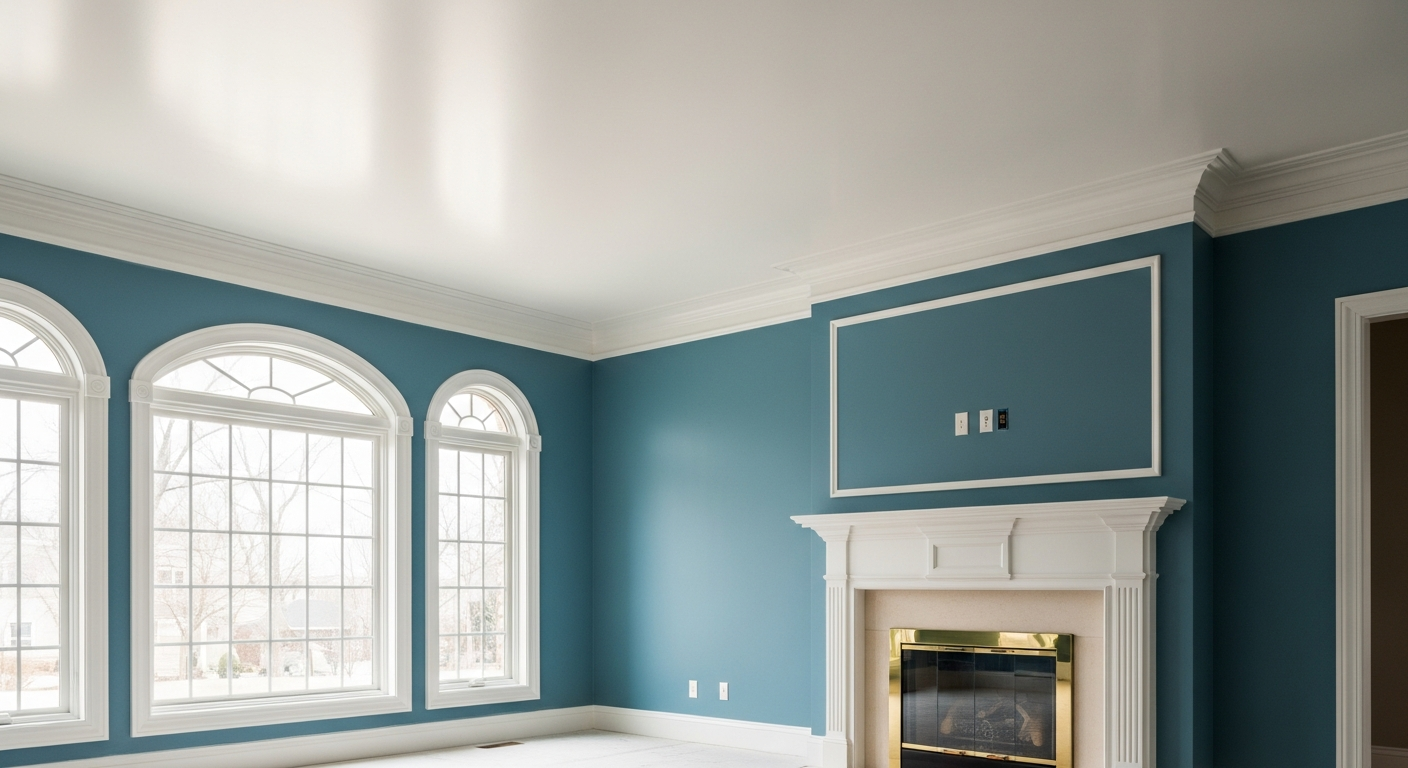

For those willing to embrace true architectural weight, the definitive answer is Benjamin Moore Williamsburg Wythe Blue (CW-590).
A proper Benjamin Moore Williamsburg Wythe Blue (CW-590) paint color review is not about putting a pretty swatch on a wall; it is a masterclass in visual relationships, light absorption, and environmental harmony. This is a color that commands respect, steeped in an eighteenth-century pedigree but intensely relevant to modern, high-end design.
The Anatomy of a Colonial Undertone
Williamsburg Wythe Blue CW-590 is a masterwork of deception. It is categorized as a blue, but to call it a simple blue is an insult to its chemical complexity. It is an oxidized copper, a heavy, mossy teal with a muddy gray underbelly that grounds it firmly in the earth.

Work Directly with Torlando Hakes
Skip the color choice stress. Work directly with me as your personal Color Designer to select the perfect architectural palette for your home, and get a Complementary Color Consultation when you purchase paint through us.
In the realm of color theory, pure hues lack sophistication. They bounce light back too aggressively, creating a sterile, synthetic energy. CW-590 thrives entirely on its murky undertones. Because it possesses a moderate Light Reflectance Value (LRV), it doesn't wash out when flooded with lumens, nor does it collapse into a black hole in the shadows. It breathes. It absorbs the chaotic visual noise of a room and translates it into a low-frequency, resonant hum.
Wrestling with Bloomington’s Schizophrenic Light
Context is everything. A color that sings in the perpetual high-noon glare of Miami will die a miserable death in the Midwest. Bloomington’s seasonal light forces interior paint to perform heavy lifting.
In the height of summer, a southern exposure blasts the living room with intense, warm light. Under this aggressive illumination, CW-590 pushes its green undertones forward, harmonizing effortlessly with the thick canopy of oak and sycamore leaves outside the glass. The color feels lush, expansive, and almost botanical.
But it is during the brutal, flat gray of a Midwestern winter that this specific blue-green proves its true pedigree. Northern and eastern light in January carries a distinct blue bias. Lesser paints turn frigid and institutional under these conditions. Williamsburg Wythe Blue, however, leans into its gray foundation. It pulls inward, creating a cocooning effect around the hearth that feels deeply protective and historically grounded.
Architectural Harmony at the Hearth
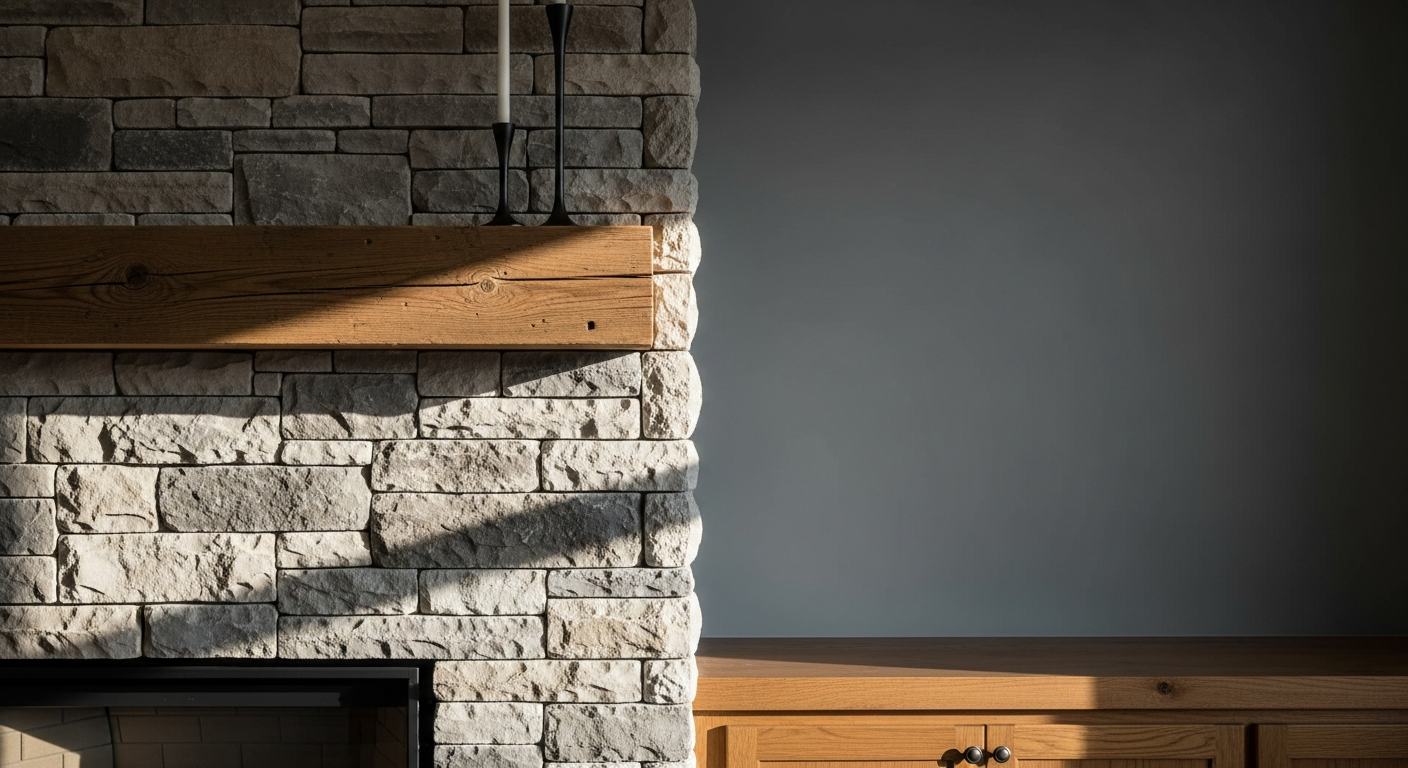
The hearth is not just a fireplace; it is the visual heavyweights’ boxing ring. Firelight, masonry, and wall color are locked in a perpetual dialogue.
In high-end Bloomington residences, the hearth is typically constructed from native Indiana limestone—a porous, tactile material inherently rich in warm, greige undertones. Placing a stark, cool white or a cool gray next to this stone creates a jarring, abrasive boundary. Williamsburg Wythe Blue acts as the perfect chromatic counterweight.
The warmth of the limestone complements the cool, teal-gray depths of the paint. At night, when the primary light source shifts from the sun to the incandescent glow of a fire, the color transforms entirely. The amber light of the flames neutralizes the blue, pulling out the rich, earthy greens. The walls seem to advance slightly, compressing the space into an intimate, fiercely elegant sanctuary.
Trims, Complements, and Cutting the Visual Noise
A bold wall color is easily ruined by the wrong trim. Slapping a brilliant, untinted white on the baseboards alongside CW-590 is a rookie mistake. The severe contrast creates a visual razor edge that cheapens the historic complexity of the blue.
To honor the visual relationships at play, the trim must carry its own weight. Benjamin Moore Capitol White (CW-10) is the definitive coordinate—a creamy, nuanced white with just enough historic sootiness to transition smoothly from the deep teal without jarring the eye.
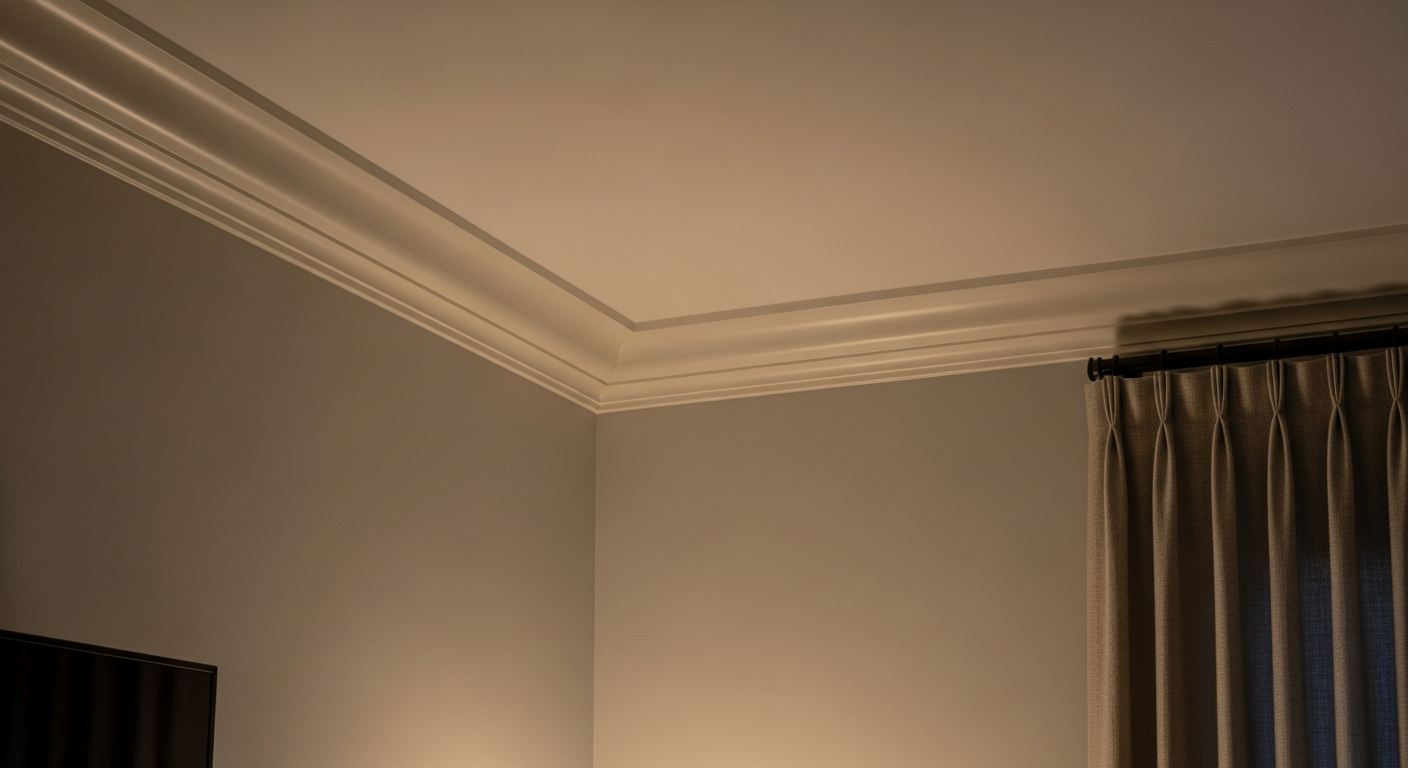
For a more atmospheric, high-tension aesthetic, look to the ceiling. Instead of defaulting to flat white, pulling a softer, heavily muted tone like Benjamin Moore Bracken Tenement Biscuit (CW-115) upward bridges the gap between the dark walls and the overhead plane. This approach controls light bounce, keeping the spatial energy focused entirely downward toward the hearth, where the life of the room actually happens.
Color in a living space is never a passive backdrop. It is an active participant in the daily rhythm of the house. Williamsburg Wythe Blue does not just decorate a room; it commands it, honoring the architecture, manipulating the regional light, and transforming the hearth into a masterclass of residential design.
 After
After Before
Visualize Your Space with Color Studio AI
Planning a project? Skip the paint chip guesswork. Use our Color Studio AI to instantly visualize these paint colors on your own walls, or take advantage of our aligned contractor pricing matching current Sherwin-Williams retail promotions.
Book Your Upcoming Paint Project
Craftsman Painter is now scheduling premium transformations. Secure your spot and elevate your property value.
Get an EstimateHelp Others Find Professional Color Insights
Share this story directly to your networks or copy the link to share with friends.