


To create a dining space that truly resonates in the Cuyahoga Valley, one must not flee from the shadows, but rather invite them in and pour them a drink. Enter the ultimate architectural secret weapon for the Akron dining room: Benjamin Moore’s Salamander (2050-10). This is not just paint; it is an exercise in atmospheric manipulation.
The Anatomy of a Shadow: Benjamin Moore Salamander
Salamander is a masterclass in chromatic tension. Officially residing in the deep greens, it is an infinitely complex blackened teal that refuses to be categorized. With a staggeringly low Light Reflectance Value (LRV) of 3.46, this color acts as a localized black hole in the dining room, absorbing stray photons and creating an immediate, undeniable sense of enclosure and intimacy.
In a space designed for breaking bread, wall color dictates the entire sensory experience of the meal. Bright, high-LRV dining rooms force the eye outward, creating a frantic, transient energy. Salamander does the exact opposite. It pulls the visual weight of the room inward, settling the nervous system. The deep, heavy green undertones mimic the ancient, rugged canopy of the nearby Cuyahoga Valley National Park at dusk. It is rich, brooding, and unapologetically sophisticated.

Work Directly with Torlando Hakes
Skip the color choice stress. Work directly with me as your personal Color Designer to select the perfect architectural palette for your home, and get a Complementary Color Consultation when you purchase paint through us.
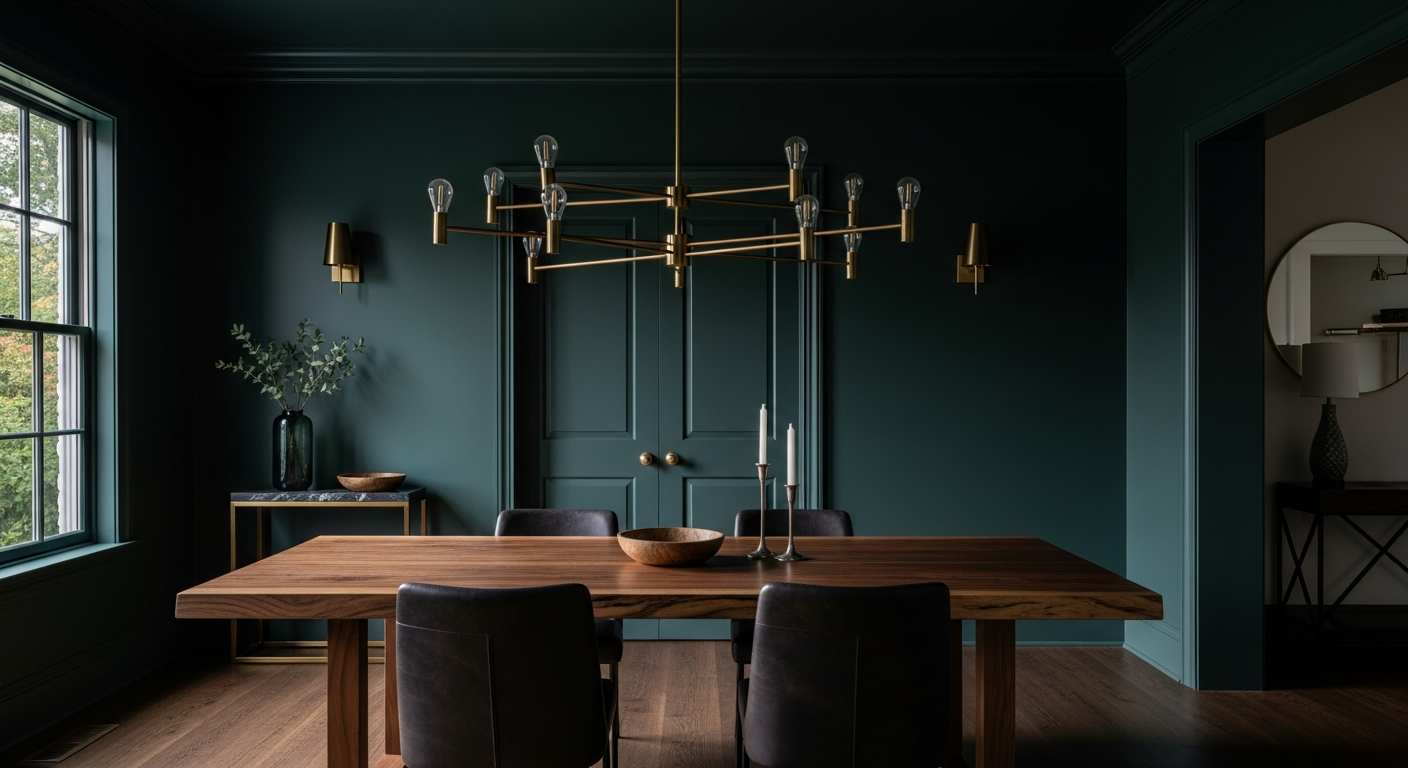
Wrestling with the Northeast Ohio Sun
Color is never a static finish; it is a living, breathing participant that shifts its identity based entirely on the geometry of light. In Akron, understanding the geographical exposure of your dining room is the only way to harness Salamander’s true potential.
In a North-facing dining room, the indirect, cool light of an Ohio winter will pull the charcoal and black undertones to the surface. The walls will read as an enveloping, velvety slate-black, demanding warmth from the table setting—think heavy linen napkins, oxidized brass flatware, and the glow of beeswax candles.
Conversely, if the dining space features Western exposure, the late afternoon sun breaking through the Akron overcast will utterly transform the room. As the intense, horizontal golden-hour light rakes across the walls, Salamander flashes its hidden cards. The blackness recedes, and a vivid, oxidized emerald pushes forward. This interaction between the warm, setting sun and the cool, fathomless base of the paint creates a visual vibration that makes the walls appear to hum with life just as dinner is being served.
Architectural Relief and Exacting Complements
A color this dense demands absolute precision in its coordinating elements. Throwing a standard, unconsidered builder-grade white on the baseboards alongside Salamander is an architectural tragedy. The transition between the void-like walls and the structural trim must be carefully calibrated.
For a traditional, high-contrast aesthetic that honors historical Akron homes, Benjamin Moore’s White Dove (OC-17) is the definitive complementary trim. White Dove contains microscopic drops of black and yellow, preventing it from looking sterile. When applied in a subtle satin finish to wainscoting or crown molding, it provides necessary architectural relief, framing the deep green walls like a museum mat board around a Dutch master painting.
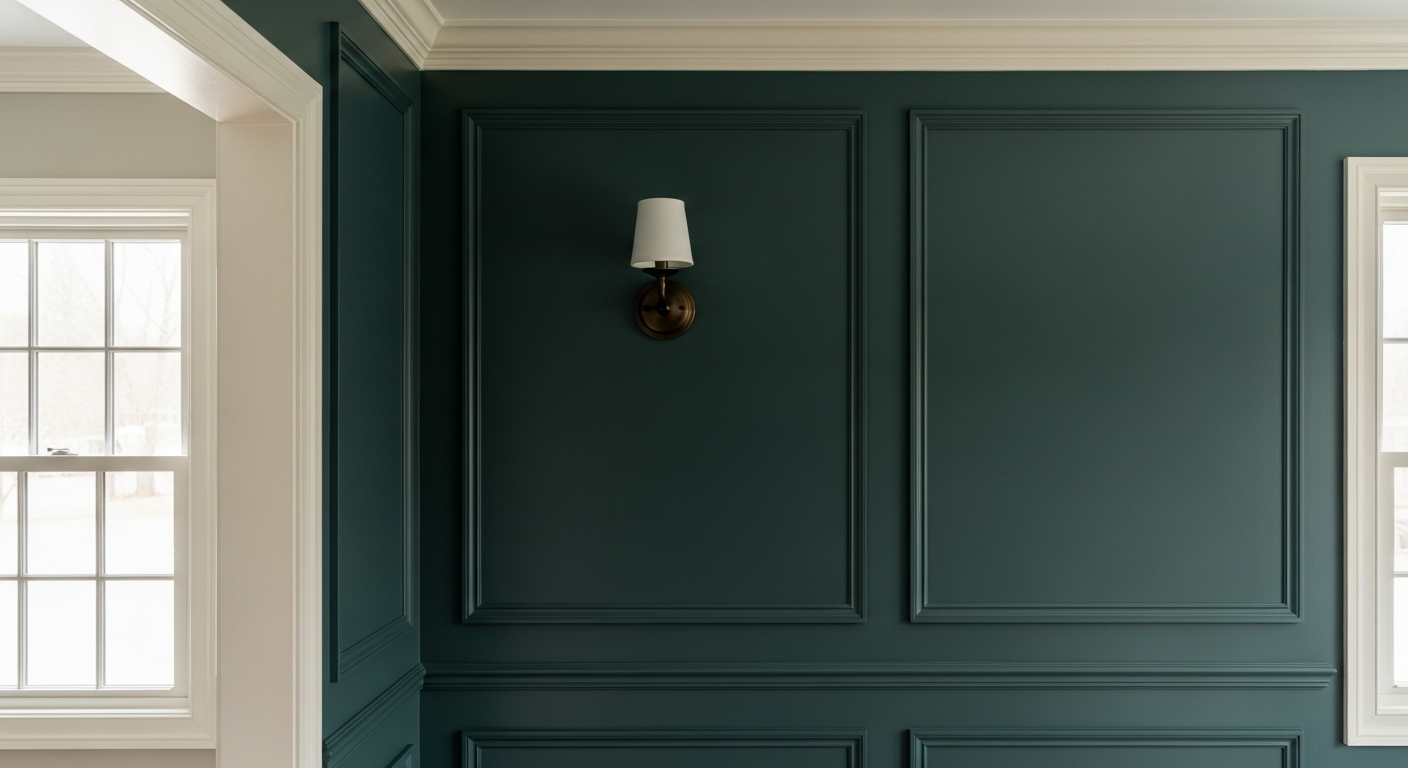
However, the most contemporary and arresting application of Salamander is the technique of color-drenching. By painting the walls, baseboards, window casings, and even the ceiling in the exact same 2050-10 coordinate—shifting only the sheen, perhaps utilizing an eggshell on the walls and a durable semi-gloss on the trim—the room’s hard boundaries dissolve. The dining room ceases to be a box and becomes an infinite, enveloping void.
The Evening Ritual
As the unpredictable Ohio daylight fades, the dining room relies entirely on the artificial lighting grid, and this is where Salamander earns its keep. High-end color theory dictates that artificial light temperature must perfectly offset the wall’s undertones.
A dining room bathed in this deep, aquatic green requires lighting firmly locked at 2700 Kelvin. Under the incandescent amber glow of a low-hanging pendant light or strategically placed perimeter sconces, Salamander warms up beautifully. The walls recede into the background, blurring the edges of the room and forcing the visual focus entirely onto the center of the table—onto the food, the wine, and the faces of the guests.
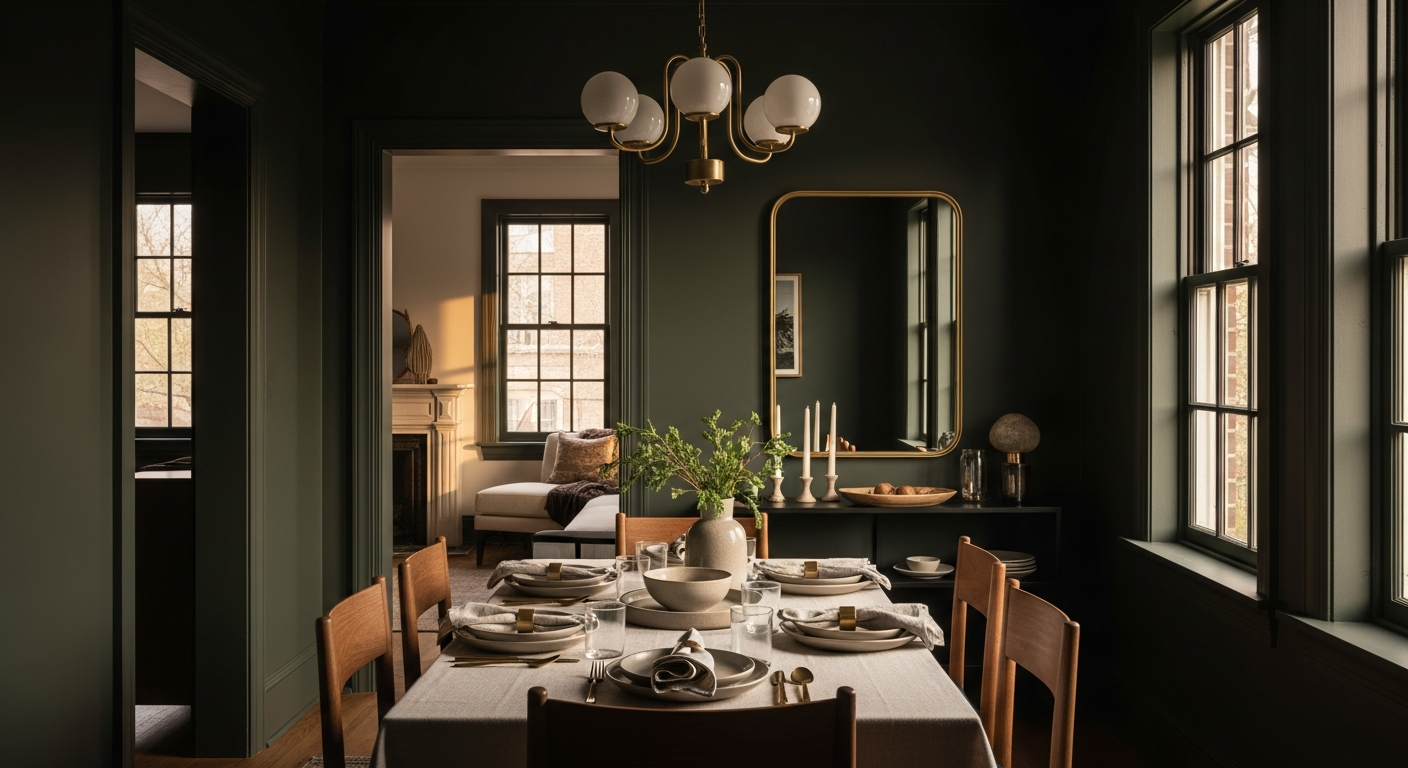
In a region defined by its industrial grit and relentless winter skies, residential color choices must carry genuine architectural weight. Timid palettes offer no refuge. A dining room wrapped in the fathomless depth of Benjamin Moore Salamander doesn't just survive the Akron climate; it commands it, turning a simple meal into an undeniable atmospheric event.
 After
After Before
Visualize Your Space with Color Studio AI
Planning a project? Skip the paint chip guesswork. Use our Color Studio AI to instantly visualize these paint colors on your own walls, or take advantage of our aligned contractor pricing matching current Sherwin-Williams retail promotions.
Book Your Upcoming Paint Project
Craftsman Painter is now scheduling premium transformations. Secure your spot and elevate your property value.
Get an EstimateHelp Others Find Professional Color Insights
Share this story directly to your networks or copy the link to share with friends.