
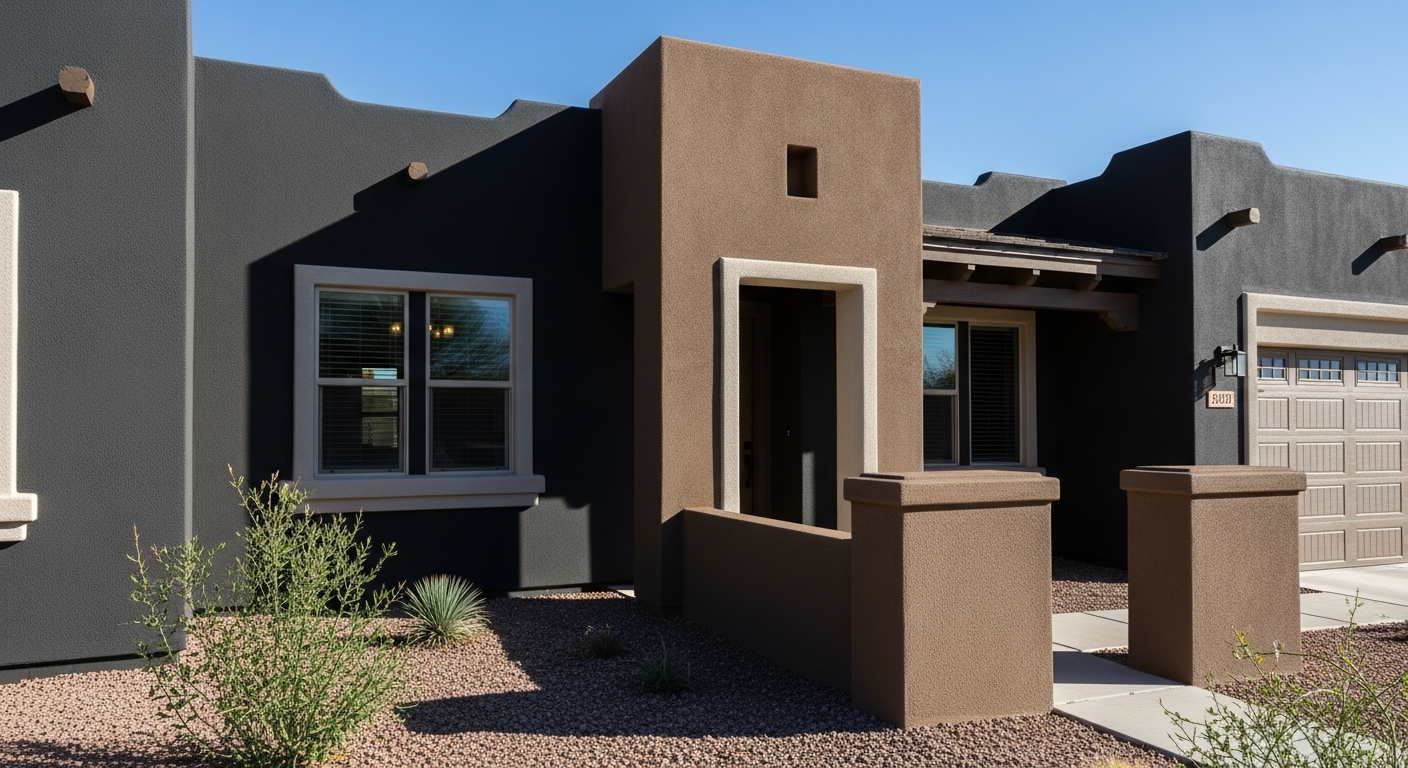

Weak, high-reflectance grays turn to sterile concrete under the Phoenix sky. Overly warm beiges rot into a fleshy, unpalatable peach when exposed to the radiant heat of an Arizona sunset. To ground a living room hearth in this environment requires an earthy, complex pigment with the sheer architectural density to absorb the glare without collapsing into darkness.
Enter the heavy hitter. In any serious Sherwin-Williams Portabello (SW 6102) paint color review, the conversation must immediately bypass the superficial and focus entirely on light absorption and spatial gravity. This is not a color for the timid; it is a masterful, muddy taupe that holds the room hostage in the best possible way.
The Architecture of Light Absorption
Color is never static. It is a living, breathing response to its environment. Sherwin-Williams Portabello carries a Light Reflectance Value (LRV) of 39. In a damp, overcast Pacific Northwest bungalow, that number might read as oppressive or cavernous. But in Phoenix, an LRV of 39 is a necessary shield.

Work Directly with Torlando Hakes
Skip the color choice stress. Work directly with me as your personal Color Designer to select the perfect architectural palette for your home, and get a Complementary Color Consultation when you purchase paint through us.
When the midday Arizona sun hits a living room wall, it exponentially multiplies the perceived brightness of the space. Portabello acts as a visual dampener. It eats the harsh, blinding glare and translates it into a sophisticated, velvety warmth. Around the hearth—where structural elements like stone, raw timber, or blackened steel demand a sturdy visual backdrop—this specific mushroom-taupe provides an immense sense of permanence. The color anchors the fireplace, demanding that the eye settle and rest rather than squint against the abrasive desert light.
Mastering the Undertone Dance
The true genius of Portabello lies in its undertones, which are notoriously difficult to balance in the Southwest. The Phoenix landscape is dominated by terracotta, burnt ochre, and pale dusty greens. When light reflects off this desert floor and bleeds through a living room window, it acts as an aggressive red-orange filter.
A standard warm gray or taupe will often flash pink or purple under this regional light—a catastrophic failure of visual relationships. Portabello survives the Phoenix sun because of its stealthy, heavily muted green-brown base. The green undertone is the essential neutralizing agent. It functions exactly as color theory dictates on the color wheel: the subtle green base directly cancels out the incoming red-orange radiation from the desert dirt. The result is a hearth wall that remains decidedly grounded, earthy, and perfectly neutral, entirely immune to the unpredictable mood swings of the setting sun.
Cultivating Spatial Flow with Trims and Complements
A color of this magnitude cannot exist in a vacuum; it requires equally deliberate architectural framing. The visual relationship between the hearth, the wall, and the surrounding millwork dictates the ultimate success of the design.
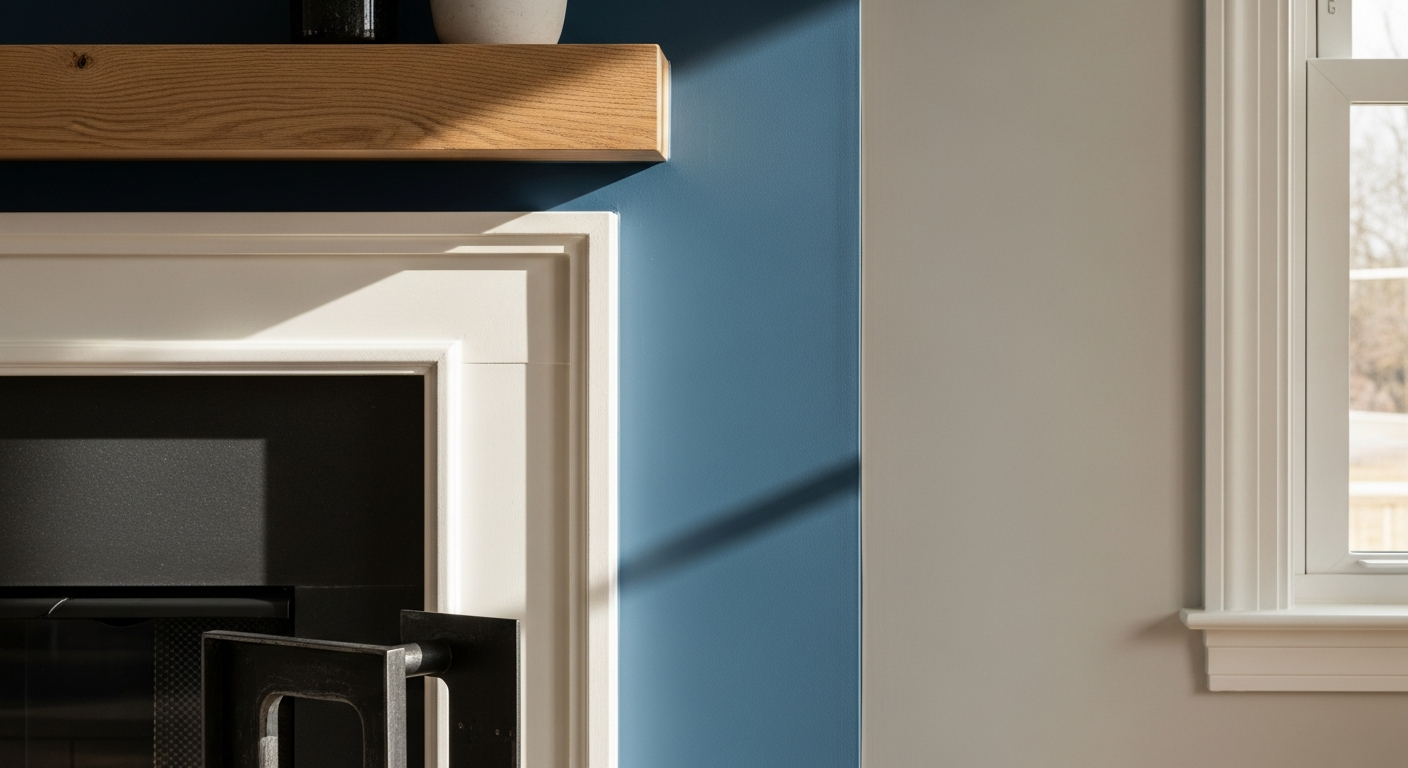
Pairing Portabello with a stark, un-tinted white trim is a fatal amateur error. The contrast becomes jagged and artificial, breaking the organic energy flow of the room. To maintain the sophisticated desert narrative, the trim must carry its own subtle warmth. Sherwin-Williams Alabaster (SW 7008) is the undeniable counterpart here. Alabaster’s soft, creamy nuance bridges the gap between the dark mud of Portabello and the starkness of a ceiling, creating a seamless, rolling transition that feels carved from the desert itself.
For the immediate focal elements—the mantelpiece, the hearthstone, or the window mullions flanking the fireplace—leaning into profound darkness elevates the entire vignette. Sherwin-Williams Iron Ore (SW 7069) introduces a brutalist, almost geologic charcoal that makes the taupe walls sing. The combination of the blackened hearth against the complex mud-taupe of Portabello forces an immediate, visceral respect for the space.
The Evening Transformation
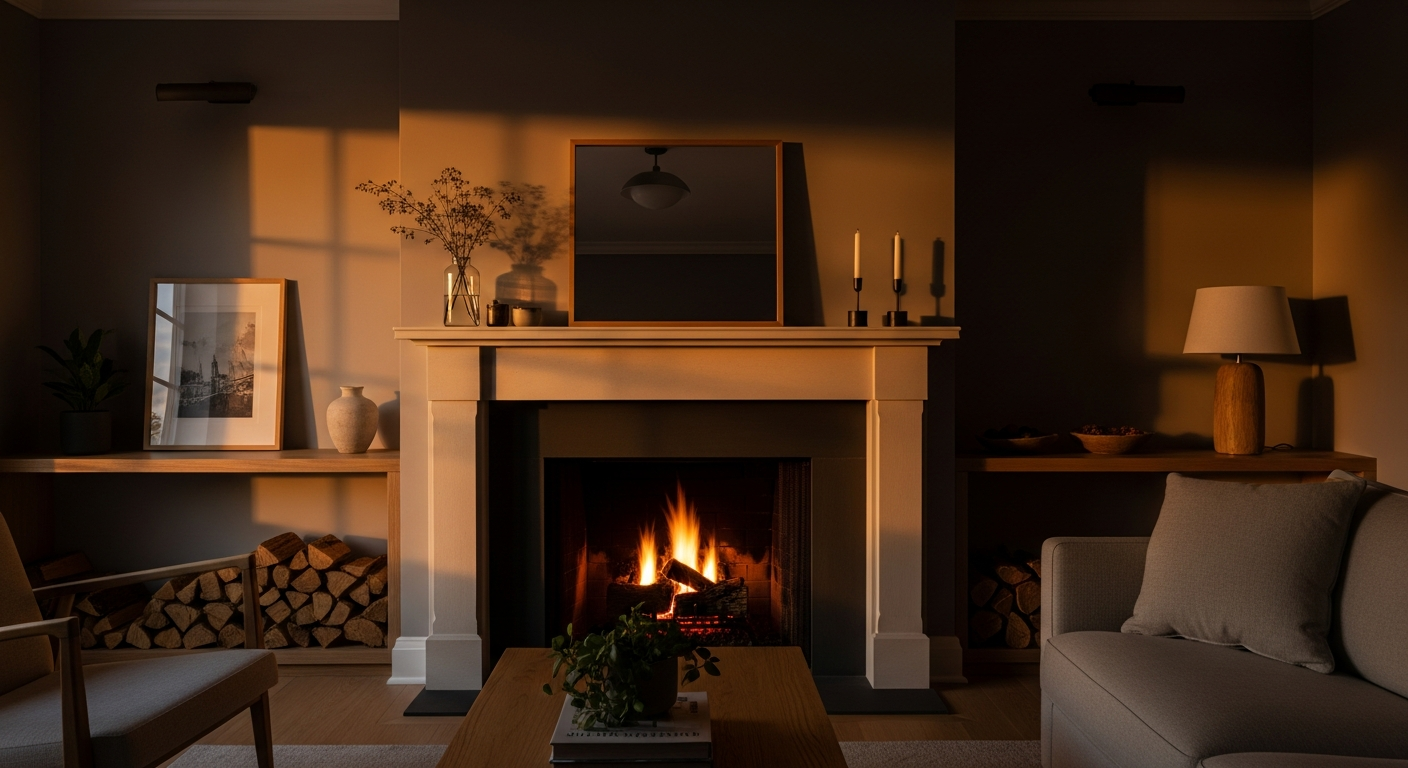
As the punishing Phoenix sun finally drops below the horizon, the ambient energy of the living room shifts entirely. The hearth assumes its traditional role as the literal and figurative source of warmth. Here, the psychology of the color fully reveals itself.
Stripped of the intense natural daylight, Portabello recedes into a deep, enveloping shadow. Under the warm, 2700K glow of ambient table lamps and the flicker of a fire, the green undertones vanish completely. What remains is a rich, historic brown-gray that feels incredibly intimate. It is the color of old stone and ancient desert dusk. By respecting the regional climate, mastering the undertones, and executing flawless visual relationships, the hearth is transformed from a mere architectural feature into an unyielding sanctuary.
 After
After Before
Visualize Your Space with Color Studio AI
Planning a project? Skip the paint chip guesswork. Use our Color Studio AI to instantly visualize these paint colors on your own walls, or take advantage of our aligned contractor pricing matching current Sherwin-Williams retail promotions.
Book Your Upcoming Paint Project
Craftsman Painter is now scheduling premium transformations. Secure your spot and elevate your property value.
Get an EstimateHelp Others Find Professional Color Insights
Share this story directly to your networks or copy the link to share with friends.