
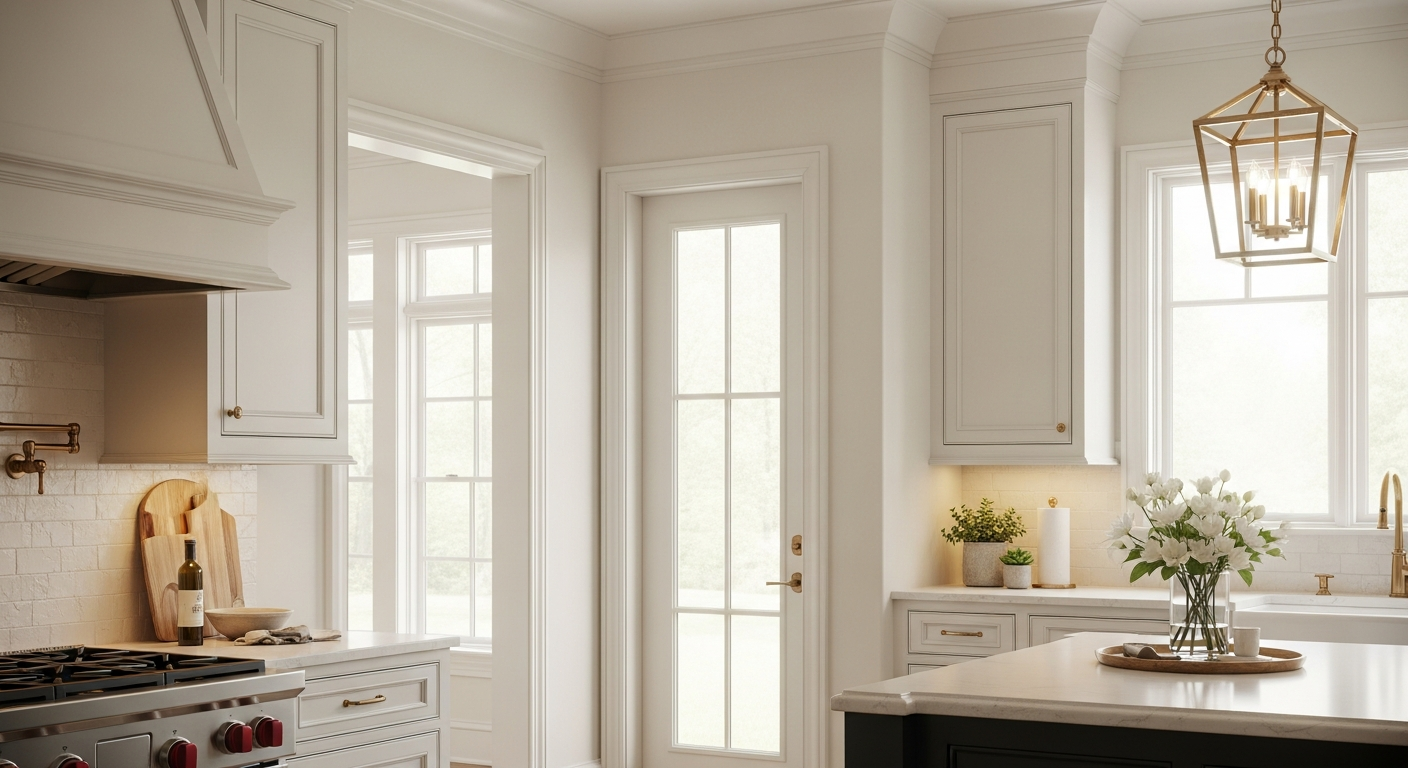

Enter Benjamin Moore Seashell (OC-120).
In the kitchen operational center—the highly kinetic prep zone where storage, ergonomics, and daily culinary rituals collide—color must perform under immense environmental pressure. Seashell is not a timid neutral. It is an incredibly sophisticated, calculated off-white carrying a whispered peach-pink undertone that actively wrestles with Atlanta’s shifting daylight. Understanding the visual weight and light absorption of this specific color is the key to unlocking a kitchen that feels rooted, expansive, and effortlessly alive.
The Architecture of Atlanta Light and Chromatic Tension
Color is never static. It is a highly localized, reactive surface. With a Light Reflectance Value (LRV) of roughly 69.34, Benjamin Moore Seashell absorbs just enough light to establish architectural mass while bouncing enough illumination to keep the prep zone highly functional.

Work Directly with Torlando Hakes
Skip the color choice stress. Work directly with me as your personal Color Designer to select the perfect architectural palette for your home, and get a Complementary Color Consultation when you purchase paint through us.
In a kitchen facing true South, the intense Georgia sun amplifies Seashell’s underlying warmth. The subtle peach undertone neutralizes the cool, green-tinted light filtering through exterior foliage. This creates a deeply welcoming hearth. In North-facing operational centers, where light is notoriously flat and blue, Seashell acts as a visual radiator. It introduces a necessary flush of warmth against the cool glare of stainless steel ranges, high-arc faucets, and heavy cookware. The color behaves as an active participant in the space, expanding and contracting with the passing of the afternoon sun.
Anchoring the Culinary Hearth: Coordinates and Complements
An operational center cannot float; it must be anchored. The aesthetic success of Seashell (OC-120) relies entirely on the visual relationships it establishes with its surrounding geometry. Because Seashell carries a distinct, warm undertone, applying it without a rigid boundary turns a kitchen into an ambiguous, muddy cave. It requires sharp, unforgiving contrast to legitimize its warmth.
The trim and ceiling coordinate is non-negotiable: Benjamin Moore Chantilly Lace (OC-65). With virtually no discernible undertones and a soaring LRV, Chantilly Lace acts as the architectural skeleton. When applied to crown molding and window casings, it snaps the edges of the room into sharp focus, forcing the peach warmth of Seashell on the primary cabinetry to read as an intentional, curated design choice rather than aged, yellowing paint.
To ground the visual gravity of the lower storage banks and the primary prep island, introduce Benjamin Moore Cushing Green (HC-125). This deeply saturated, historic olive tone speaks directly to the lush Atlanta exterior. The chromatic tension between the heavy, earthy green of the base coordinates and the airy, shell-tinted upper sightlines creates a kitchen that feels historically grounded yet ruthlessly modern.
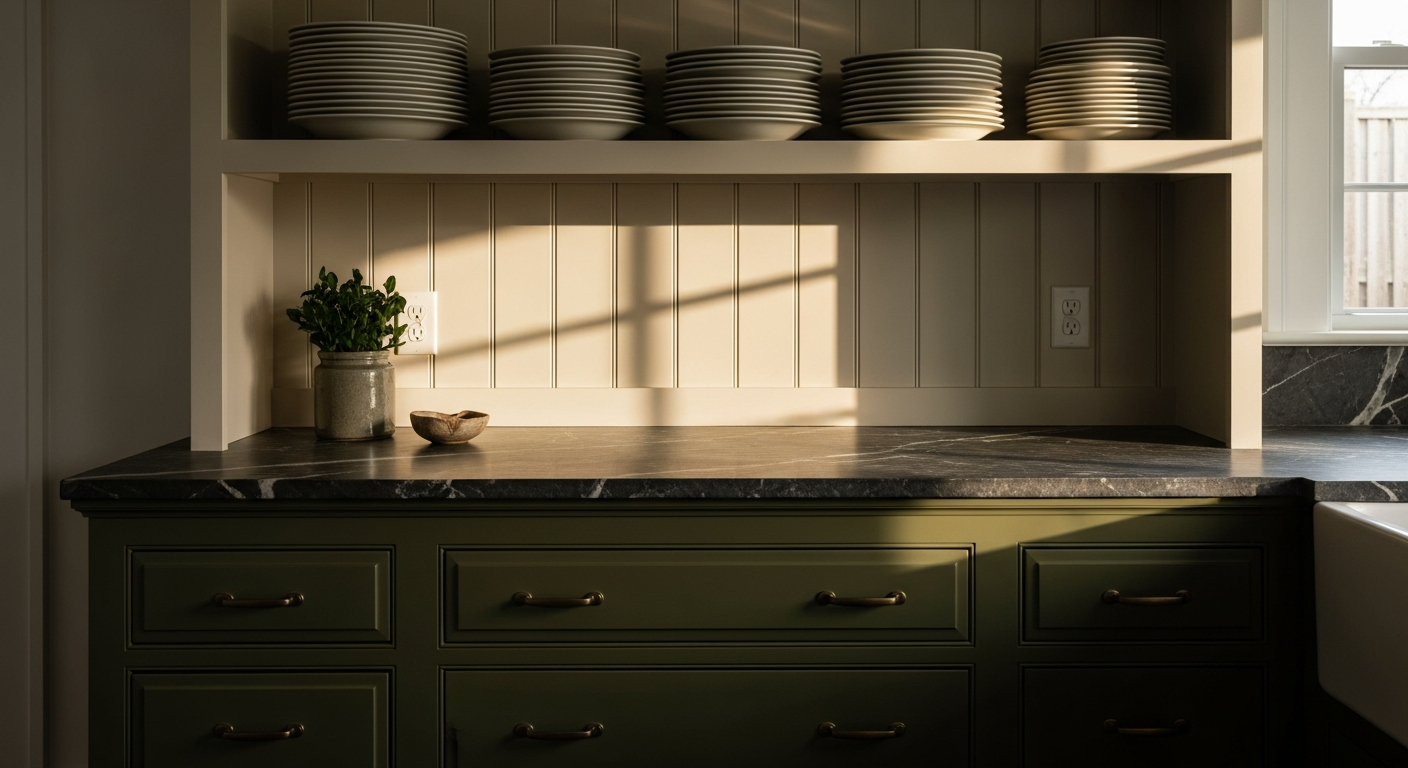
Ergonomics and the Illusion of Cleanability
Beyond sheer atmosphere, paint in the kitchen operational center must address the chaotic reality of culinary work. The visual relationship between color and cleanliness is profound. Flat, stark whites amplify every splatter of olive oil, every smudge of flour, and every fingerprint. Dark colors absorb light to the point of obscuring the critical visual clarity needed for safe knife work.
Seashell (OC-120) strikes a masterful balance in the high-traffic prep zone. Its nuanced depth forgives minor daily wear while maintaining the overarching illusion of a highly sanitized, orderly environment. When applied in a durable satin or semi-gloss finish to Shaker cabinet profiles, the structural recesses of the doors capture shadows that emphasize the wood's geometry. The ambient light grazes the flat rails, highlighting the warmth of the peach undertone and creating a rich, textural backdrop against the utilitarian coldness of professional-grade appliances.
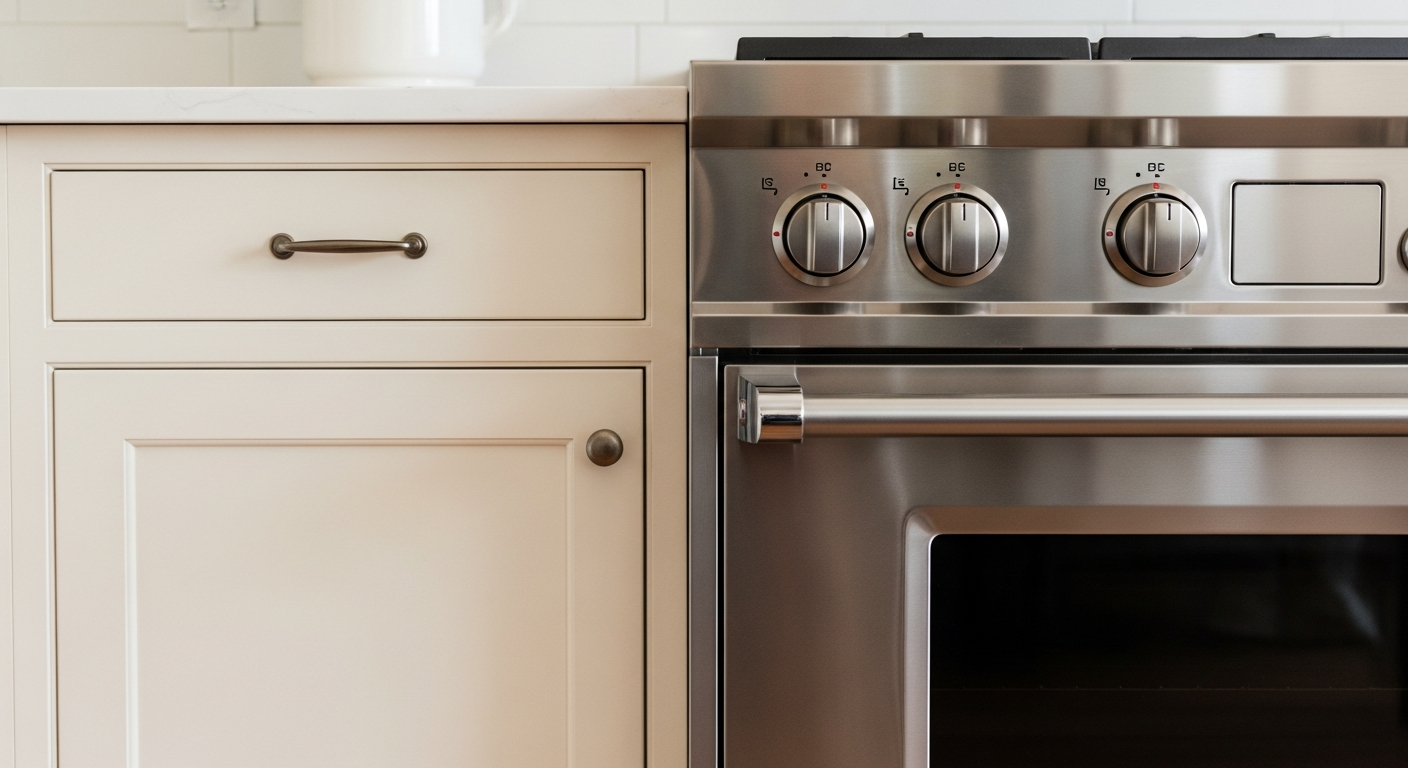
The Final Calculation
Selecting a paint color for a highly operational space is not an exercise in flipping through fan decks; it is an exercise in environmental psychology. Benjamin Moore Seashell (OC-120) succeeds in Atlanta because it respects the region's specific atmospheric weight. It utilizes the heavy, diffused light rather than fighting it. By pairing this dynamic off-white with razor-sharp trims and earth-bound base colors, the kitchen ceases to be a mere room for assembling meals. It transforms into a beautifully calibrated machine, deeply connected to its environment, where light, shadow, and architectural mass exist in perfect, functional harmony.
 After
After Before
Visualize Your Space with Color Studio AI
Planning a project? Skip the paint chip guesswork. Use our Color Studio AI to instantly visualize these paint colors on your own walls, or take advantage of our aligned contractor pricing matching current Sherwin-Williams retail promotions.
Book Your Upcoming Paint Project
Craftsman Painter is now scheduling premium transformations. Secure your spot and elevate your property value.
Get an EstimateHelp Others Find Professional Color Insights
Share this story directly to your networks or copy the link to share with friends.