
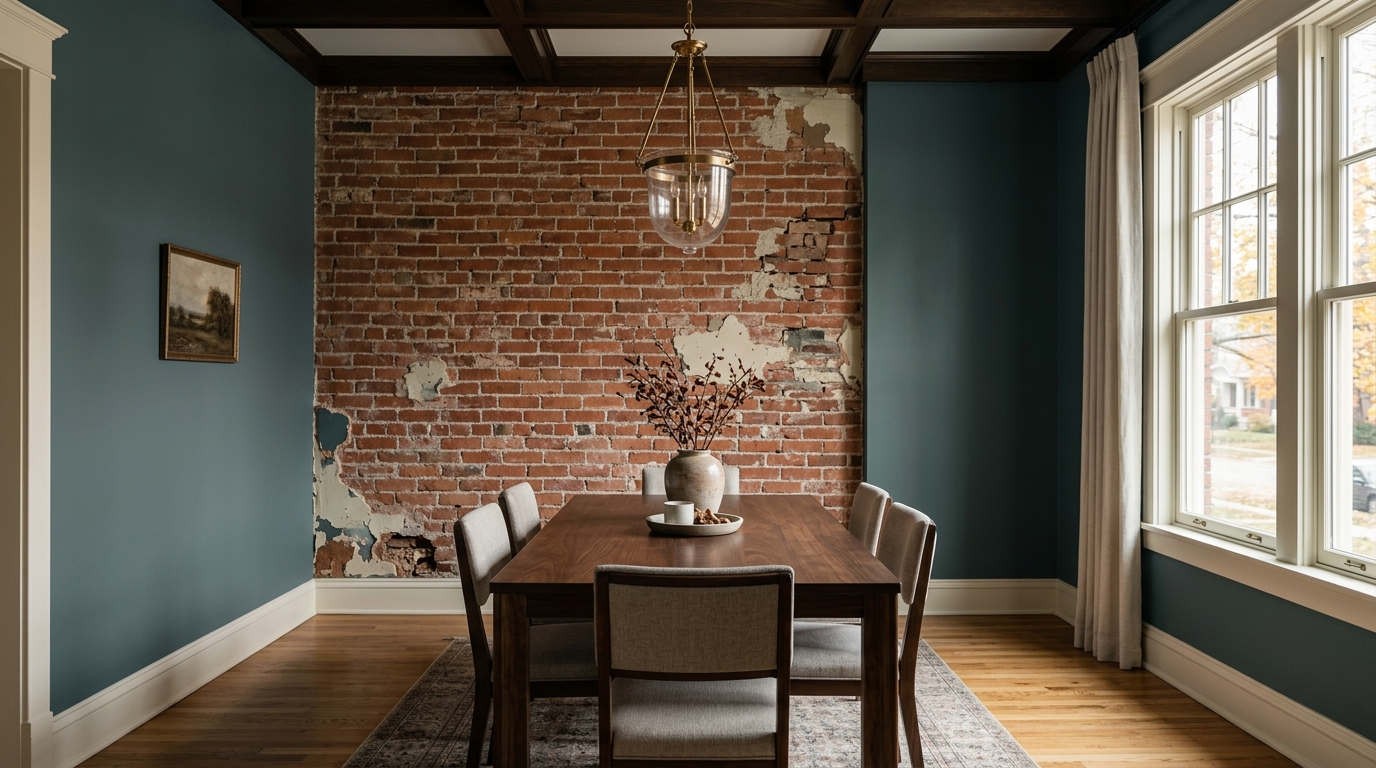
Paint is failing. It blisters, flakes, and peels away in jagged ribbons. The culprit is not a defective paint brand, nor is it the age of the house. The failure is entirely rooted in a fundamental misunderstanding of masonry physics, the mechanics of Midwest moisture, and the volatile chemistry of the substrate itself.
Achieving a flawless, permanent finish on interior brick requires respecting the science of the materials. Slapping a thick coat of acrylic latex over century-old masonry is a guarantee of structural failure. To craft a dining room wall that withstands the test of time, the substrate must be analyzed, neutralized, and properly conditioned.
The Physics of Efflorescence in the Midwest Climate
Indianapolis sits in a climate defined by extremes. Deep winter freezes give way to humid, saturated summers. This aggressive freeze-thaw cycle turns porous historic brick and lime-based mortar into a microscopic sponge. Capillary action draws moisture from the earth or compromised exterior tuckpointing directly through the masonry.

Work Directly with Torlando Hakes
Skip the color choice stress. Work directly with me as your personal Color Designer to select the perfect architectural palette for your home, and get a Complementary Color Consultation when you purchase paint through us.
As this moisture travels through the brick toward the warm, conditioned air of the dining room, it dissolves alkaline salts naturally present in the clay and mortar. When the water reaches the surface and evaporates, it leaves behind a crystalline, chalky white residue. This is efflorescence.
Painting over active efflorescence is an exercise in futility. The expanding salt crystals possess immense hydrostatic pressure—more than enough physical force to sever the mechanical bond between the paint film and the brick substrate. The coating is pushed off from the inside out. Before a single drop of paint enters the dining room, the efflorescence must be physically and chemically eradicated.
Substrate Analysis and the Saponification Trap
Beyond the physical pressure of expanding salt, historic brick presents a severe chemical hazard to modern architectural coatings: high alkalinity.
Newer Portland cement and historic lime mortars carry incredibly high pH levels. When an unprepared, highly alkaline masonry surface is coated with a standard oil-based or alkyd paint, a destructive chemical reaction called saponification occurs. The alkaline salts attack the fatty acids in the paint binder, literally turning the paint into a soft, gooey soap. The paint film loses all structural integrity, melting and sliding off the wall.
Even modern acrylic latex paints, which are more resistant to alkalinity, will eventually blister if the underlying pH remains too high and moisture continues to push through the wall. Master craftsmanship demands testing. A simple pH pencil or litmus paper applied to a distilled water-wetted section of the brick will reveal the truth. A pH reading above 9.0 means the dining room wall is a hostile environment for any standard coating.
The Mechanics of pH Neutralization
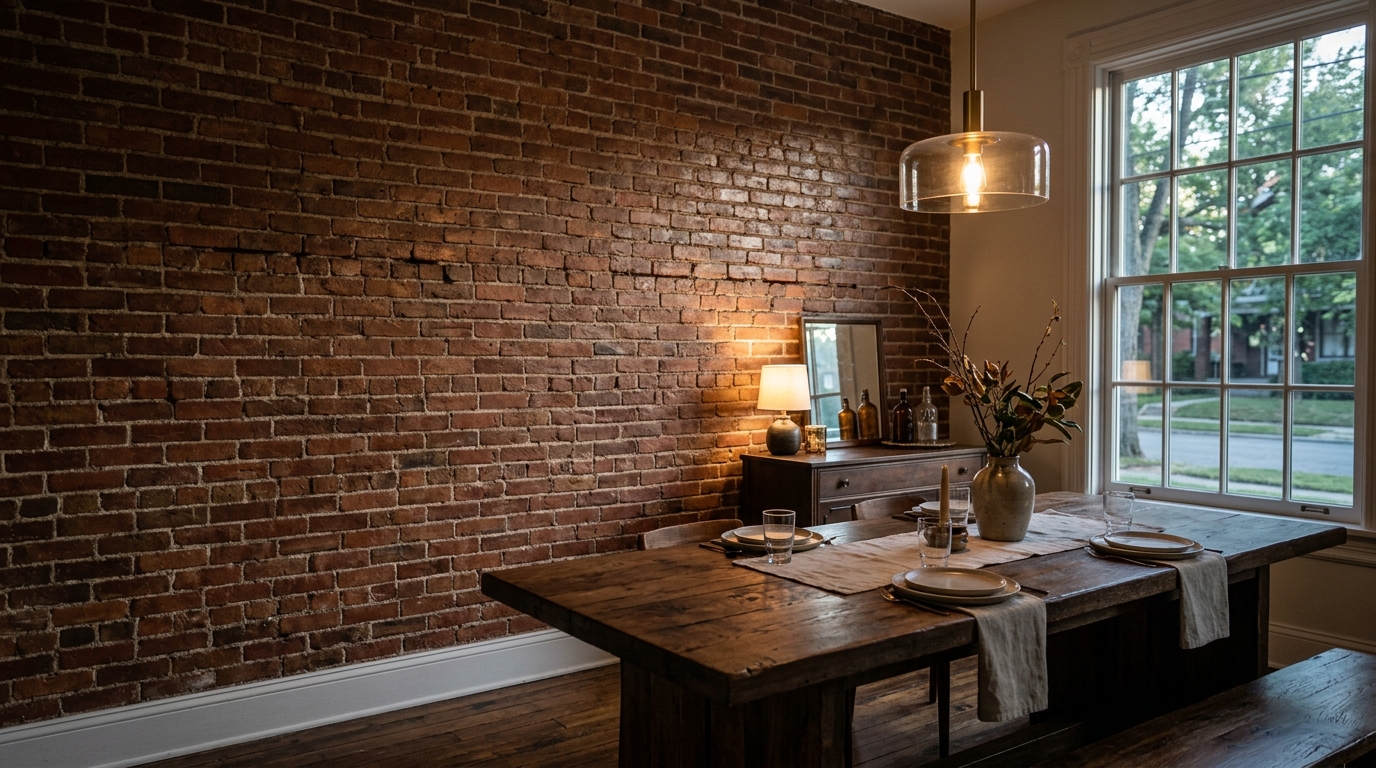
Remediation begins with mechanical removal. Stiff bristle brushes—never wire, which can deposit rust-prone iron fragments into the porous clay—are used to sweep away the loose efflorescent salts. Water must be strictly avoided during this phase; washing the wall simply dissolves the salts and drives them deeper back into the substrate, restarting the cycle.
Once the surface is mechanically clean, the chemistry must be balanced. Neutralizing the alkalinity requires applying an acidic masonry conditioner. However, amateur hour often involves dumping harsh muriatic acid onto the brick. This is a catastrophic error for historic Indianapolis homes. Muriatic acid aggressively eats away the soft, century-old lime mortar, destroying the structural integrity of the wall itself.
Proper craftsmanship dictates the use of a buffered phosphoric acid solution or a dedicated, professional-grade masonry neutralizer. These compounds react with the alkaline salts, transforming them into insoluble compounds that can no longer migrate or attack the paint film. After the chemical reaction runs its course, the surface pH drops into a safe, neutral zone.
Engineering a Breathable, Permanent Finish
With the efflorescence neutralized and the pH stabilized, the dining room wall is finally ready to accept a coating. However, sealing the brick with an impermeable vapor barrier is the final, fatal mistake.
Masonry must breathe. Moisture will always exist in a Midwest home, and it needs a pathway to escape. Sealing the brick with heavy elastomeric paints traps moisture behind the film, guaranteeing that the plaster, wood framing, and mortar joints will eventually rot from the inside out.
The superior, architecturally sound choice is a silicate mineral paint. Unlike latex, which sits on top of the brick like a plastic wrapper, potassium silicate paint penetrates the pores of the masonry. It undergoes a chemical process called silicification, permanently fusing with the brick and mortar. The result is a highly durable, completely breathable finish that allows water vapor to pass through without degrading the coating.
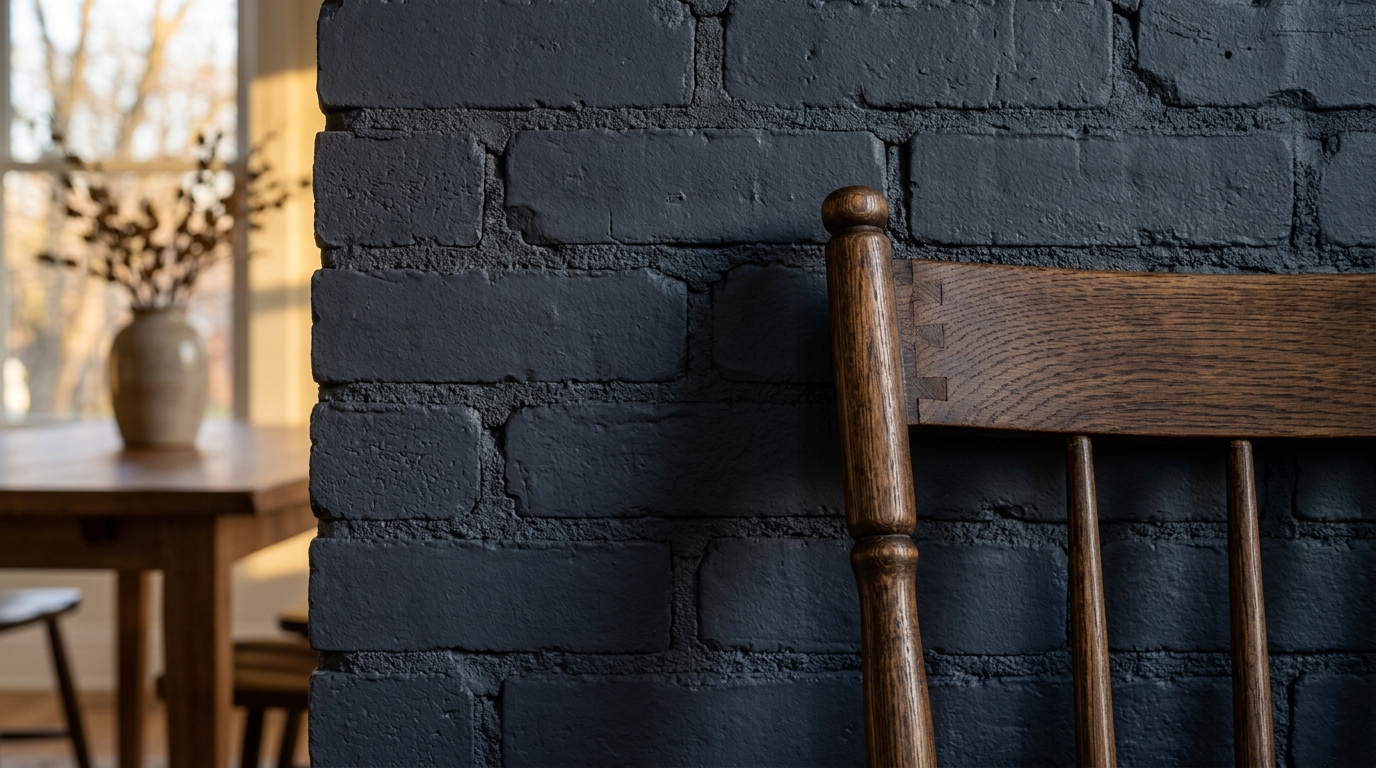
Alternatively, a high-quality, alkali-resistant acrylic masonry primer followed by a 100% acrylic breathable topcoat provides an exceptionally durable finish. The key is permeability.
A dining room should be a sanctuary of nourishment and connection, anchored by walls that exude strength and history. Craftsmanship is not simply rolling color onto a surface. It is an intimate understanding of physics, chemistry, and the environment. By respecting the substrate and executing meticulous preparation, a painted historic brick wall transforms from a ticking maintenance time bomb into a permanent, exquisite architectural triumph.
 After
After Before
Visualize Your Space with Color Studio AI
Planning a project? Skip the paint chip guesswork. Use our Color Studio AI to instantly visualize these paint colors on your own walls, or take advantage of our aligned contractor pricing matching current Sherwin-Williams retail promotions.
Book Your Upcoming Paint Project
Craftsman Painter is now scheduling premium transformations. Secure your spot and elevate your property value.
Get an EstimateHelp Others Find Professional Color Insights
Share this story directly to your networks or copy the link to share with friends.