
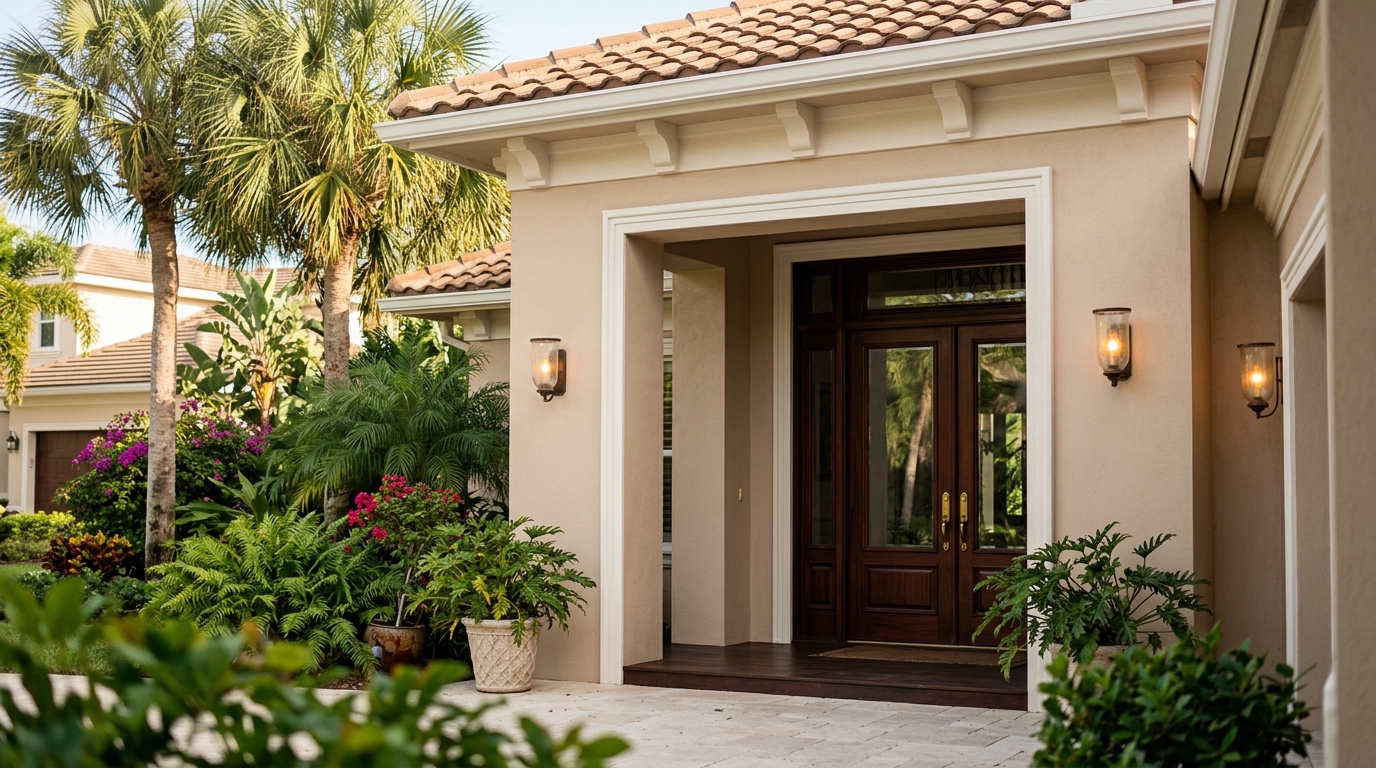

Stepping out of the brutal Florida midday glare and into a home should feel like a sudden, deep exhale. Achieving that physical sensation relies entirely on the precise manipulation of light absorption and visual weight.
For this specific transition, one exact formulation dominates the conversation among those who understand the physics of color: Sherwin-Williams Macadamia (SW 6142).
The Physics of Light in Central Florida
Light in Central Florida is uniquely heavy. It carries moisture, bouncing intensely off limestone driveways and filtering through massive canopies of Spanish moss. When that light hits an entryway wall, it exposes every flaw in a color’s chemical makeup. Flimsy, high-reflectance whites turn blinding and clinical, while dark, heavy colors can suddenly feel like an oppressive cave, trapping the heat rather than escaping it.

Work Directly with Torlando Hakes
Skip the color choice stress. Work directly with me as your personal Color Designer to select the perfect architectural palette for your home, and get a Complementary Color Consultation when you purchase paint through us.
Sherwin-Williams Macadamia sits precisely at the fulcrum of this environmental dilemma. With a Light Reflectance Value (LRV) of 49, it rests dead center on the light-to-dark spectrum.
This specific LRV means Macadamia absorbs almost exactly half the light that strikes it. In an entryway bathed in the intense, directional sunlight of an Ocala morning, the walls hold their ground. The color refuses to wash out or bleach into nothingness. Instead, it creates an optical step-down—a visual cooling off period that allows the iris to dilate comfortably as one steps across the threshold.
Undertones That Speak to the Earth
A common, disastrous mistake made in Florida entryways is the selection of beiges with pink or fleshy undertones. When the abundant green light reflecting off Ocala’s dense foliage crashes into a pink-leaning wall, the resulting visual dissonance is immediate and deeply unsettling. The space feels agitated, sickly, and unresolved.
Macadamia is a masterclass in environmental harmony because its foundational undertones are distinctly khaki and subtle green.
It is an earthy, grounded hue that acknowledges the landscape outside the front door rather than fighting it. When the late afternoon sun slices through the sidelights of an entryway portal, the khaki undertones in Macadamia activate, radiating a profound, organic warmth. It feels structural. It feels like aged sandstone or a sun-baked canvas. The visual relationship between the interior walls and the exterior equestrian environment becomes seamless, blurring the line between architecture and earth.
Crafting the Visual Relationship with Trim
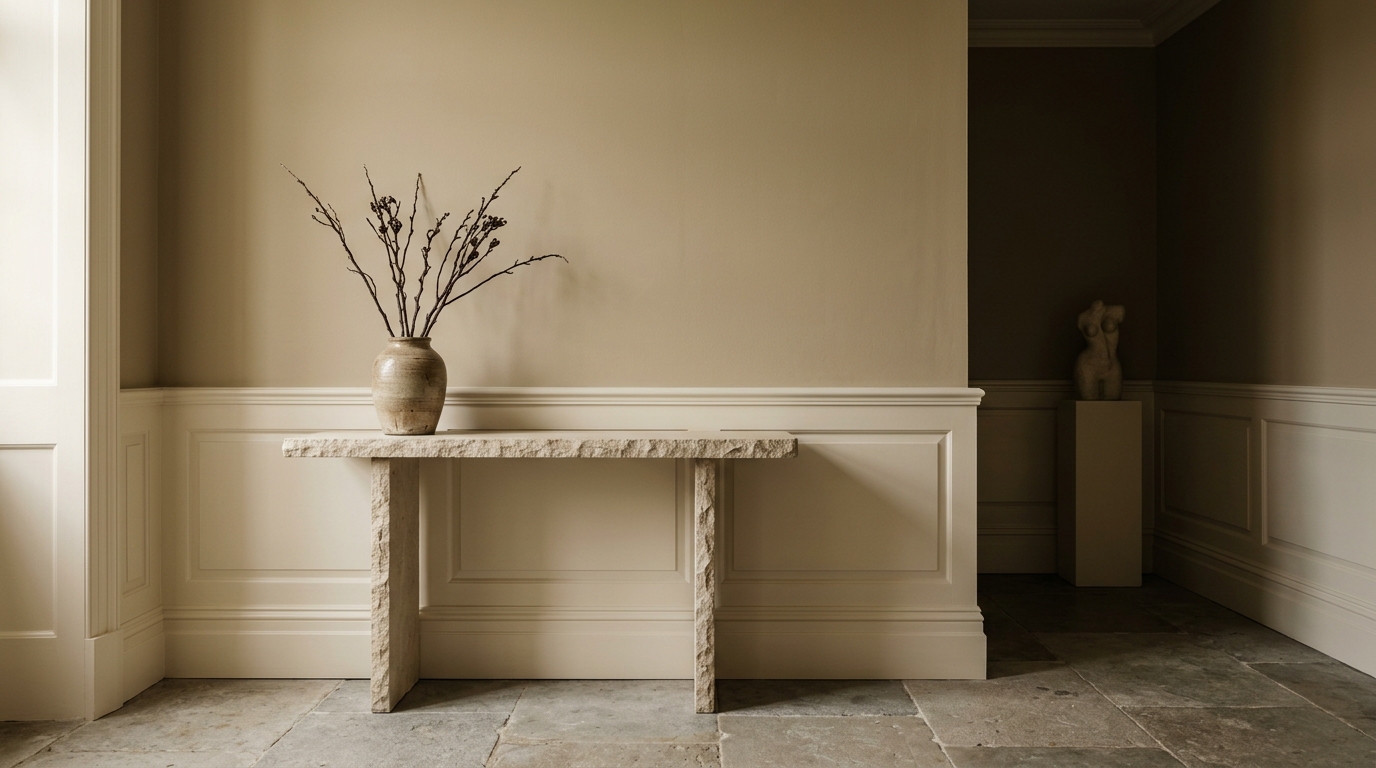
A wall color does not exist in a vacuum; it is entirely dependent on what borders it. Trim provides the skeletal structure of a room, and the transition from wall to baseboard dictates the sophistication of the space.
To pair Macadamia with a stark, untinted white trim is to commit a grave design error. Harsh whites create a jagged, high-contrast visual fracture that destroys the calming envelope of the threshold. Instead, the architectural details require an equally nuanced, creamy offset.
Sherwin-Williams Alabaster (SW 7008) is the definitive coordinating complement for the trim, crown, and wainscoting. With an LRV of 82, Alabaster provides a soft, luminous contrast that highlights the architectural geometry without shouting at the eye. The visual relationship between the khaki-beige of the Macadamia walls and the creamy warmth of the Alabaster trim is incredibly rich. It feels expensive, intentional, and deeply rooted in classical design principles.
For the front door itself—the heavy, physical barrier to the elements—grounding the portal is essential. A deep, anchoring shade like Sherwin-Williams Andiron (SW 6120), a rich, complex olive-brown, provides the necessary visual gravity. The eye registers the dark weight of the door, moves to the soft frame of the Alabaster trim, and then rests comfortably on the expansive warmth of the Macadamia walls.
The Architecture of Sanctuary
Color in the threshold is never just paint. It is an active participant in how a building breathes and how its inhabitants decompress. Mastering this space requires an absolute rejection of arbitrary trends in favor of a rigorous understanding of how light, undertone, and architecture intersect.
By harnessing the exact chromatic coordinates of Sherwin-Williams Macadamia, an entryway ceases to be a mere hallway. It transforms into a beautifully calibrated instrument—a space that silently and perfectly manages the heavy Florida light, grounding the architecture and welcoming the inhabitant into a space of total, undeniable calm.
 After
After Before
Visualize Your Space with Color Studio AI
Planning a project? Skip the paint chip guesswork. Use our Color Studio AI to instantly visualize these paint colors on your own walls, or take advantage of our aligned contractor pricing matching current Sherwin-Williams retail promotions.
Book Your Upcoming Paint Project
Craftsman Painter is now scheduling premium transformations. Secure your spot and elevate your property value.
Get an EstimateHelp Others Find Professional Color Insights
Share this story directly to your networks or copy the link to share with friends.