The premature failure of residential coatings is rarely a defect of the paint itself. Rather, it is typically a failure to manage the relationship between the regional climate, moisture transmission, and the specific architectural substrate. Understanding the physical mechanics of paint adhesion is the only reliable method for executing a long-lasting exterior paint job in this environment.
The Mechanics of Northeast Ohio Freeze-Thaw Cycles
Wood is an inherently hygroscopic material. It naturally absorbs and releases ambient moisture in response to atmospheric humidity and precipitation. In Akron, where winter temperatures frequently oscillate above and below the freezing mark, this absorbed moisture expands and contracts violently within the cellular structure of exterior wood siding.
Book Your Upcoming Paint Project
Craftsman Painter is now scheduling premium transformations. Secure your spot and elevate your property value.
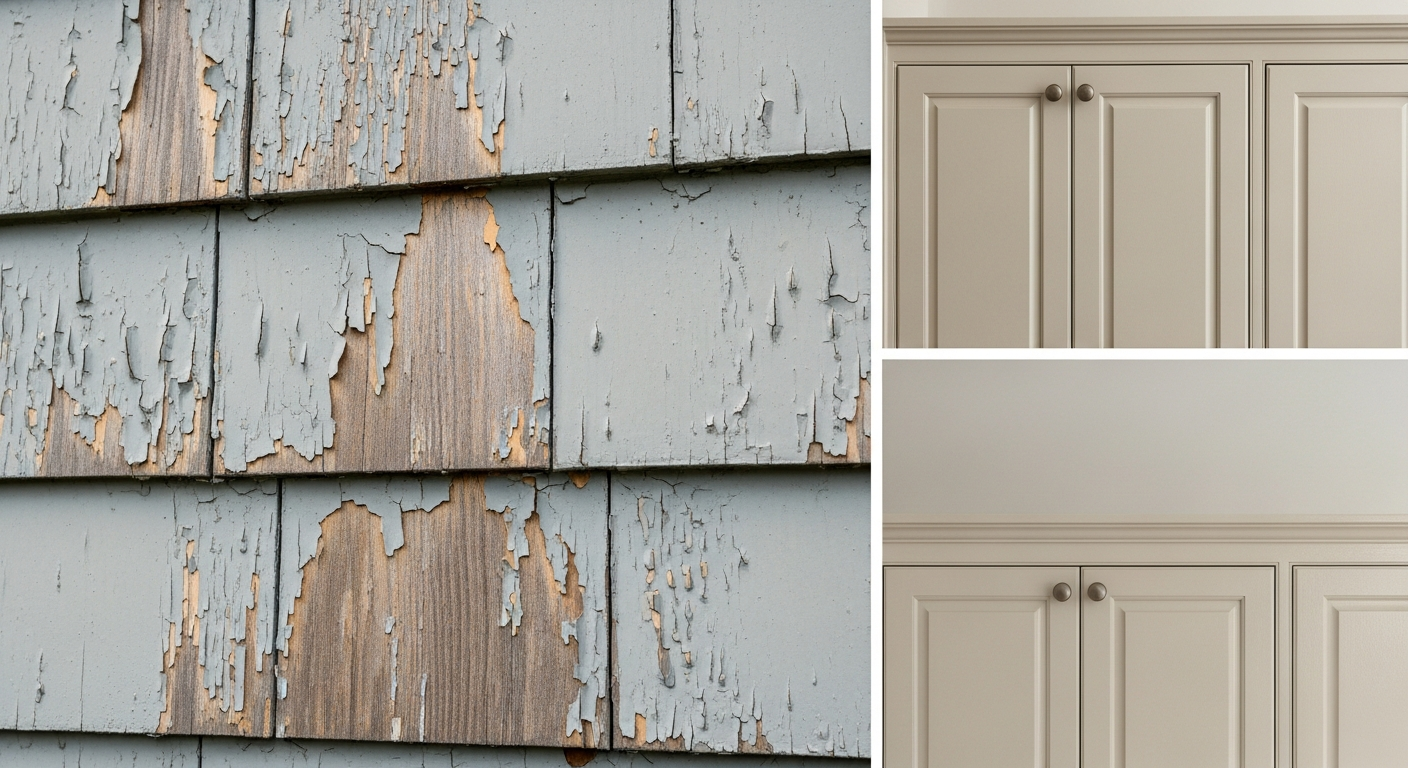
Get an EstimateWhen a rigid, low-quality, or heavily layered coating is subjected to this constant dimensional movement, it fractures. Micro-cracking allows liquid water to penetrate directly behind the paint film. Once trapped, the water freezes and expands by roughly nine percent, which systematically destroys the mechanical bond between the primer and the wood surface.
Preventing this failure requires removing heavily built-up, brittle paint layers and replacing them with highly flexible coating technologies designed to move with the substrate.
Vapor Permeability and Historic Wood Siding
Many of Akron’s most structurally significant properties, particularly the historic homes found in Highland Square and the Merriman Valley, were built before the advent of modern vapor barriers. In these older homes, interior moisture generated by heating systems, showers, and cooking migrates outward through the wall cavities and exits directly through the exterior siding.
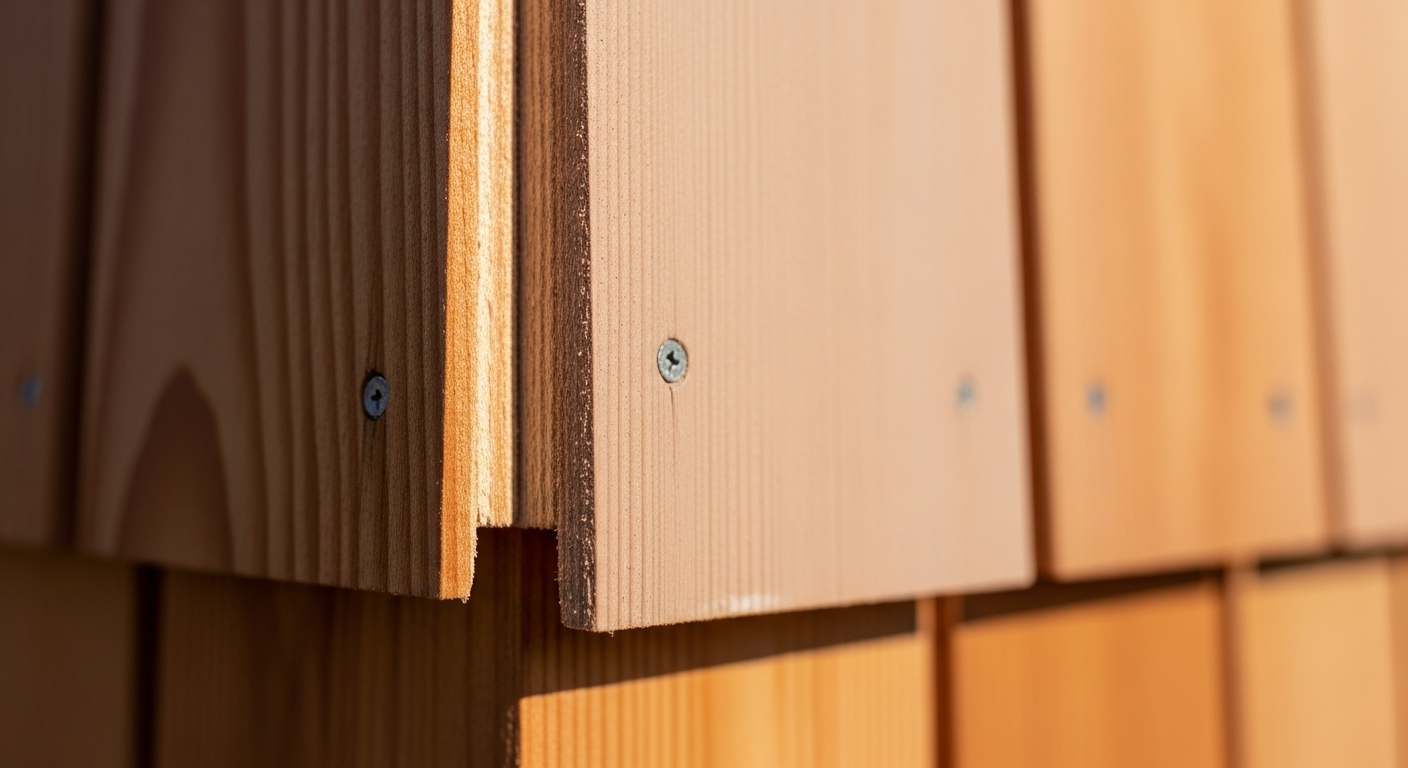
If the exterior paint film acts as an impermeable plastic sheet, this escaping moisture condenses immediately behind the coating. This phenomenon generates hydrostatic pressure, which physically pushes the paint off the substrate, resulting in large-scale blistering and peeling.
Managing vapor transmission requires a coating system engineered with a high perm rating. The chosen primers and topcoats must allow microscopic moisture vapor to safely pass out of the house, while still maintaining absolute liquid water resistance against rain and snow on the exterior.
Engineered Coating Architecture for the Local Climate
Preventing coating failure ultimately dictates a highly specific approach to surface preparation and product selection. Bare wood must be properly conditioned to a moisture content below fifteen percent before any application begins. Furthermore, all compromised, oxidized, or failing layers must be mechanically removed to establish a sound surface profile for the new system.
The primer serves as the critical anchor. For older cedar, redwood, and pine substrates common in Northeast Ohio, a slow-drying, high-adhesion penetrating primer is required to bind degraded wood fibers and block tannin bleed.
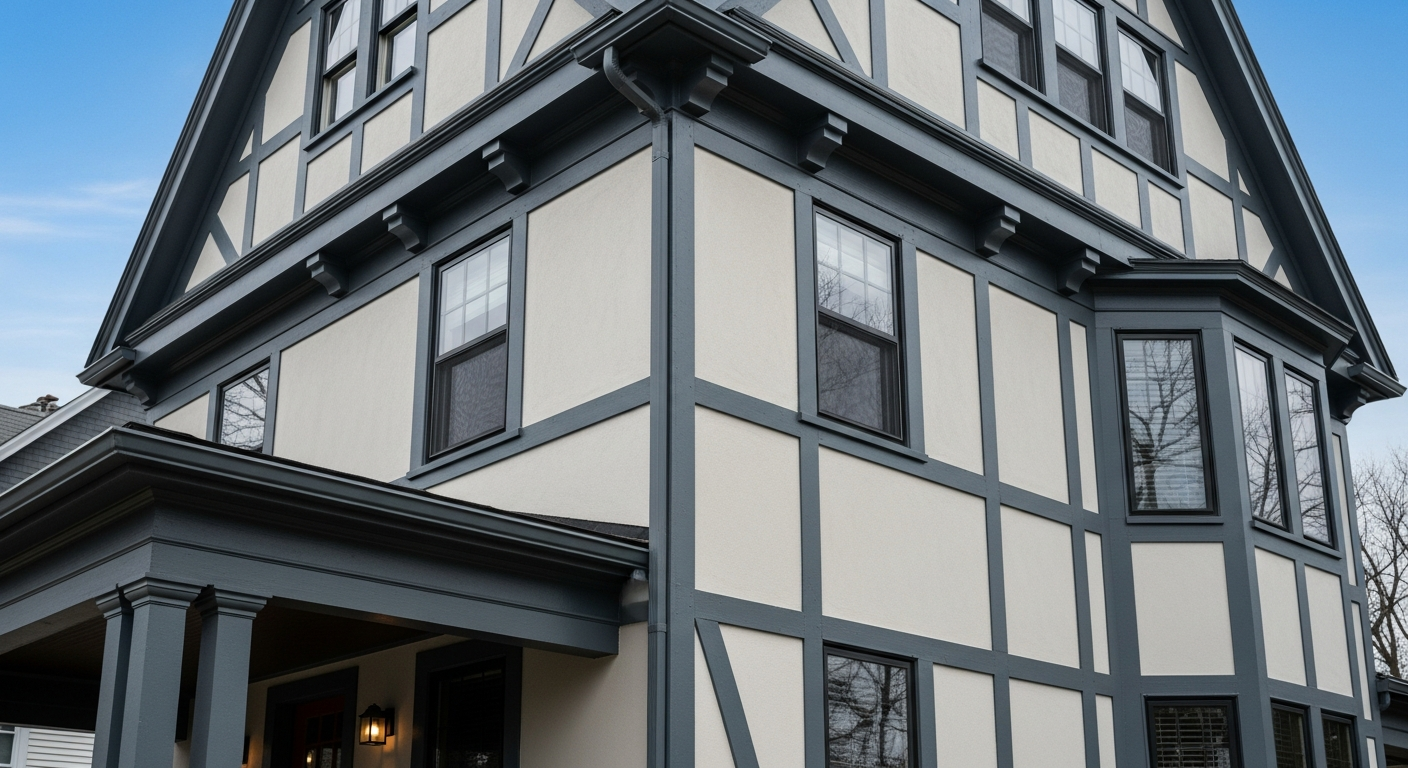
The exterior topcoat must heavily balance flexibility with UV durability. Premium 100% acrylic resin technologies are ideal for the Akron climate. These modern acrylics remain elastomeric even at lower temperatures, stretching and recovering as the underlying wood shifts.
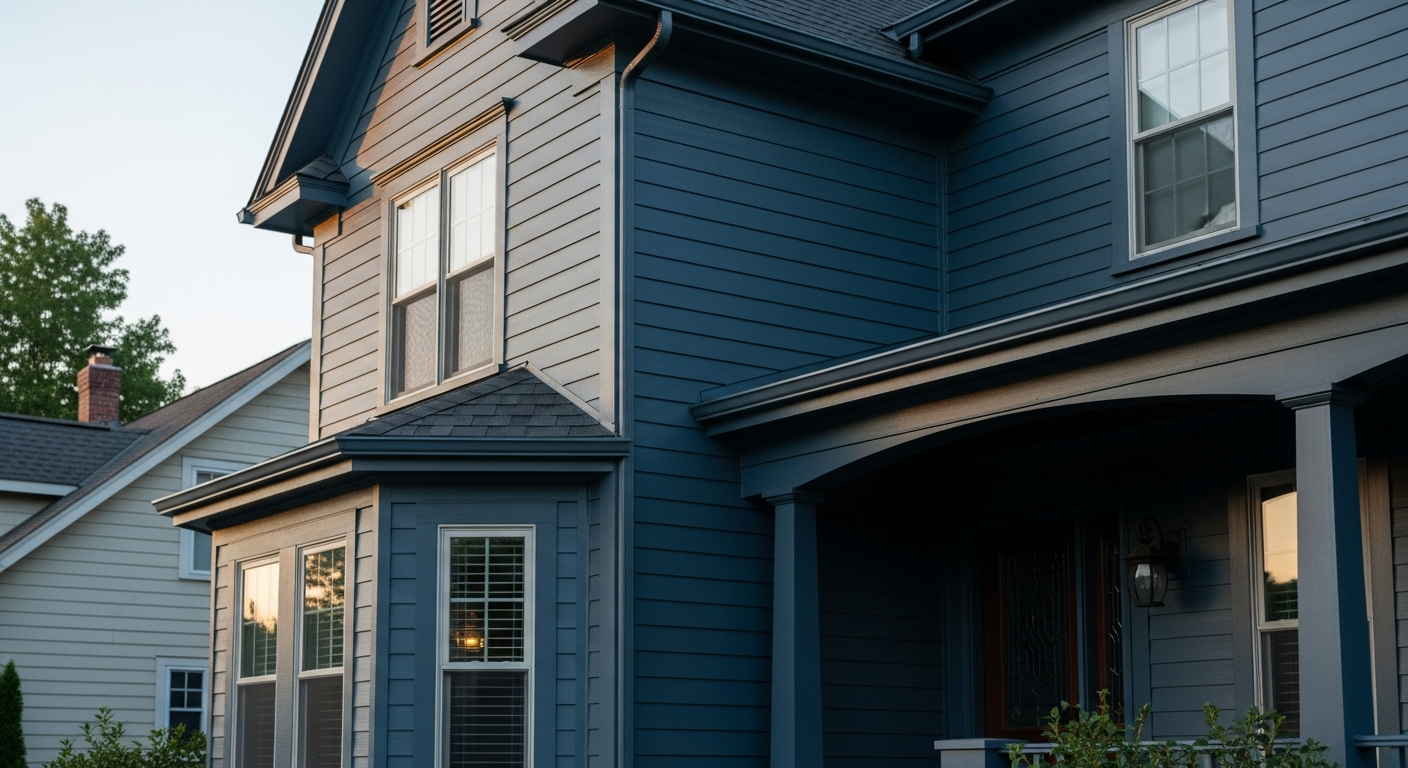
Selecting historically accurate, deep, earthy tones—such as rich slate grays or muted sage greens—further grounds the aesthetic of regional architecture. When those pigments are housed in a technically sound, UV-resistant acrylic base, color retention is maximized without compromising the structural integrity of the coating. Ultimately, exterior protection is a matter of building science. Proper coating specification protects the home, ensuring the architecture withstands the rigors of the Ohio climate for years to come.