


Failing to optimize this outdoor-indoor interface results in spoiled goods, bloated utility bills, and highly inefficient domestic labor loops. Treating the garden porch as an active operational node completely redefines the efficiency of a high-desert household.
The Thermal Receiving Dock for Peak-Summer Deliveries
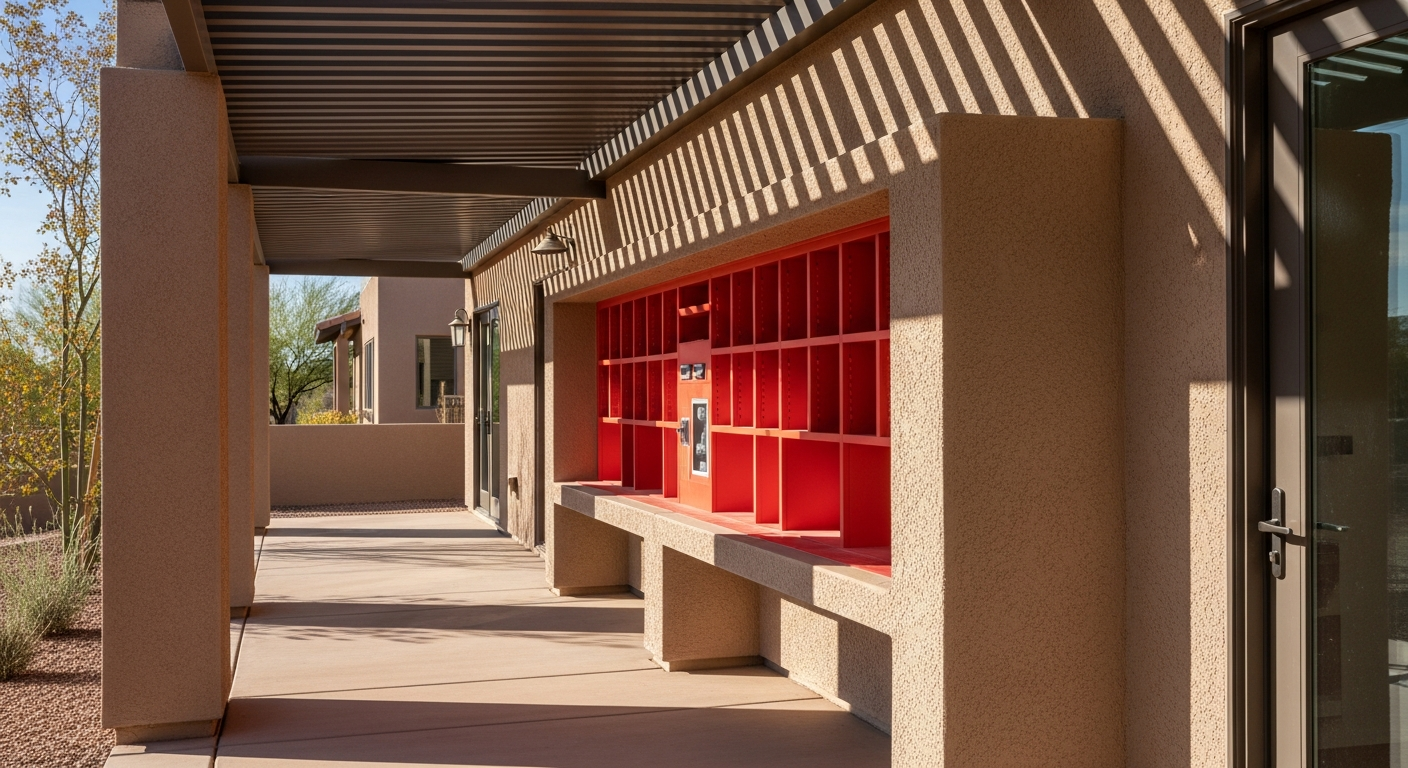
High summer in Phoenix dictates that ambient temperatures routinely exceed 110 degrees, creating a hostile environment for the final mile of the domestic supply chain. Unmanaged delivery drops result in spoiled grocery orders, melted pharmacy shipments, and degraded consumer goods. The garden porch must be engineered as an insulated, UV-shielded receiving dock.
Implementing a heavily shaded, secure storage module—whether a heavy-duty lockbox or an integrated masonry drop-zone—stabilizes the intake of household goods. By redirecting all deliveries into a dedicated, temperature-buffered quadrant of the porch, the household prevents continuous financial loss from ruined perishable deliveries and eliminates the need for emergency replacement runs.

Work Directly with Torlando Hakes
Skip the color choice stress. Work directly with me as your personal Color Designer to select the perfect architectural palette for your home, and get a Complementary Color Consultation when you purchase paint through us.
The Inverted Agricultural Supply Chain
Phoenix operates on an inverted growing season. The operational calendar dictates that October through April is the primary cultivation window for residential micro-agriculture. The garden porch serves as the staging ground and primary storage node for this seasonal supply chain.
Managing the inventory of organic compost, drip-line components, and citrus fertilizers requires spatial discipline. Dedicating specific volumetric zones on the porch for dry goods storage prevents the degradation of materials caused by severe sun exposure. Proper staging reduces redundant purchasing, tightens the exterior maintenance budget, and ensures landscaping assets are deployed precisely when the temperature drops.
Traffic Ergonomics and Haboob Decontamination
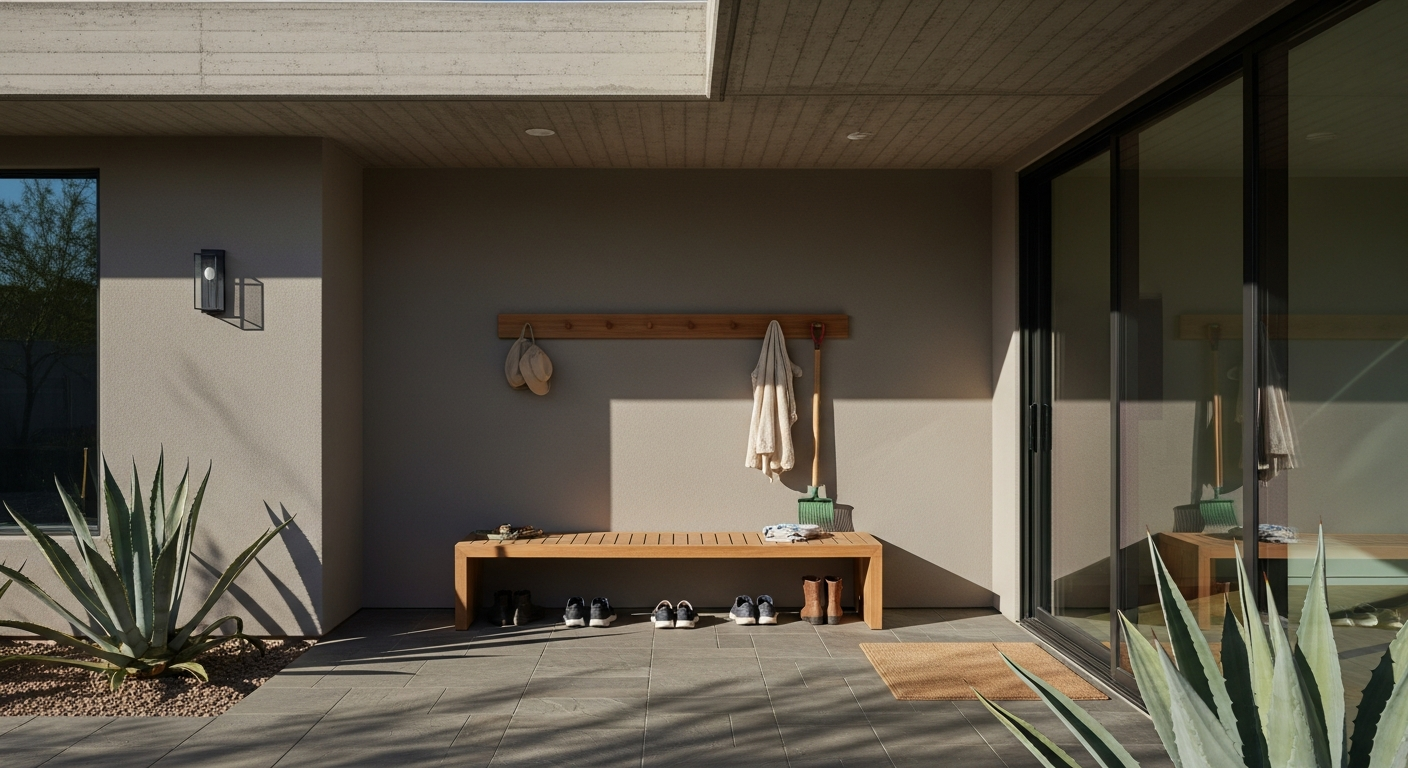
During the monsoon season, dust infiltration becomes a severe operational liability. High-velocity haboobs deposit particulate matter that wreaks havoc on interior HVAC filters and hard flooring. The garden porch acts as the primary decontamination zone and particulate barrier.
Establishing a hard stop for exterior footwear and landscaping tools directly on the porch drastically reduces the interior vacuuming and floor-maintenance chore schedule. Implementing a linear spatial flow—a removal zone, a closed storage bin, and a heavy-duty transition mat—creates an ergonomic sequence. This simple traffic redirection protects expensive interior mechanical systems from premature failure and reclaims hours of weekly cleaning labor.
Auditing the Irrigation Maintenance Budget
Water is the primary recurring expense in the desert domestic system. The garden porch frequently houses the manifold or control nodes for the exterior irrigation grid. Treating this area as a strictly managed utility sector is essential for household financial planning.
Routine weekly audits of the porch's water access points are required. Inspecting poly-tubing, hose bibs, and emitter heads for UV degradation prevents catastrophic, undetected water loss. Categorizing these routine replacements in the household financial ledger under seasonal capital expenditures ensures the operational budget accurately reflects the wear and tear of the desert environment.
Optimizing the Morning Staging Protocol
The safe operational window for exterior labor in a Phoenix summer closes by 9:00 AM. Therefore, the porch must be optimized for the rapid deployment of household tasks before the heat index peaks. Kinetic efficiency is the ultimate goal.
Stage watering cans, pruning shears, and yard waste receptacles in immediate, unobstructed proximity to the primary access door. This eliminates unnecessary steps and searching, allowing the morning exterior chore circuit to be executed rapidly. When the physical tools are perfectly aligned with the behavioral pattern of the household, daily maintenance becomes a seamless operational loop rather than an exhausting, heat-soaked chore.
 After
After Before
Visualize Your Space with Color Studio AI
Planning a project? Skip the paint chip guesswork. Use our Color Studio AI to instantly visualize these paint colors on your own walls, or take advantage of our aligned contractor pricing matching current Sherwin-Williams retail promotions.
Book Your Upcoming Paint Project
Craftsman Painter is now scheduling premium transformations. Secure your spot and elevate your property value.
Get an EstimateHelp Others Find Professional Color Insights
Share this story directly to your networks or copy the link to share with friends.