
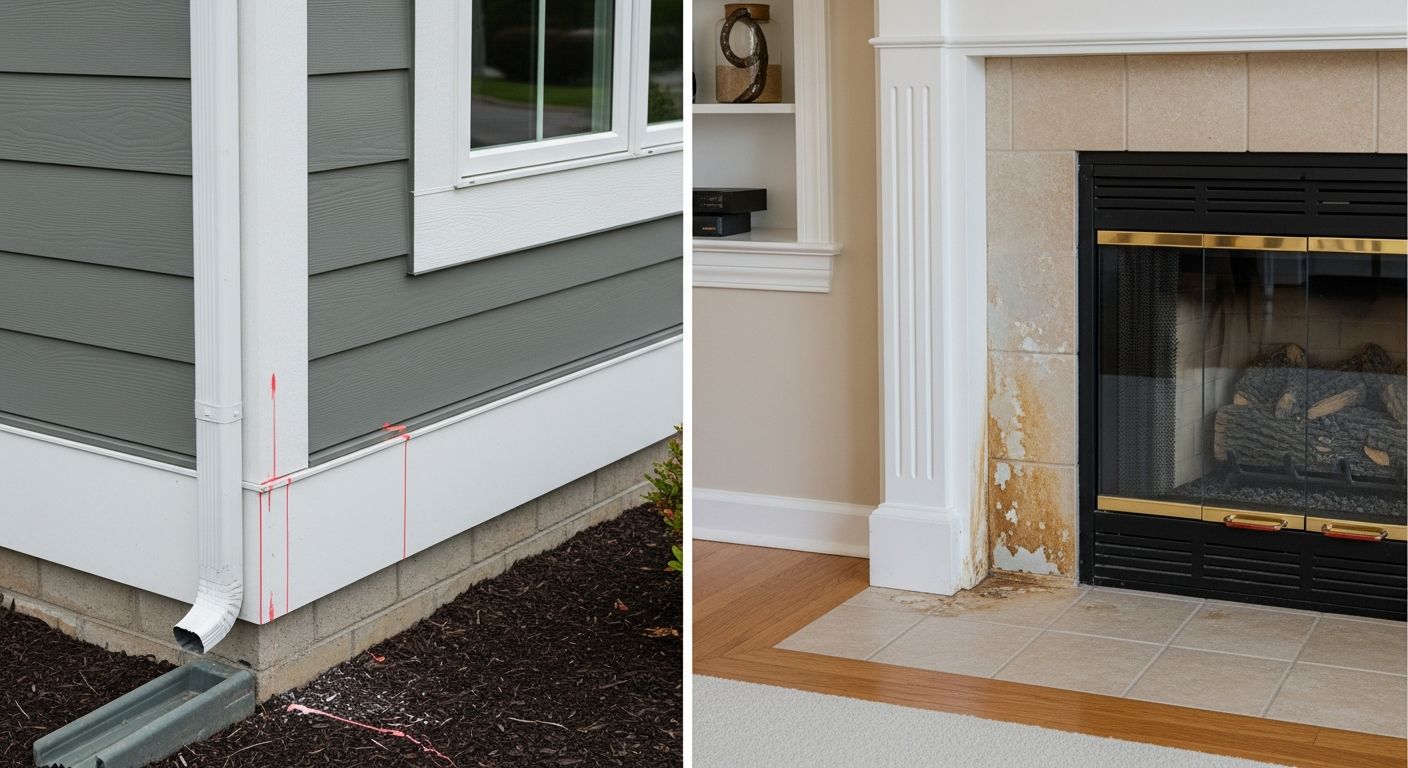

The immediate reaction is to grab a scraper and a fresh can of interior paint. That is a critical error. The failure manifesting on the interior living room hearth almost always originates on the exterior building envelope. In the specific microclimates of coastal San Diego, from the salt-heavy air of Point Loma to the dense morning marine layers of La Jolla, the destruction of the interior hearth is directly tied to the suffocating physics of failing elastomeric paint on exterior stucco.
The Physics of Vapor Drive and Substrate Failure
Masonry is fundamentally a sponge. Stucco, concrete block, and brick are highly porous substrates that breathe, absorb, and release moisture. In San Diego, the persistent coastal marine layer introduces massive amounts of airborne moisture and hygroscopic marine salts to the exterior envelope of a home.
When an exterior chimney breast or stucco wall shares a structural mass with the interior living room hearth, moisture dynamics dictate the lifespan of the interior finish. Vapor drive—the physical law where moisture moves from areas of high pressure and humidity to areas of lower pressure—pushes the damp coastal air deep into the masonry mass. It naturally seeks the warm, dry interior of the living room.

Work Directly with Torlando Hakes
Skip the color choice stress. Work directly with me as your personal Color Designer to select the perfect architectural palette for your home, and get a Complementary Color Consultation when you purchase paint through us.
When the exterior stucco is properly coated with a highly breathable, vapor-permeable finish, the masonry can manage this moisture exchange harmlessly. But when an incorrect coating is introduced to the exterior, catastrophic failure begins deep within the substrate.
The Elastomeric Death Trap
Decades ago, elastomeric paint was marketed as a miracle cure for cracked San Diego stucco. These coatings are essentially liquid rubber. They build to a massive film thickness, bridging gaps and creating a completely waterproof, impermeable membrane over the exterior substrate.
Applying an elastomeric coating over an exterior chimney mass is a structural death sentence for the interior hearth. Because elastomeric paint traps moisture inside the wall assembly, the normal drying potential of the exterior stucco is eliminated. The trapped moisture has only one escape route: inward, pushed by vapor drive directly through the masonry mass toward the living room hearth.
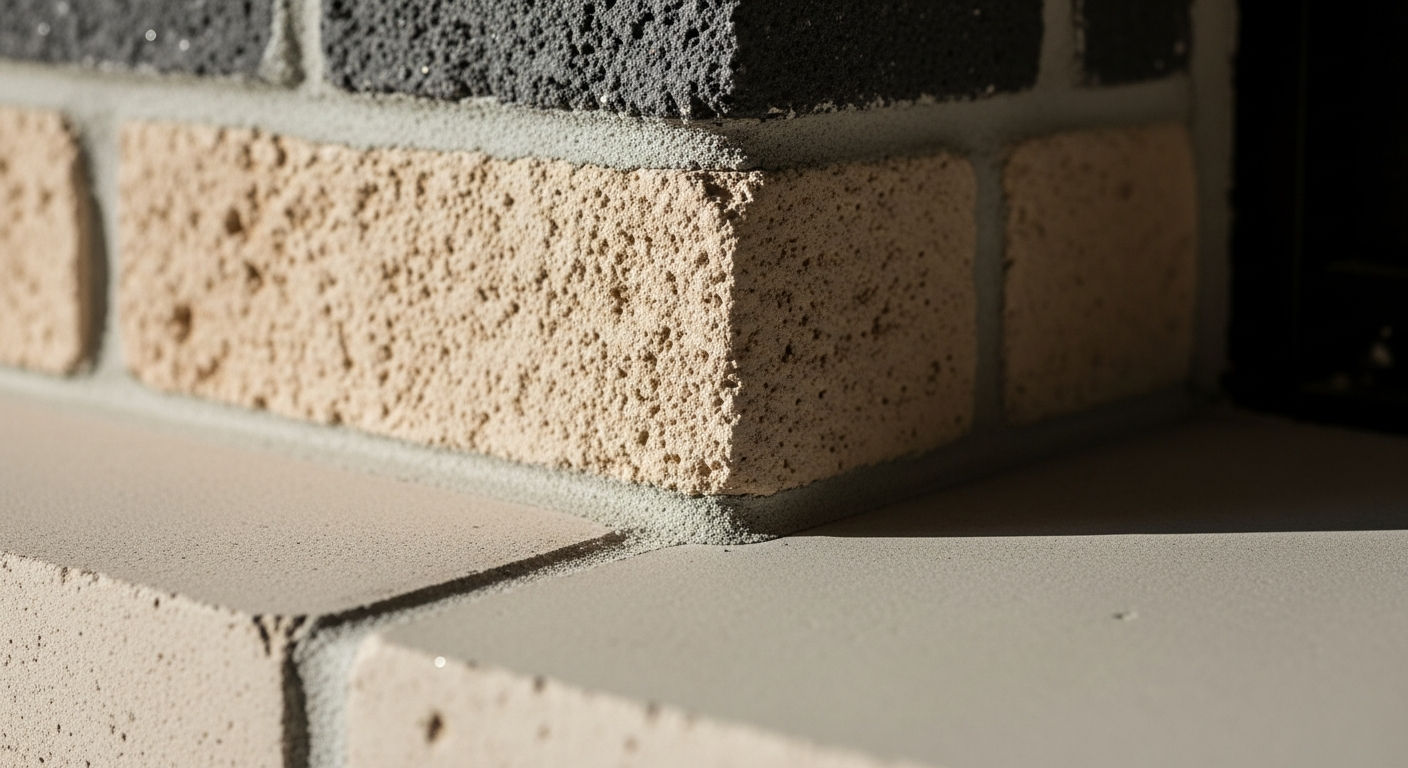
As this trapped water travels through the chimney breast, it dissolves naturally occurring alkali salts and calcium hydroxide present in the mortar and stucco. When this chemical soup reaches the interior face of the hearth, the water evaporates into the dry, conditioned air of the living room. The dissolved salts are left behind, crystallizing into a chalky white powder known as efflorescence.
Neutralizing Efflorescence at the Chemical Level
Efflorescence is not merely a cosmetic issue; it is a violent mechanical force. As the salt crystals grow and expand beneath the interior paint film, they generate immense hydrostatic pressure. This microscopic expansion literally blasts the coating off the substrate, resulting in the peeling, flaking, and bubbling often misdiagnosed as simple paint failure.
Scraping and repainting the hearth without addressing the chemistry guarantees a repeat failure within months. True craftsmanship requires treating the disease, not the symptom.
First, the suffocating exterior elastomeric membrane must be aggressively stripped or remediated to restore the vapor permeance of the building envelope. Once the masonry mass can breathe again, the interior efflorescence must be chemically neutralized.
Alkali salts cannot be washed away with water, as moisture simply drives them deeper into the porous substrate. The surface requires a highly specific chemical treatment—typically a diluted sulfamic acid or specialized masonry neutralizing wash. This chemical reaction breaks down the hardened salt deposits and rapidly lowers the severe alkalinity of the surface. Once neutralized, the substrate must be thoroughly rinsed and allowed to reach an equilibrium moisture content and a neutral pH level before any coating is considered.
Rebuilding the Anchor of the Home
With the salts dissolved and the masonry pH balanced, the physical reconstruction of the hearth’s surface begins. The integrity of the final finish relies entirely on the mechanical bond formed during this stage.
Spalled or damaged areas must be excavated back to raw, solid substrate. Patching requires specialized, high-adhesion cementitious compounds that mirror the density and porosity of the surrounding masonry. Once cured, the entire hearth must be sealed with a high-performance, alkali-resistant masonry primer. This specialized bonding layer penetrates the porous substrate, locking down microscopic dust and creating a monolithic, stabilized surface.
The Mastery of High-Performance Coatings
The final finish applied to the hearth must respect the laws of physics. Because the chimney mass spans the exterior and interior of the home, the coating must allow microscopic water vapor to transmit freely while providing a visually flawless surface.
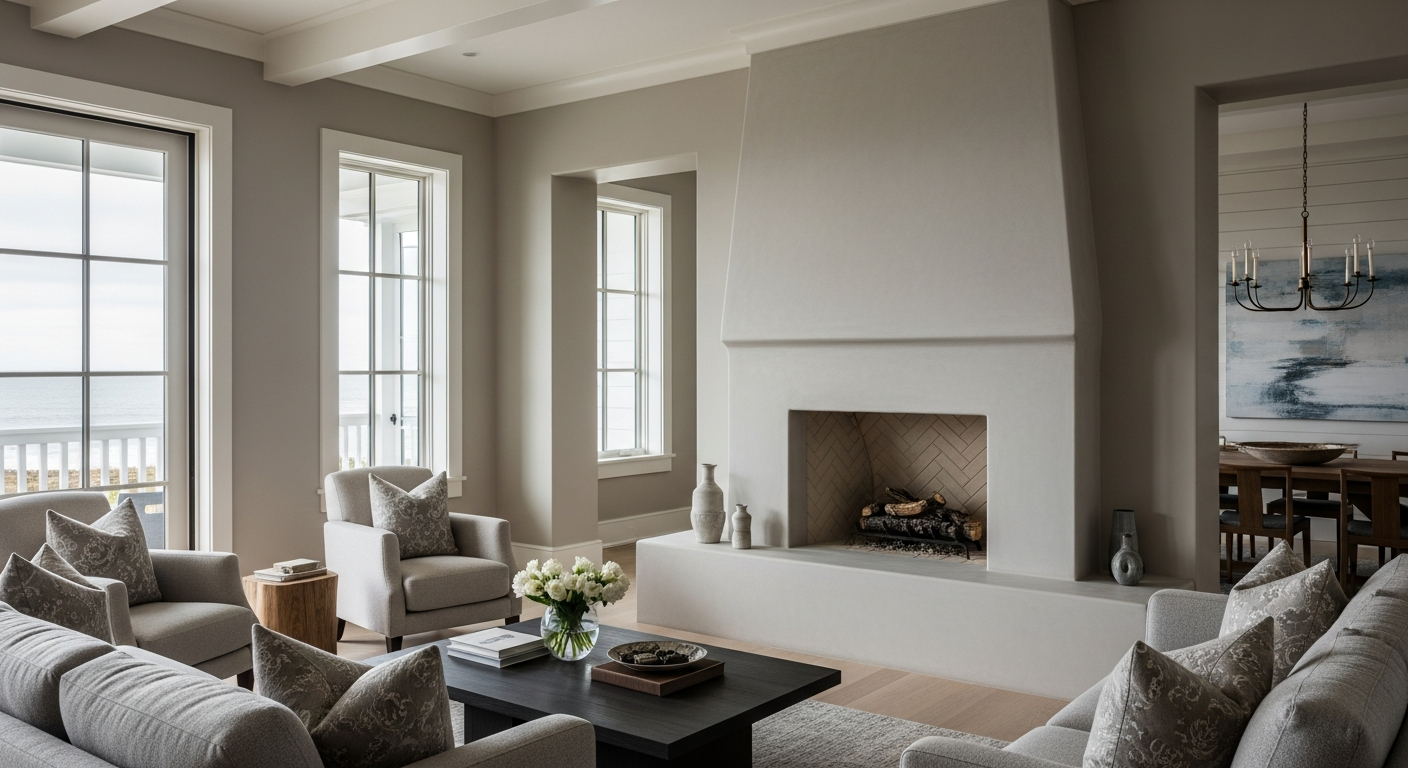
Premium 100% acrylic binders or traditional mineral-based paints are strictly required here. These advanced architectural coatings dry to a highly breathable, microporous film. When the morning ambient light grazes the living room hearth, it should illuminate a perfectly uniform, dead-flat or low-sheen texture that honors the raw materiality of the architecture.
Craftsmanship is not simply the act of applying paint. It is an uncompromising understanding of structural mechanics, substrate chemistry, and environmental forces. When a living room hearth is prepared and coated with this level of technical rigor, it ceases to be a maintenance liability. It becomes a permanent, enduring testament to architectural integrity, built to withstand the relentless forces of the coastal environment.
 After
After Before
Visualize Your Space with Color Studio AI
Planning a project? Skip the paint chip guesswork. Use our Color Studio AI to instantly visualize these paint colors on your own walls, or take advantage of our aligned contractor pricing matching current Sherwin-Williams retail promotions.
Book Your Upcoming Paint Project
Craftsman Painter is now scheduling premium transformations. Secure your spot and elevate your property value.
Get an EstimateHelp Others Find Professional Color Insights
Share this story directly to your networks or copy the link to share with friends.