
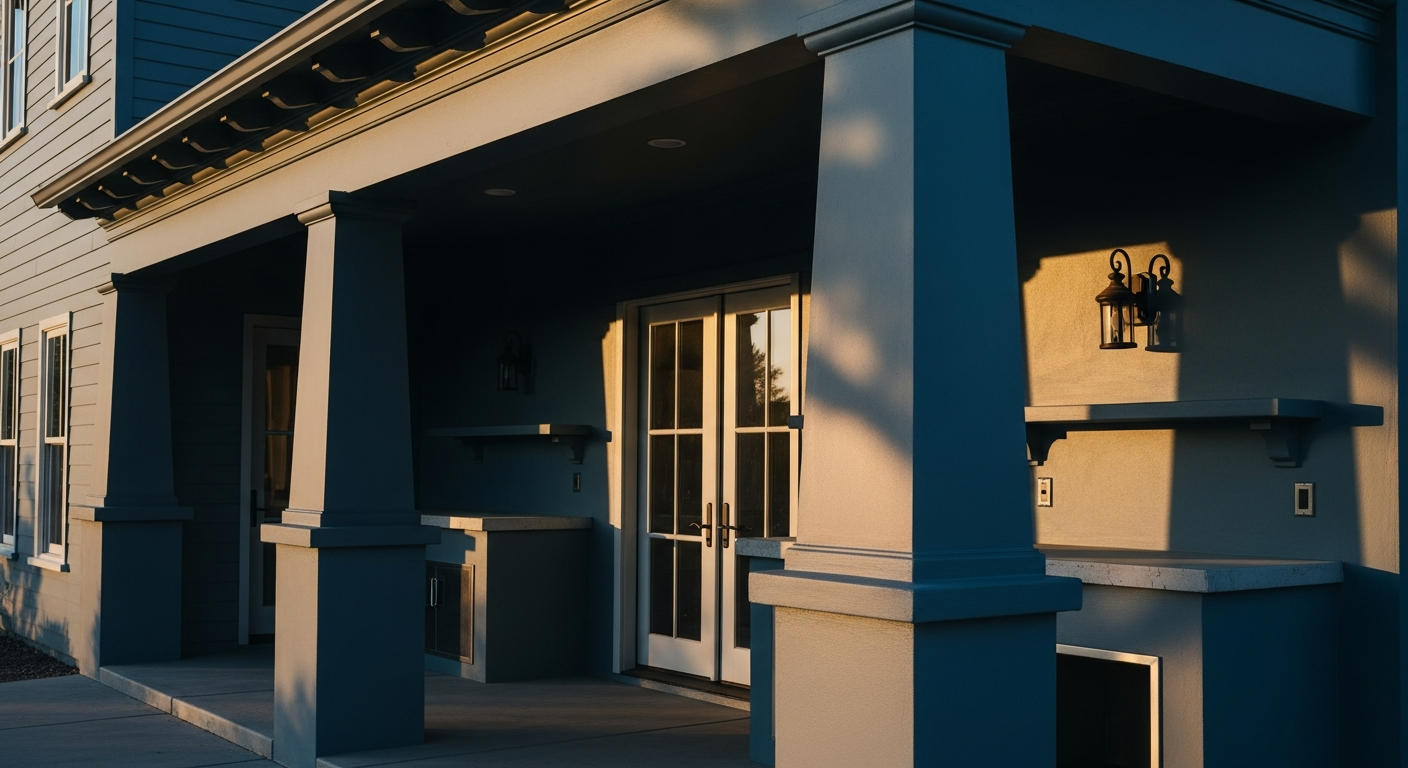

Optimizing this outdoor-indoor interface ensures the integrity of the household food supply. By engineering the garden porch for thermal grocery management, high-yield microclimate cultivation, and efficient al fresco culinary deployment, the residence transforms into a highly functional logistics hub.
The Intake Node: Securing the Cold Chain
Grocery flow begins the moment provisions breach the property line. In Maricopa County, the degradation of the cold chain occurs in minutes. A container of dairy or fresh produce left exposed on a sun-baked porch immediately begins to lose structural and nutritional integrity.
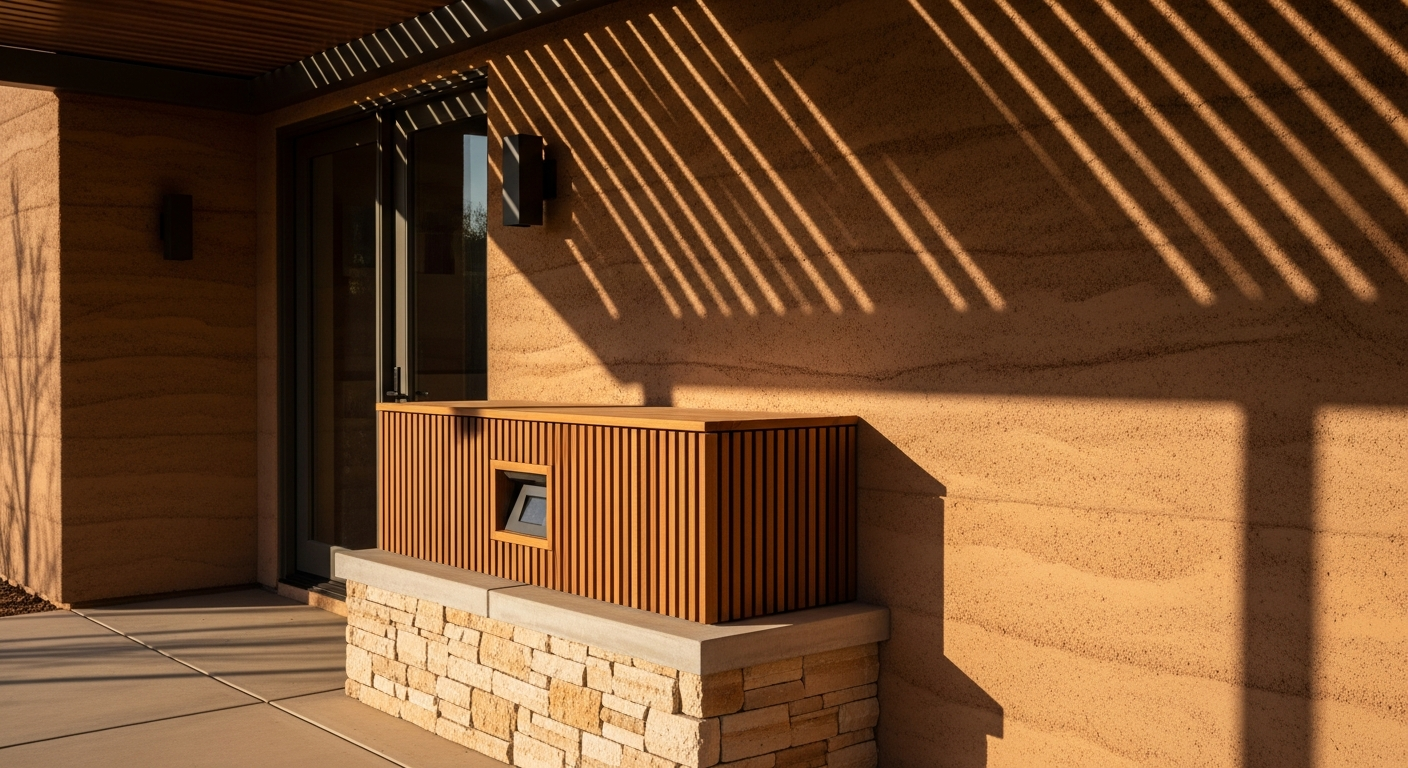
Establishing a secure, thermally insulated intake drop-zone is a foundational requirement for any Phoenix residence utilizing grocery delivery services. This requires dedicated spatial allocation on the shaded perimeter of the porch. An integrated thermal lock-box—constructed with heavy thermal mass materials like stone or concrete, and lined with insulated composites—provides a stable holding environment.

Work Directly with Torlando Hakes
Skip the color choice stress. Work directly with me as your personal Color Designer to select the perfect architectural palette for your home, and get a Complementary Color Consultation when you purchase paint through us.
By situating this intake node strategically near the primary kitchen threshold, the physical transit time from the delivery drop to the indoor pantry and refrigeration units is minimized. The flow of goods is streamlined, reducing thermal exposure and preserving the culinary lifespan of perishable assets.
Cultivation Vectors: Microclimate Herb Production
The low desert climate presents severe challenges for traditional agriculture, yet the garden porch offers highly controllable parameters for hyper-local herb cultivation. Cultivating culinary inputs exactly where they will be processed eliminates transport friction and guarantees peak volatile oil content at the moment of harvest.
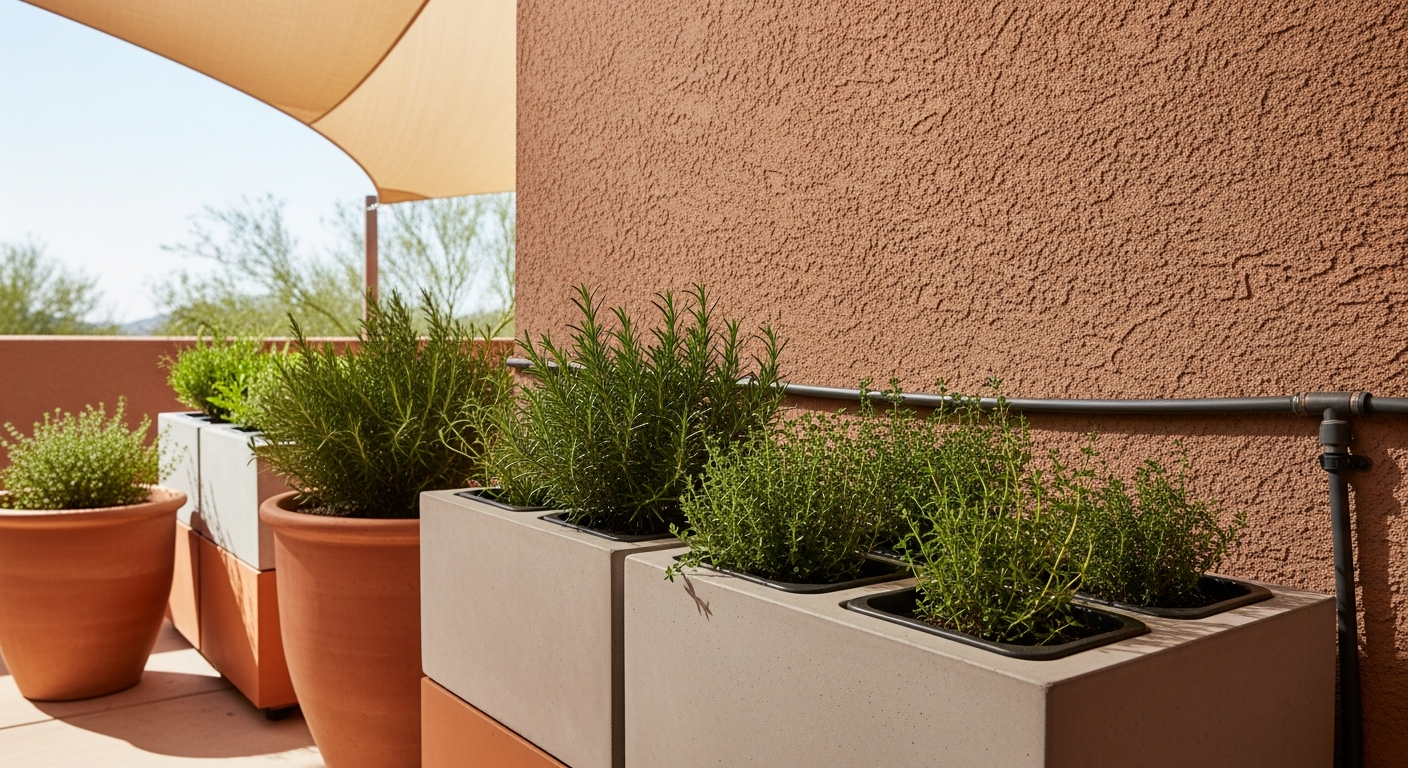
Success in Phoenix requires abandoning passive gardening in favor of active microclimate engineering. Sun-mapping the porch dictates the placement of modular cultivation stations. Drought-resistant, high-sun botanicals like rosemary, thyme, and Mexican oregano thrive on the southern or western exposures, provided they are housed in thick-walled, light-colored ceramic or concrete containers that resist thermal heat transfer to the root zones.
For more delicate cultivars like basil or cilantro, the porch infrastructure must incorporate strategic shading. Utilizing the structural shadows of the roofline or deploying woven shade sails reduces UV stress. Crucially, a domestic agricultural system is only as reliable as its hydration logistics. Implementing automated, gravity-fed drip irrigation ensures a consistent moisture baseline, preventing the rapid soil desiccation characteristic of the Arizona heat.
Culinary Deployment: Spatial Efficiency for Entertaining
When the sun drops and evening temperatures in the Valley become hospitable, the garden porch transitions from an intake and cultivation node into a culinary deployment zone. Entertaining outdoors demands rigid spatial organization to prevent operational bottlenecks at the kitchen door.
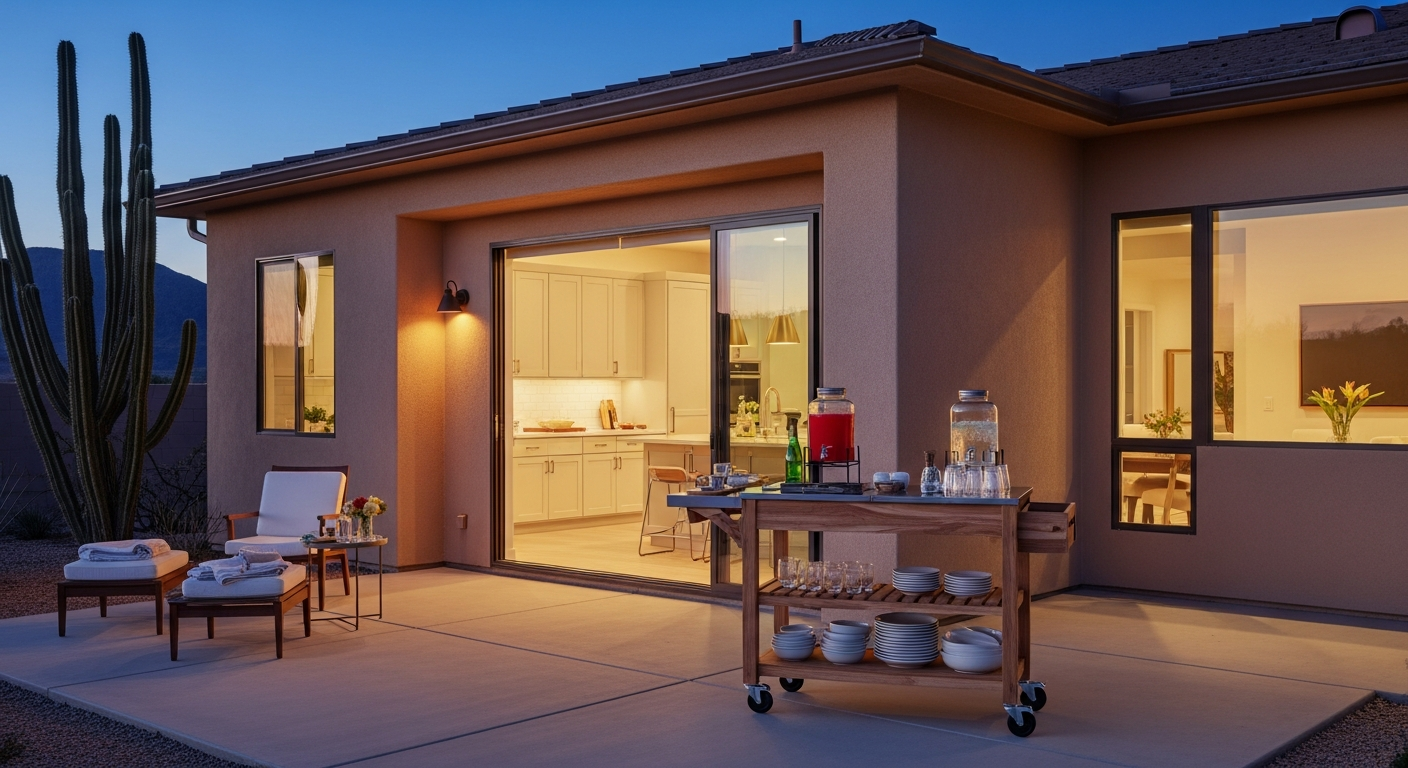
The seamless flow of food from the interior prep stations to the exterior consumption zone relies on dedicated staging areas. Mobile prep carts constructed of durable, weather-resistant materials serve as temporary holding points. These stations bridge the gap between the indoor pantry and the outdoor dining table, allowing for the rapid deployment of flatware, ambient-temperature side dishes, and hydration supplies.
By establishing clear movement vectors—separating the path of outgoing finished plates from incoming cleared dishes—the porch operates with the efficiency of a commercial expediting line. Food is delivered at optimal temperature, resources are accessible without constant return trips to the interior kitchen, and the entire domestic ecosystem functions as a unified, high-performance machine.
 After
After Before
Visualize Your Space with Color Studio AI
Planning a project? Skip the paint chip guesswork. Use our Color Studio AI to instantly visualize these paint colors on your own walls, or take advantage of our aligned contractor pricing matching current Sherwin-Williams retail promotions.
Book Your Upcoming Paint Project
Craftsman Painter is now scheduling premium transformations. Secure your spot and elevate your property value.
Get an EstimateHelp Others Find Professional Color Insights
Share this story directly to your networks or copy the link to share with friends.