
When consumer demand cools, resilient trades businesses double down on B2B prospecting, calibrate their pricing models, and ruthlessly eliminate production bottlenecks.
By Torlando Hakes
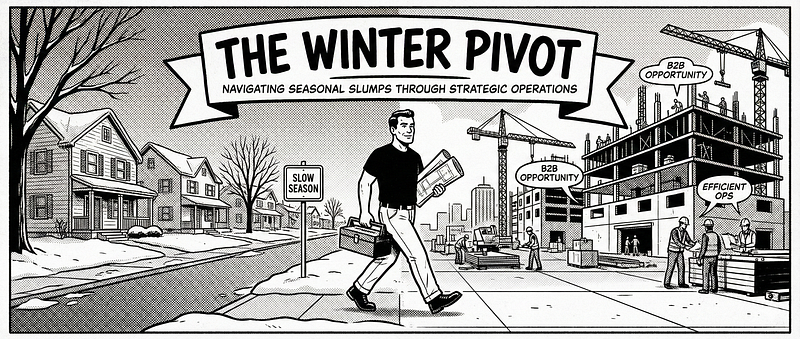
November 21st. In the residential service industry, this date often marks the beginning of “the quiet.” The holiday rush for home improvements has faded, and the winter freeze — both meteorological and economic — sets in. For many business owners, the knee-jerk reaction to this seasonal downturn is panic. They scramble for immediate, often low-quality leads, slashing prices just to keep crews busy. It is a grind that feels necessary but often leads to diminishing returns and burnout.

Work Directly with Torlando Hakes
Skip the color choice stress. Work directly with me as your personal Color Designer to select the perfect architectural palette for your home, and get a Complementary Color Consultation when you purchase paint through us.
However, an analyze of high-performing trades businesses reveals a different approach. Instead of reacting to the market’s silence with frantic activity, they use the winter as a strategic crucible. They pivot hard toward Business-to-Business (B2B) relationships, they re-evaluate the mathematics of their profitability, and they tighten operational efficiencies. The quiet season isn’t the time to retreat; it is the time to optimize.
The B2B Imperative and AI-Augmented Prospecting
When residential homeowners pull back, commercial entities often ramp up. Businesses use the end of the year to spend remaining budgets, plan facility expansions, or organize maintenance during holiday closures. The challenge for the typical residential contractor is shifting gears to navigate complex B2B buying committees. You aren’t just selling to a homeowner; you are navigating a landscape containing facility managers and CFOs.
This is where modern tools, specifically Generative AI, must move from novelty to utility. AI should not be used to automate mass, generic spam. Instead, it should act as a “Business Development Coach,” helping organizations structure targeted, high-touch outreach.
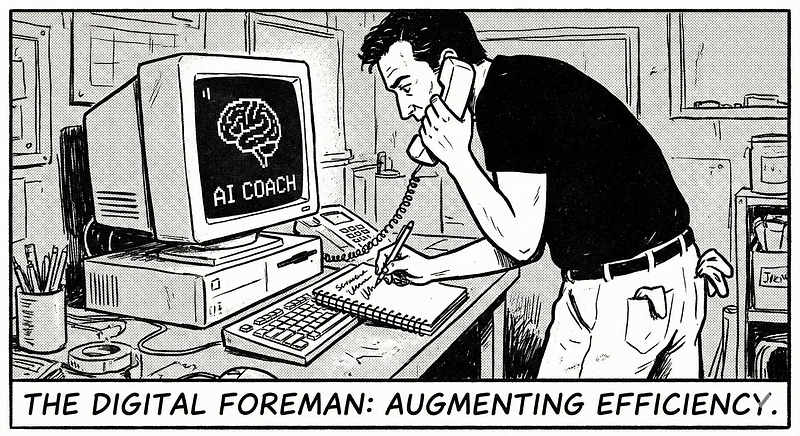
We encourage using AI to execute “10-minute strategic sprints.” Rather than staring at a blank screen, an owner can use advanced models to quickly map accounts, identify key decision-makers at local charter schools or property management firms, and draft highly specific value propositions that address long-term maintenance ROI. AI is a research accelerator, not a relationship replacement.
The Pricing Paradox: Winning the Wrong Jobs
Perhaps the most insidious danger of the slow season is the erosion of profit margins due to fear-based pricing. In the urgency to generate winter leads, many businesses over-rely on lead aggregators and slash their prices, winning jobs that ultimately cost them money.
Consider a business running at a terrifying 5% net profit margin. To achieve a healthy, sustainable 30% margin, that business doesn’t need a minor tweak; it needs a significant price increase. The fear, of course, is that raising prices will kill sales volume. But data suggests otherwise. A business closing 80% of its bids is almost certainly underpriced. Conversely, a 20% closing ratio indicates either severe overpricing or a failure to communicate value.
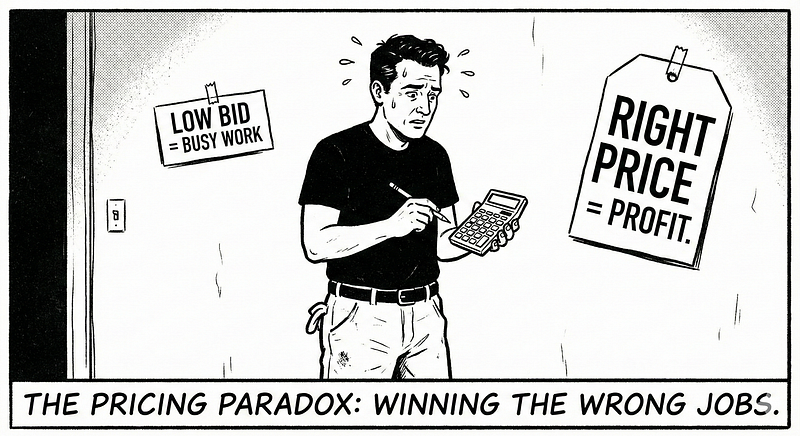
The goal is the “Goldilocks zone” — often a 40–60% closing ratio — where you are winning enough work to sustain volume, but losing the bottom-feeders who shop solely on price.
Banishing the “Four Horsemen” of Unproductivity
If the market will not bear a higher price, and you cannot ethically lower wages, the only remaining lever to increase the margin between cost and revenue is productivity. In the trades, productivity is lost not in inches, but in miles, due to four primary bottlenecks — the “Four Horsemen” of profitability erosion: indirect labor (supply runs), poorly planned dry time, social loafing, and improper task assignment.
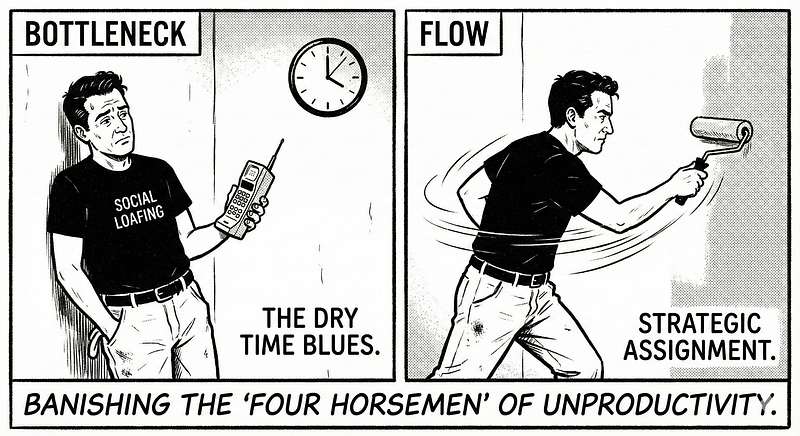
Managing these bottlenecks requires an active management presence. It means timing indirect labor, pre-stocking vehicles, structuring the day so that dry times happen during breaks, and ensuring the most difficult tasks are assigned to the most capable hands to maintain flow.
Conclusion
The winter slowdown is inevitable. Participating in the race to the bottom is optional. By shifting focus to B2B relationship-building, rejecting the comfort of low-margin busy work, and rigorously attacking operational bottlenecks, service businesses can turn the quiet season into their most profitable pivot.
 After
After Before
Visualize Your Space with Color Studio AI
Planning a project? Skip the paint chip guesswork. Use our Color Studio AI to instantly visualize these paint colors on your own walls, or take advantage of our aligned contractor pricing matching current Sherwin-Williams retail promotions.
Book Your Upcoming Paint Project
Craftsman Painter is now scheduling premium transformations. Secure your spot and elevate your property value.
Get an EstimateHelp Others Find Professional Color Insights
Share this story directly to your networks or copy the link to share with friends.