

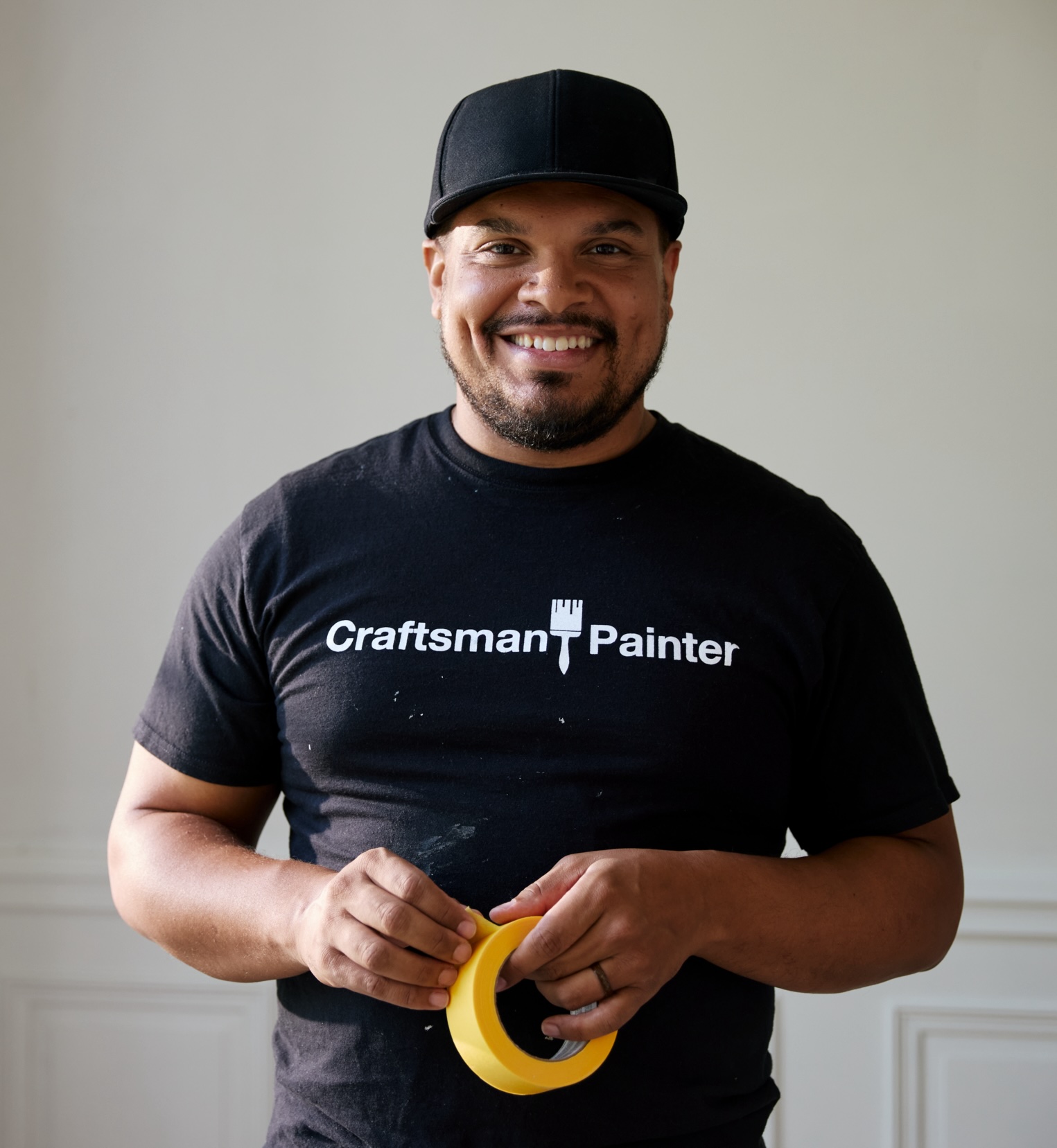
We’ve been led astray by the business coaches, and now we’re in a world of panic. But we don’t have to be.
When we decide to hang our own shingle in our respective trade, the one thing people don’t tell us is that we have to become sales people. Unfortunately, our training in our apprenticeships or design school didn’t teach us how to sell. They didn’t tell us to figure out whether we even like selling, and they sure have hell didn’t say anything about the sleepless nights wondering where our next meal is coming from.
I get it. I’m in that boat, and fortunately for me, I’m one of the few people on the planet that actually doesn’t mind sales — who hasn’t simultaneously transitioned straight from frat bro to sales bro . As it is, I actually prefer the kind of pressure that comes from eating what you catch versus the pressure that comes from a boss that has to pay you regardless of what you bring in. I learned that the hard way.
The only ones that seem to know that there is an obvious need to teach sales skills are the business coaches. Which makes sense. They call you up, trying to get your business, knowing that you’re struggling with something. Then they pinpoint your struggle, and they promise all your problems will go away if you pay them money that you don’t actually have. What is their promise? That you CAN in fact close more deals AND you can charge more money in the process.

Work Directly with Torlando Hakes
Skip the color choice stress. Work directly with me as your personal Color Designer to select the perfect architectural palette for your home, and get a Complementary Color Consultation when you purchase paint through us.
That’s the overwhelming message of the gurus. Charge more money. And if you can’t win by charging more money, your mindset is garbage. The ultimate neg for a business owner. They are calling you insecure to your face and then asking, “what’s your problem?”
Every business coach on the planet across all industries has preached this message for the last decade, and where has it lead our country? Record inflation. But who’s to blame? The president. Obviously. Not the faulty logic that fundamentally misunderstands how a supply and demand economy actually works.
Price elasticity is your problem, not your head trash.
The question has been asked enough times on the PaintED Facebook group “why do people choose your competition over you?” to know why people don’t go with smart business owners. It’s the price. It’s always the price. If the price is close, it comes down to availability.
Underpriced competition is the number one gripe of paint contractors bar none. But less sophisticated companies intuitively understand something that “smart” contractors don’t. If your price is too high, people don’t buy. It’s that simple.
I am not and will never be an advocate for cut rate pricing, however, the biggest issue with a good economy is that businesses inflate their prices and all too often, their profit margins don’t follow suit. Instead, their expenses inflate along with their prices. This puts any business in a rough spot. Especially when demand for services is elastic. And boy is our demand elastic.
What is price elasticity? The short answer, it means price goes up and down depending on external factors. You can’t will this industry into being inelastic. It’s a law that has and will continue to outlast your mortal existence.
Some examples.
The population. The more houses, the more service needs. You live in a small town? There is less demand. You can’t control that.
Consumer income. Do they have the money in the bank or not? It’s Christmastime. Are they going to spend the money they do have on presents or home remodels? It’s summer. Are they working on the house? Or going on vacation? If they don’t have money for both, they aren’t doing both. And after a long pandemic of postponed travel, people got their home renos done, and now they want to get out.
The price of substitutes. I.e., yourrivals. If the competition is more available, cheaper, and well rated, you won’t win the bid. I don’t care how great your song and dance is. I don’t care how loyal you thought the customer was.
The local economy. Yes, this does have impact. However, it’s not the end all be all and too many people blame the economy for their inability to adapt to it. I distinguish the local economy from the macroeconomy because if you look at 2008, certain local economies were insulated from the Great Recession. Namely, university towns, medical epicenters, agricultural counties, and food distribution strong holds. The bottom line, people have to eat, they go to the doctor when they get sick, and they go back to school when they can’t find a job. Diverse economies also do better in a down economy.
Cities that struggle are usually overly driven by nice to have services, restaurants, tourism, and housing. Look out Boulder. Manufacturing can be hit or miss. When it hits, it can save a local economy. When it misses, it can turn any town into a ghostly shadow of its former self. I look at cities with fast growth and people pouring in to move as a red flag. You can get in when the getting is good, but be prepared to move when the house of cards comes crashing down.
Again, when life gets too expensive, people dip out. It’s an economic law that has nothing to do with your pure unadulterated vinegar-and-burbon-pumping-through-your-veins will power. Sorry. I suggest relaxing a little bit. Breathe. Drink some water.
So what’s the answer here?
The demand for home services caught everyone by surprise during the pandemic. There just wasn’t any way to see it coming. When have we ever experienced anything like it? But the reality is, people got their work done, they put off vacations, they are sick of being at home. Not only this, whenever there is blood in the water, the sharks come swimming. There was an opportunity in trades. Still is. People got ambitious. They left their companies and hung their own shingles. Now there are more sharks in the water and a softening demand for services. That doesn’t mean it’s gone and depending on where you live, you may not be noticing the shrink.
If you are getting hit by the lead shrinkage, you have to start with the economic reality that price matters.
If the reason people aren’t choosing you is your price, start with price. BUT BE CAREFUL. If you cut prices too low, you’ll be in a world of hurt. There is a smart way to do this.
Being smart about price cuts means you have to understand your marginal cost. Marginal cost is the cost incurred by adding one additional unit of labor. This idea can be expressed in terms of slices of pie. Let’s look at a whole pie as a single unit.
For every pie that gets delivered, there are the costs of the ingredients, the cost of the baker who made it, overhead costs related to the bakery and delivery, and profit margins for the bakery that sells it. Each category here gets a certain number of slices, commiserate with the value that they bring to the pie’s production. Business coaches love to tell you how this pie should be sliced and diced, but the truth of the matter is, it depends on the pie. The margins on a Kroger brand pumpkin pie are much different than an Amish homemade apple pie. There’s just no comparison. So you have to do the hard work of determining your own margins.
As you sell more pies, your cost structure changes. At a certain point, you need different machinery to keep up with the demand. Sometimes the cost of that additional overhead will increase the marginal cost of the pie. Over time, the marginal cost of the pie will decrease as you pay off machine loans and ramp up production so that your overhead costs are a smaller percentage of the total revenue coming in. Get out your spreadsheets because this is what the hard work of figuring this stuff out looks like.
The rule of thumb here is that the higher the overhead you carry, the more volatile you’ll be in a slowed economy. If your expenses have become inflated, you’re not going to have a lot of room in your cost structure to be competitive on price. But if you have tied as many of your costs as possible to direct production expenses and have avoided recurring expenses, you’ll have the ability to weather just about any storm.
The surprising outcome, for most people, is that they end up being more profitable while doing less work.
Be weary of marketing agencies that tell you to spend your way out of it. For obvious reasons they need you to spend your money.
Look for ways to spend your time meeting people in the real world. Build relationships with the people who are currently selling to people who will need your services next. Realtors, designers, title companies, mortgage lenders, flooring installers. Make bets on better use of your time, rather than resorting to shelling out more cash.
Think about ways to creatively partner with other people. Instead of looking at your fellow practitioners as rivals, look at them as collaborators. Join a collective that shares resources to leverage economies of scale to make running a business cheaper.
The nice thing about collectives is that they tend to help you fill in the gaps where you’re deficient. Let’s say you have a small crew but a huge opportunity comes your way. In a collective you can call on other members to come help you tackle bigger jobs.
Work with part-time sales reps.
We live in a culture now eagerly engaged in side hustles and entrepreneurship. A lot of sidehustlers and part-time entrepreneurs would be more than content to just knock the chains off a product or service they can just sell without having to deal with producing it. Forging partnerships with independent sales reps could be your ticket to never worrying where your work is coming from again.
At our collective, we exclusively work with this group of intelligent and creative individuals, who have that entrepreneurial spirit but don’t have a desire to take on every responsibility of the business. It’s a symbiotic relationship. Our production teams rely on their book of business and our reps rely on our teams ability to produce. Everyone at Craftsman Painter fundamentally acknowledges and embraces that interdependency we have on one another and it builds a community that’s fun to be a part of.
Last, don’t sweat your losses but do work up a sweat. Anxiety and complaining never helped anyone, but this latest gold rush of order taking is gone for the moment. If you want to stay busy you gotta get busy. The magic sauce is being able to keep it cool. Don’t get commission breath. Just take daily steps that will move the ball forward. Trust in your own future.
— Torlando
The Craftsman Painter Collective is a community of painters and designers who work together to make stuff pretty. We offer resources to help you build your personal brand and not worry about all the business stuff. With HR support and benefits, you get the best of both worlds. The freedom of entrepreneurship and the security of employment. Check out CraftsmanPainter.com/collective to team up with us.
 After
After Before
Visualize Your Space with Color Studio AI
Planning a project? Skip the paint chip guesswork. Use our Color Studio AI to instantly visualize these paint colors on your own walls, or take advantage of our aligned contractor pricing matching current Sherwin-Williams retail promotions.
Book Your Upcoming Paint Project
Craftsman Painter is now scheduling premium transformations. Secure your spot and elevate your property value.
Get an EstimateHelp Others Find Professional Color Insights
Share this story directly to your networks or copy the link to share with friends.