
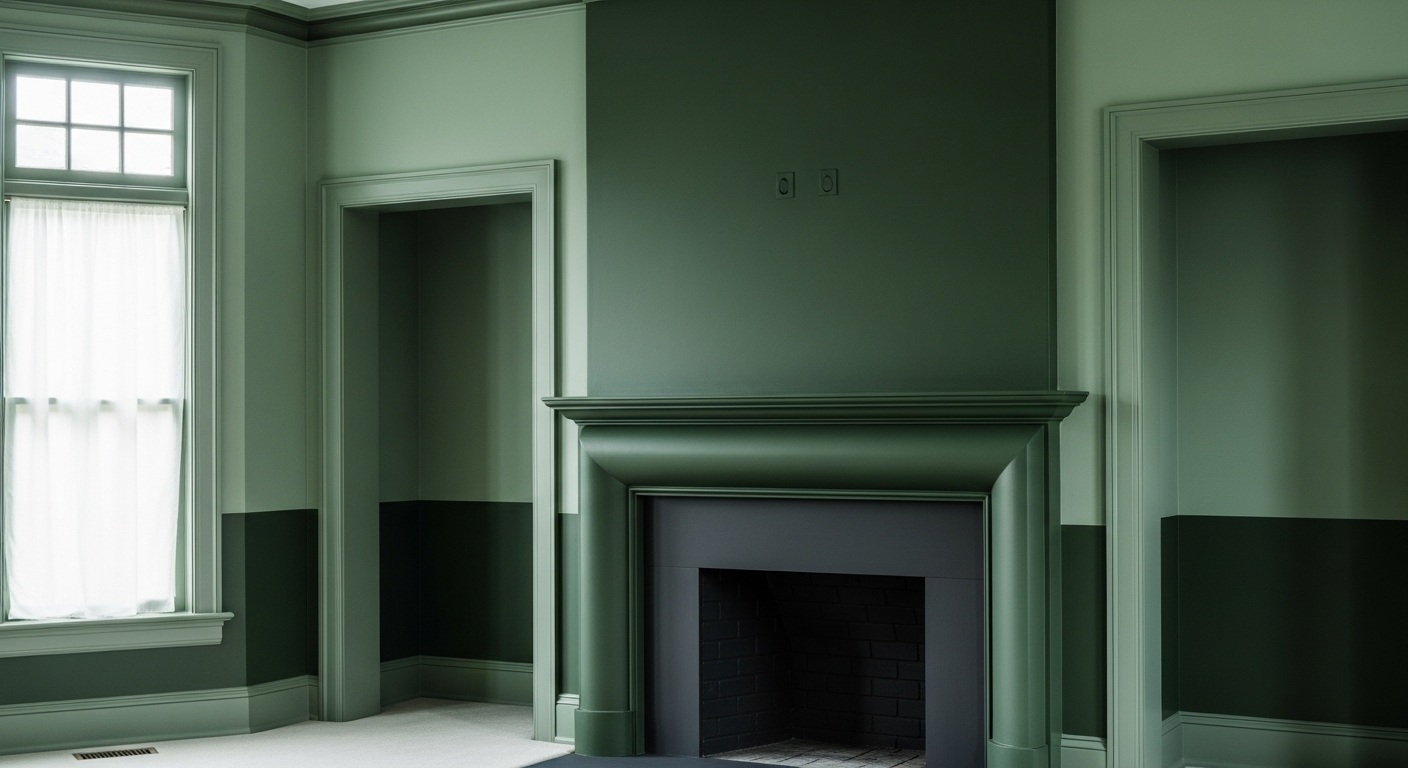

When the skies over the Rust Belt go dormant, casting a diffuse, flat-gray light from November through April, weak colors die on the wall. A hearth cannot be painted in a timid shade. It requires architectural weight. It requires light absorption. It requires Benjamin Moore Lafayette Green (HC-135).
The Architecture of Akron Light
To understand Lafayette Green is to understand the physics of light absorption. With a Light Reflectance Value (LRV) of 9.22, this is a color that swallows weak light and converts it into pure, atmospheric depth. It is not a flat, synthetic hunter green, nor is it an aggressively vibrant emerald. It is a deeply historic, blackened botanical shade that grounds the social center of the household with unshakeable authority.
In the dead of winter, the overcast lake-effect skies of Akron cast a cool, bluish light into the home. When this light hits a hearth painted in Lafayette Green, the color’s subtle slate-gray undertones step forward. The hearth recedes slightly, feeling older, heavier, and carved from soapstone. It anchors the living room, pulling the perimeter inward and creating a profound sense of enclosure and warmth, even before the fire is lit.

Work Directly with Torlando Hakes
Skip the color choice stress. Work directly with me as your personal Color Designer to select the perfect architectural palette for your home, and get a Complementary Color Consultation when you purchase paint through us.
The Southern Exposure Matrix
Visual relationships in a space are entirely dictated by the angle of the sun. The hearth is a stationary monolith; the sun is a moving spotlight. As the seasons shift to the dense, humid, intensely verdant summers of Northeast Ohio, the behavior of Lafayette Green transforms entirely.
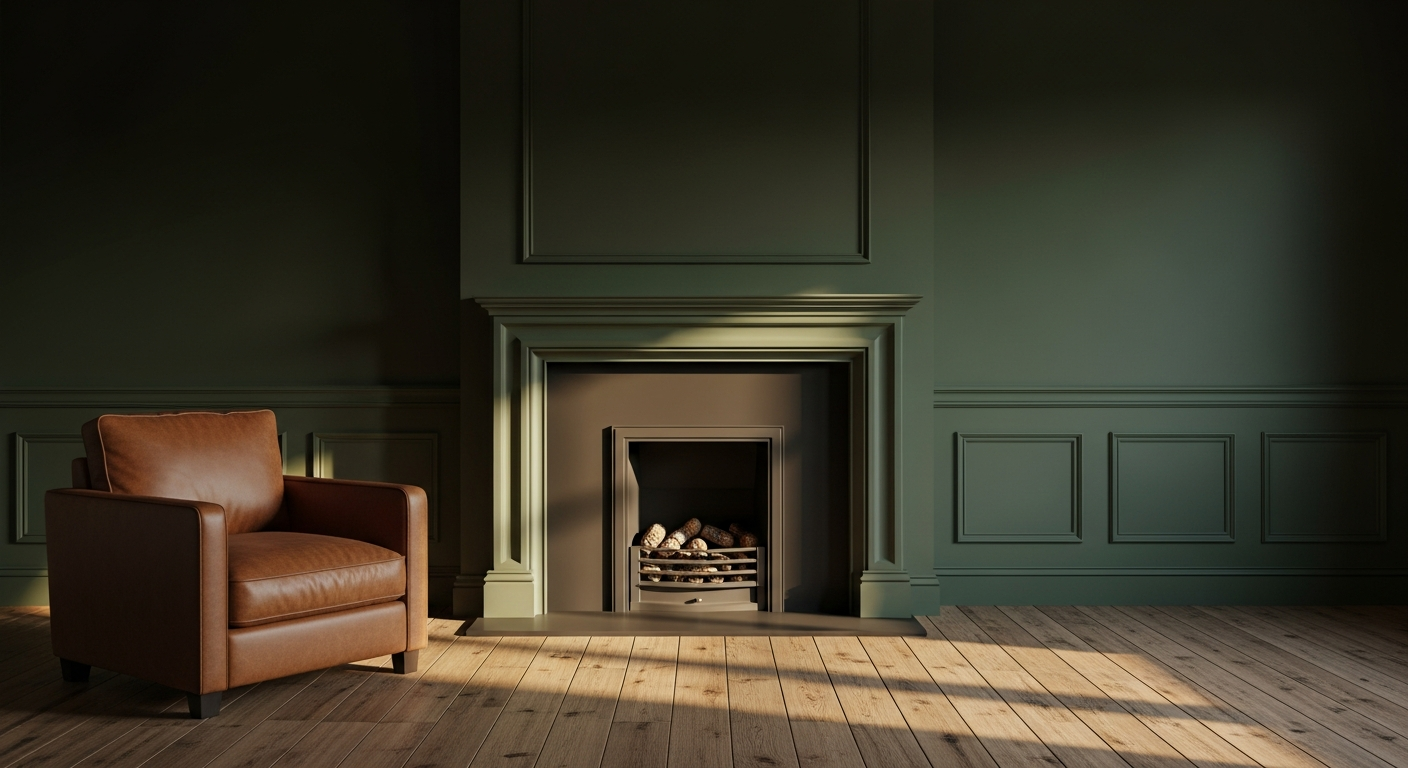
When direct, warm southern light rakes across a matte application of HC-135, the blackened qualities burn off. The organic, forested olive undertones wake up. The color becomes deeply luminous. This subtractive coloration creates a dynamic relationship with the outdoors. The lush canopy of the Akron summer outside the window begins to speak directly to the hearth inside, pulling the exterior environment into the living room without resorting to predictable, leafy pastels.
When the sun goes down and the fire is lit, the ultimate visual relationship takes over. The interplay of amber, flickering light against a deeply cool, light-absorbing green creates a maximum complementary contrast. The green amplifies the warmth of the fire, making the physical flames appear more saturated and vibrant.

Coordinating the Trim and the Periphery
A color with this much gravity requires deliberate scaffolding. Slapping a stark, modern, hospital-white trim against a historic blackened green destroys the optical dialogue. The transition must be handled with masterful subtlety.
Benjamin Moore White Dove (OC-17) is the precise coordinate required here. White Dove carries a nearly imperceptible greige shadow in its undertone. When applied to the crown molding, baseboards, and surrounding walls, it provides a creamy, atmospheric bridge. It softly frames the heavy green hearth without creating an abrasive, high-contrast shock to the retina.
Furthermore, the materials placed around the hearth must honor this color relationship. Lafayette Green begs for tactile, organic counterparts. Heavy, aged walnut. Unlacquered brass that will patina over time. Cognac leather. These materials share a warming, grounded visual vocabulary that offsets the cooling, receding nature of the blackened green.
The Psychology of the Dark Hearth
Applying a deeply dark, saturated color to the largest architectural feature in a room is an exercise in psychological design. The amateur instinct is always to paint a room bright to make it feel larger. But spatial energy flow is not about square footage; it is about focus.
By darkening the hearth with Lafayette Green, the boundaries of the room blur. The walls fall away. The architecture recedes into shadow, and the people gathered around the ambient light of the fire become the undeniable luminous center of the space. It is a masterful manipulation of visual relationships, perfectly suited for the historic, resilient homes of the Midwest.
 After
After Before
Visualize Your Space with Color Studio AI
Planning a project? Skip the paint chip guesswork. Use our Color Studio AI to instantly visualize these paint colors on your own walls, or take advantage of our aligned contractor pricing matching current Sherwin-Williams retail promotions.
Book Your Upcoming Paint Project
Craftsman Painter is now scheduling premium transformations. Secure your spot and elevate your property value.
Get an EstimateHelp Others Find Professional Color Insights
Share this story directly to your networks or copy the link to share with friends.