
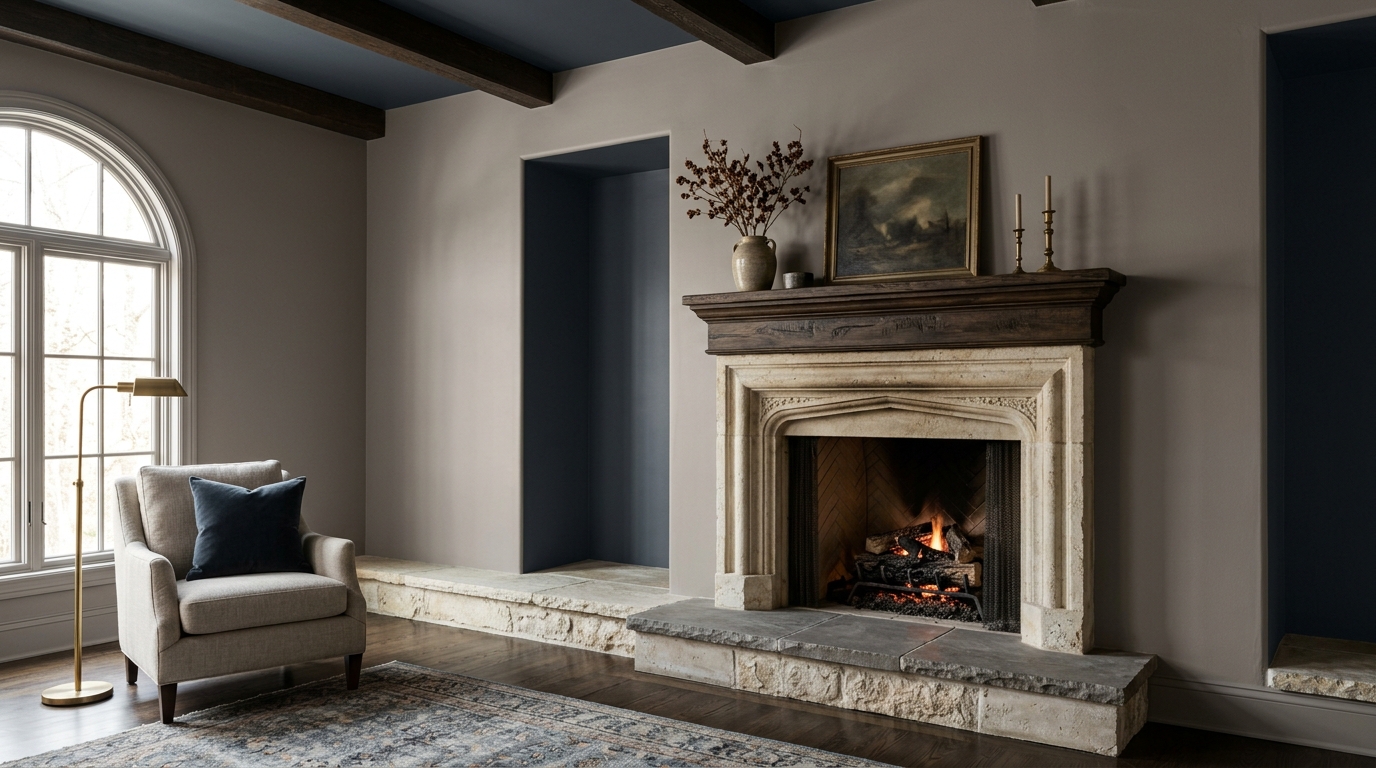

To anchor a room against the relentless chill of a Northeast Ohio winter, the visual relationship between the hearth and the surrounding architecture requires a color with unapologetic gravitas. It requires Benjamin Moore Randolph Stone (CW-75).
The Architecture of Akron’s Light and the Hearth
Color is not a static property; it is a live performance dictated by natural light and surrounding materials. The hearth is a mass of texture—brick, limestone, mortar, or slate. Slapping a sterile, high-contrast white or a cold modern gray next to this rugged masonry creates a visual friction that shatters the room's spatial energy.
Randolph Stone is pulled from Benjamin Moore’s Williamsburg Collection, meaning it is rooted in historic pigment structures. It is a muddy, deeply complex hue that refuses to be categorized simply as a brown, a gray, or a green. It possesses an LRV (Light Reflectance Value) of 36.31. This is the sweet spot for a living room feature space. It absorbs enough light to feel intimate and grounding, yet reflects just enough ambient energy to keep the walls from collapsing inward. When wrapped around a central fireplace, it acts as a visual bridge, softening the harsh transition between the heavy hearth and the negative space of the room.

Work Directly with Torlando Hakes
Skip the color choice stress. Work directly with me as your personal Color Designer to select the perfect architectural palette for your home, and get a Complementary Color Consultation when you purchase paint through us.
Deconstructing Randolph Stone CW-75
Understanding Randolph Stone requires looking past the paint chip and analyzing its behavioral undertones. At its core, it is a sophisticated taupe, but it carries a distinct, earthy green-yellow undertone. This specific chemical makeup is exactly why it thrives in the unique regional climate of Akron.
During the peak of winter, northern light filters into a room with a harsh, bluish cast. A standard neutral will immediately surrender to this light, feeling sterile and institutional. Randolph Stone, however, uses its muddy yellow-green base to neutralize the incoming blue. The visual relationship stabilizes. The walls maintain their warmth, wrapping the living room in a cocoon of historic, grounded stone.
The Alchemy of Natural Light Angles
The true magic of this color reveals itself as the earth rotates. The living room hearth remains stationary, but the light grazing it is in constant flux.
In an east-facing Akron living room, the sharp, clear morning light cuts through the window, hitting the painted surface directly. Under this direct, warm exposure, Randolph Stone leans heavily into its organic taupe roots. The green recedes, and the wall harmonizes perfectly with the raw terra cotta or soot-stained brick of the firebox.
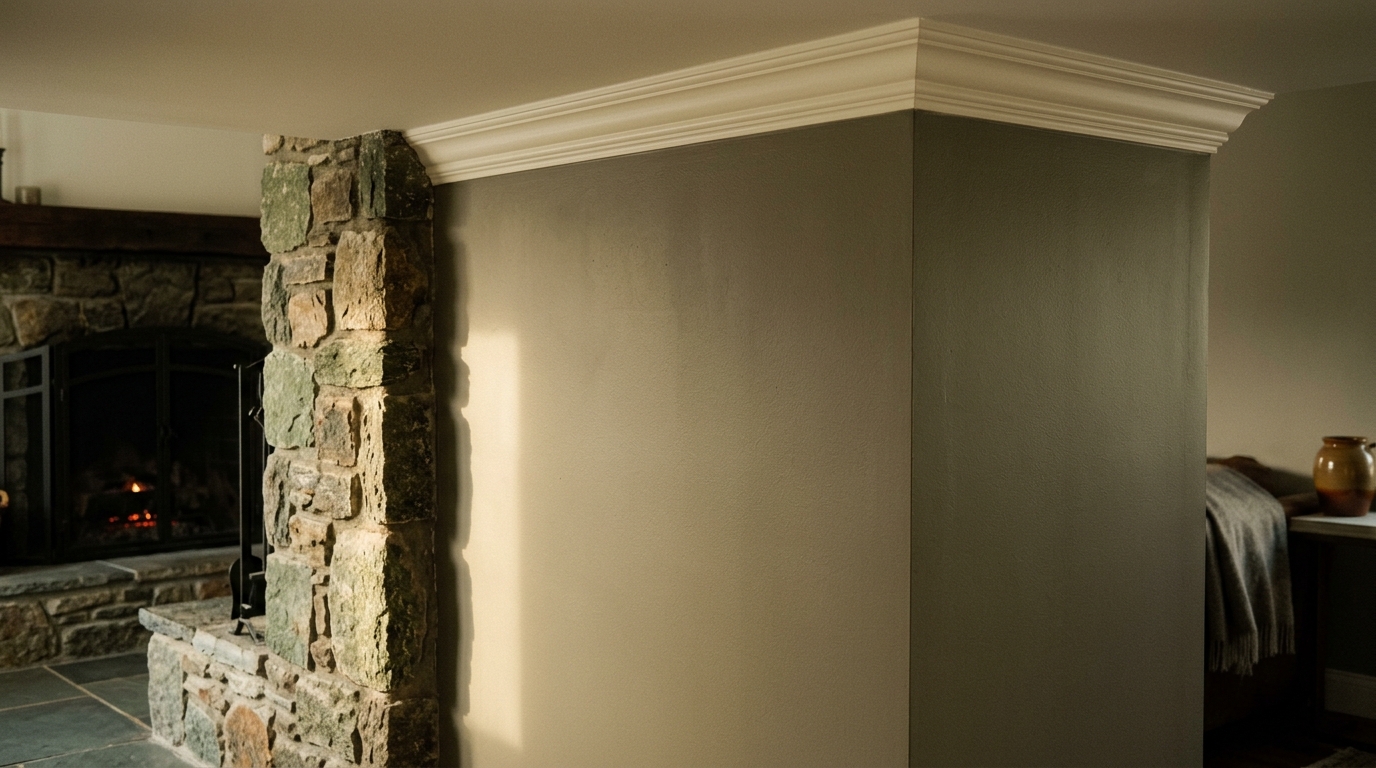
Conversely, in a west-facing room during a humid, late-summer afternoon, the light filters through the heavy green canopy of the region's abundant oak and maple trees. As this filtered light enters the room, it pulls the subtle olive undertones out of the paint. The color deepens, interacting with the shadows cast by the mantelpiece, creating a rich, moody environment that feels entirely integrated with the landscape outside.
Executing the Trim and Complements
A color with this much historic weight requires strict discipline when selecting coordinating trim. Framing Randolph Stone with a stark, blinding white will violently sever the visual flow of the room. The contrast becomes jagged, cheapening the sophistication of the historic pigment.
To maintain the integrity of the ambient light and the spatial flow around the hearth, the trim must offer a soft, seamless transition. Benjamin Moore White Dove (OC-17) is the undisputed counterpart here. With its own subtle, warm gray undertone, White Dove yields to the gravitas of the stone color rather than fighting it. When applied to the crown molding, baseboards, and built-in shelving flanking the fireplace, it creates a cohesive, muted framing effect.
Designing around the living room hearth is an exercise in respecting mass and light. By utilizing a highly reactive, deeply complex pigment like Randolph Stone, the walls stop being mere boundaries. They become active participants in the architecture, grounding the home and providing a masterclass in visual harmony, regardless of what the Ohio skies decide to do.
 After
After Before
Visualize Your Space with Color Studio AI
Planning a project? Skip the paint chip guesswork. Use our Color Studio AI to instantly visualize these paint colors on your own walls, or take advantage of our aligned contractor pricing matching current Sherwin-Williams retail promotions.
Book Your Upcoming Paint Project
Craftsman Painter is now scheduling premium transformations. Secure your spot and elevate your property value.
Get an EstimateHelp Others Find Professional Color Insights
Share this story directly to your networks or copy the link to share with friends.