
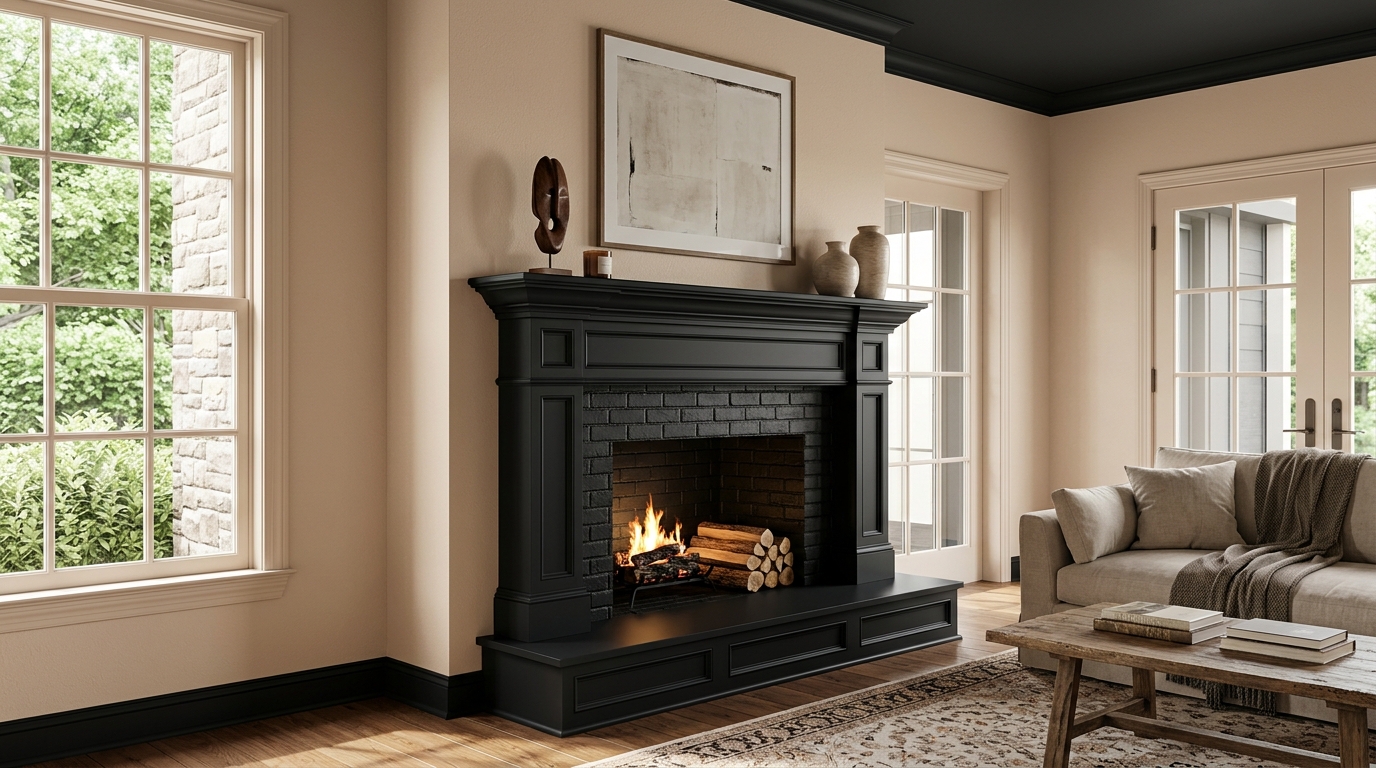

In Bloomington, Indiana, the surrounding geography forces a unique atmospheric dialogue with interior spaces. Heavy, humid summers filter sunlight through a dense canopy of deciduous oak and maple, projecting a dappled, green-shifted light through living room windows. In contrast, the drawn-out, gray winters offer a stark, flat, low-angle illumination. Designing a hearth space that thrives under both extremes requires abandoning safe, anemic neutrals in favor of something with profound structural density.
Enter Sherwin-Williams Sable (SW 6083).
The Physics and Coordinates of SW 6083
Sable is not a simple brown. It is a masterful, earthy dark tone that acts as a visual anchor. To understand its power, one must look at its exact coordinates. With a Light Reflectance Value (LRV) of exactly 8, Sable is aggressively absorptive. It does not bounce light back into the room; it consumes it.

Work Directly with Torlando Hakes
Skip the color choice stress. Work directly with me as your personal Color Designer to select the perfect architectural palette for your home, and get a Complementary Color Consultation when you purchase paint through us.
This high level of light absorption is exactly what a hearth needs to establish visual hierarchy. When applied to the central focal wall or the architecture directly surrounding the fireplace, an LRV of 8 creates a recessive cavernous effect. The wall physically appears to pull back, pushing the firelight and the surrounding furniture forward into the conscious space.
Sable carries a deeply warm, complex chocolate base with the faintest whisper of a muted red undertone. However, it is precisely this underlying warmth that prevents the color from reading as a dead, lifeless void. It possesses enough organic saturation to feel distinctly tied to the earth.
Neutralizing the Bloomington Light
Visual relationships in color theory are entirely dependent on environmental context. In southern Indiana, the dense summer tree canopy acts as a massive green light filter. When that cool, green-tinged sunlight spills into a living room, it actively drains the life out of standard grays and cool whites, leaving a room feeling clinical or sickly.
Because green and red sit on opposite ends of the color wheel, the subtle, warm red-chocolate undertones buried within Sable act as a perfect neutralizing agent for Bloomington’s summer light. The green-shifted ambient daylight hits the LRV 8 surface and is instantly harmonized, leaving the hearth looking remarkably stable, rich, and balanced.
When winter arrives and the Midwest sky turns permanently overcast, the flat, bluish-gray light hits the hearth. Here, Sable’s inherent warmth acts as an internal furnace for the room's palette. It visually insulates the living space against the harsh, cold light pouring through the glass.
Executing the Trim and Architectural Complements
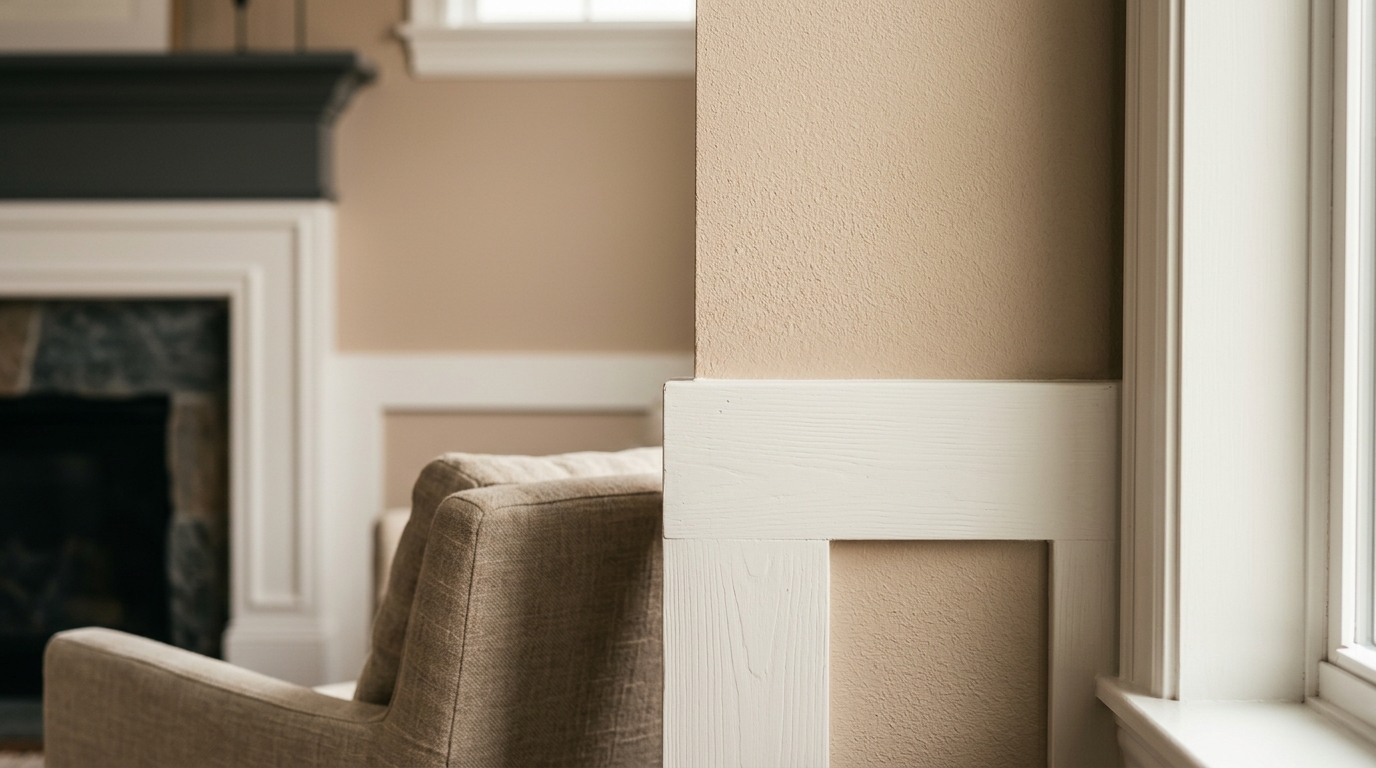
A color with the sheer density of Sable demands absolute precision when selecting complementary trims and adjacent surfaces. Slapping a stark, un-tinted builder-grade white against an LRV 8 wall creates an abrasive, high-contrast visual vibration that destroys the sophisticated calm of the hearth. The transition must be handled with nuance.
To honor the warmth of SW 6083, the trim, wainscoting, and ceiling relationships must carry their own subtle weight. Sherwin-Williams Alabaster (SW 7008) is the definitive pairing here. With its soft, creamy base and LRV of 82, Alabaster provides the necessary contrast to frame the hearth without blinding the eye. It bridges the gap between the dark, absorptive focal point and the rest of the room.
For the hearth materials themselves, the regional geology of southern Indiana provides the perfect textural complement. Raw, unpolished Indiana limestone—with its inherently warm, gray-beige fossilization—sits flawlessly against Sable. The chalky, porous nature of the limestone absorbs light in a similar, albeit lighter, manner to the paint, creating a seamless visual relationship between the earth-toned architecture and the painted drywall.
The Gravity of the Space
Mastering color theory requires an understanding of how paint manipulates human behavior within a space. The living room hearth is a place of gathering, conversation, and refuge. By anchoring this specific zone with Sherwin-Williams Sable, the architecture communicates a sense of profound stability.
When the fire is lit and the ambient lamps cast low-level tungsten light across the hearth, Sable completely dissolves the sharp corners of the room. The visual boundaries blur. The hearth stops being a mere wall with a fireplace and becomes a tailored, grounded environment that demands a quiet, lingering respect.
 After
After Before
Visualize Your Space with Color Studio AI
Planning a project? Skip the paint chip guesswork. Use our Color Studio AI to instantly visualize these paint colors on your own walls, or take advantage of our aligned contractor pricing matching current Sherwin-Williams retail promotions.
Book Your Upcoming Paint Project
Craftsman Painter is now scheduling premium transformations. Secure your spot and elevate your property value.
Get an EstimateHelp Others Find Professional Color Insights
Share this story directly to your networks or copy the link to share with friends.