
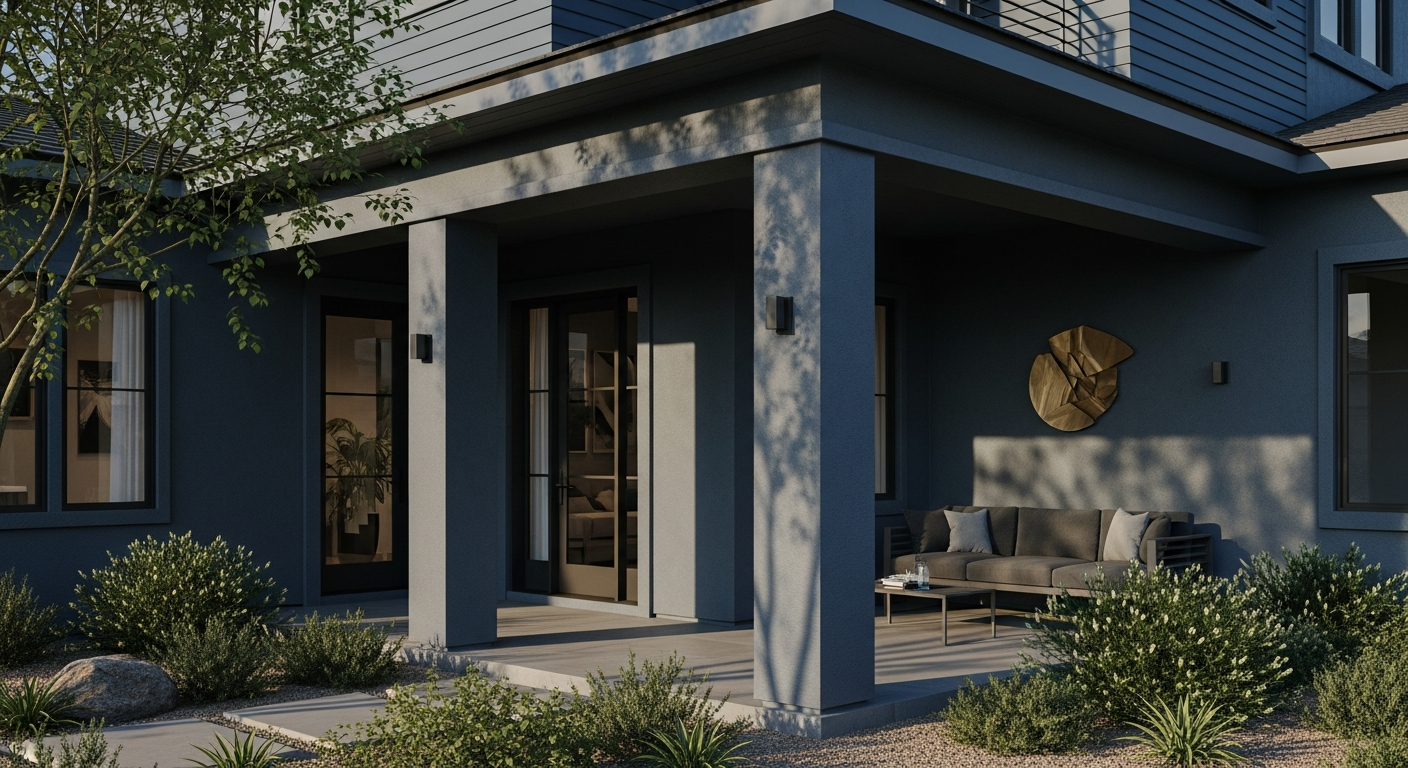

The definitive answer is Sherwin-Williams Storm Cloud (SW 6249).
Far from a trendy aesthetic gamble, deploying this specific, deeply saturated slate-blue on a transitional outdoor-indoor interface is a masterclass in regional color theory. It is a calculated manipulation of light absorption, shadow interplay, and visual psychology.
The Architecture of Visual Cooling
Stepping off a baked Phoenix sidewalk onto a shaded garden porch should trigger an immediate drop in blood pressure. Color directs that physiological response long before the ambient temperature actually registers.

Work Directly with Torlando Hakes
Skip the color choice stress. Work directly with me as your personal Color Designer to select the perfect architectural palette for your home, and get a Complementary Color Consultation when you purchase paint through us.
At a Light Reflectance Value (LRV) of 23, Storm Cloud possesses significant depth. It sits comfortably in the lower-middle tier of light reflection, meaning it actively absorbs the harsh, scattered glare of midday Maricopa County without devolving into a light-swallowing black hole. Where a stark white porch bounces blinding, eye-watering UV rays back into the face, and a beige porch simply surrenders to the surrounding dust, a shade this rich creates a perceived drop in temperature. It turns the porch into a visual cistern of cool water.
The color grounds the architecture. It gives the structure a heavy, deliberate footprint against the pale, dusty hues of the natural desert landscape. The garden porch suddenly ceases to be a mere overhang and becomes an anchored pavilion.
Undertones Under the Sonoran Sun
Paint colors do not exist in a vacuum; they exist only in relationship to the light that hits them. The light in Arizona is sharp, high-contrast, and deeply warm.
Storm Cloud is fundamentally a stormy blue-gray. In an overcast Pacific Northwest climate, it might read as a melancholic, misty slate. But under the relentless Phoenix sun, its behavior shifts entirely. The intense ambient warmth of the desert light neutralizes the iciest blue undertones, allowing the color to read as incredibly balanced and grounded.
On an east-facing garden porch, morning light catches the cyan-blue drops within the pigment mix, offering a crisp, waking energy against the muted greens of potted agaves. By noon, as the sun moves overhead and indirect light takes over, the hue flattens out into a stoic, architectural charcoal-blue. In the late afternoon, as the western sky explodes in golden hour fire, the gray foundation of SW 6249 steps forward, creating deeply complex, bruised-violet shadows where the architecture recedes. It is an endlessly dynamic visual performance.
Precision in Complements and Coordinates
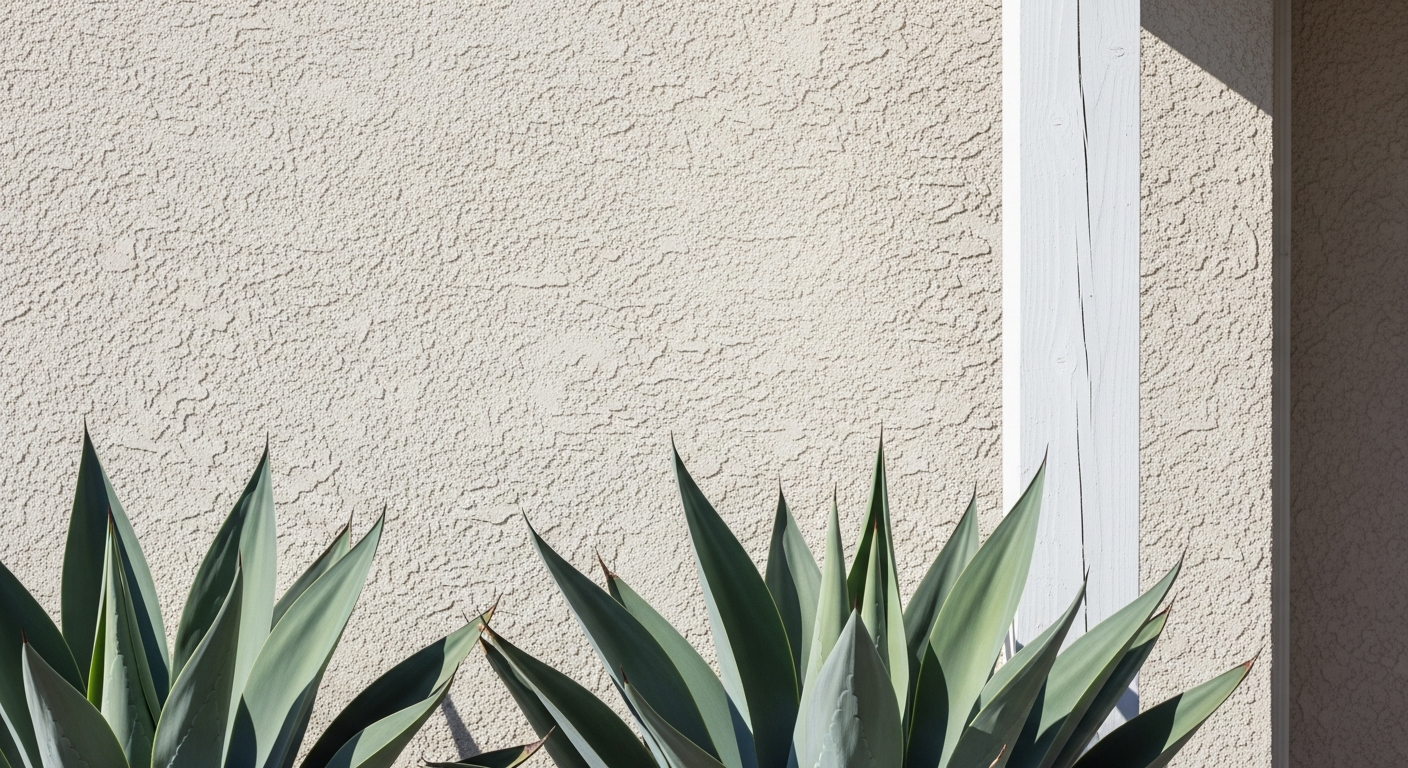
To maximize the visual weight of Storm Cloud, the surrounding trim and material coordinates must be handled with ruthless precision. A muddy off-white will instantly drag the slate-blue into a dingy, dated territory.
The only correct answer for adjacent architectural trim, fascia boards, or structural columns is Sherwin-Williams Pure White (SW 7005). With an LRV of 84 and an almost imperceptible drop of black in its formula, Pure White offers a razor-sharp, high-contrast boundary without the blinding, clinical sterility of an untinted bright white. The transition between the deep slate of the porch walls and the crisp definition of the trim creates a tailored, high-end visual boundary.
For surrounding masonry or flooring transitions, bypass the gray-scale entirely. The cool, stormy nature of SW 6249 demands the organic warmth of the desert to create tension. Sherwin-Williams Drift of Mist (SW 9166) works beautifully as a secondary accent for concrete or stone elements, providing a subtle, greige bridge between the cool blue and the warm desert earth. Add raw, oxidized copper light fixtures or weathered mesquite wood doors, and the visual relationship is complete.
The garden porch ceases to be just an entrance. Through the deliberate, masterful application of color and light, it becomes an enduring, shaded monument against the vast, sun-bleached horizon.
 After
After Before
Visualize Your Space with Color Studio AI
Planning a project? Skip the paint chip guesswork. Use our Color Studio AI to instantly visualize these paint colors on your own walls, or take advantage of our aligned contractor pricing matching current Sherwin-Williams retail promotions.
Book Your Upcoming Paint Project
Craftsman Painter is now scheduling premium transformations. Secure your spot and elevate your property value.
Get an EstimateHelp Others Find Professional Color Insights
Share this story directly to your networks or copy the link to share with friends.