

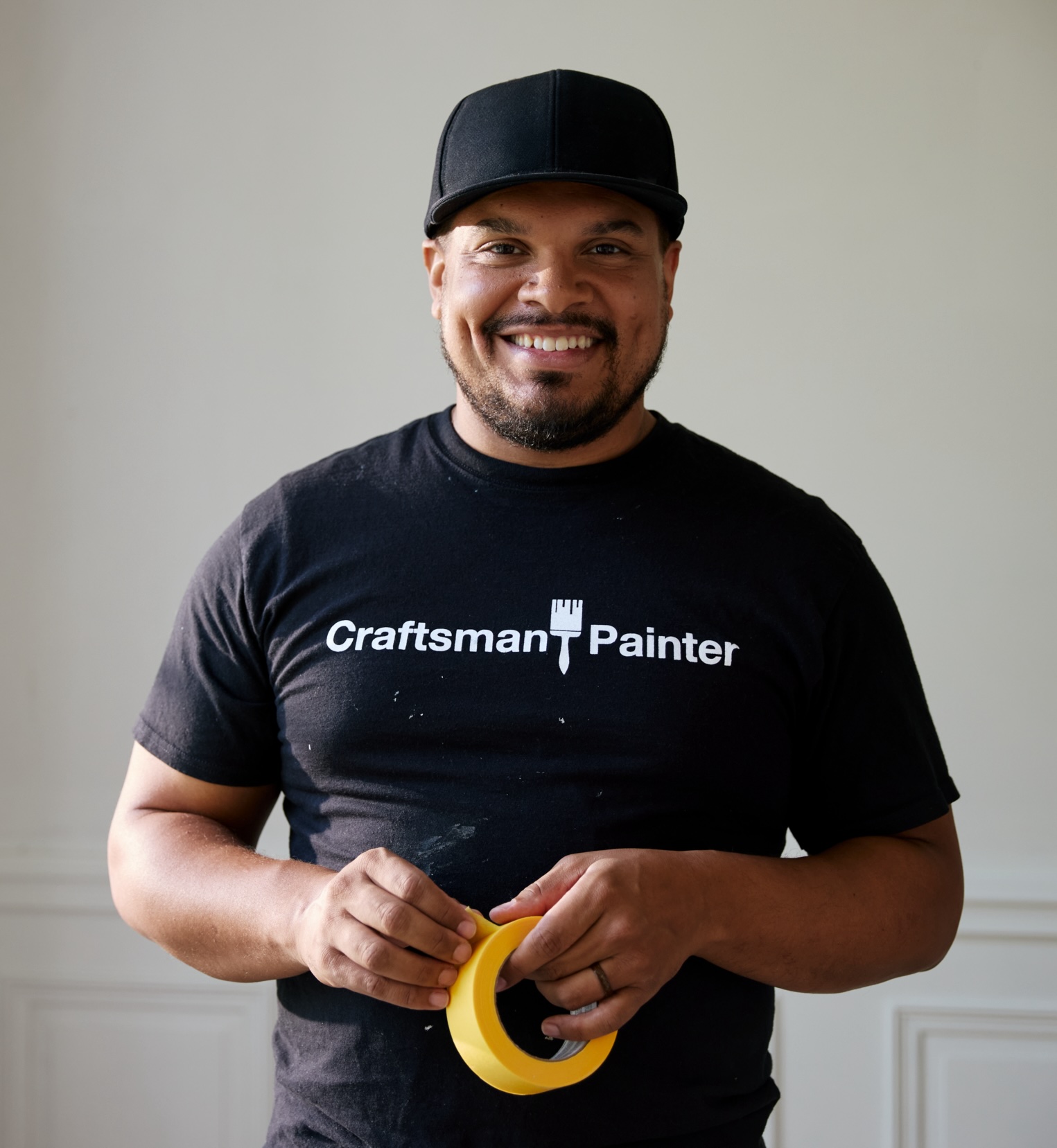
A lesson in talent acquisition
Hiring talent has got to be one of the most difficult problems to solve in business and yet most small business owners treat it like an after thought. They spend all their time in marketing, sales, and producing but finding the talent to grow your business is left unattended to until it’s too late.
Talent is what moves your business forward, especially in services. You cannot grow without people but too many business owners don’t know what they are doing with hiring and instead of looking inward they look at the generations of workers and think they don’t want to work.
Here’s the cold hard truth.

Work Directly with Torlando Hakes
Skip the color choice stress. Work directly with me as your personal Color Designer to select the perfect architectural palette for your home, and get a Complementary Color Consultation when you purchase paint through us.
These young people have no problem with the work. Their problem is the opportunity.
Why it looks like Gen-Z doesn’t want to work.
There are a few differences with the way that Gen-Zers think about work today that may have Gen-Xers scratching their head.
For a lot of Gen-X, you may have grown up with the mentality that sometimes you have to put up with the stuff that isn’t very fun and you might look at a Gen-Zer and think that they just give up if something is difficult.
That’s not how Gen-Z sees it. It’s not that they won’t put up with hard things, they just won’t put up with stuff that isn’t worth it.
This is probably something older generations should consider. Why would you live your life putting up with things that aren’t going to get you ahead?
Look at your job offer. Is it really helping anyone get ahead? Or is it a dead-end job?
I sat down with Ryan Naylor of VivaHR for a conversation about onboarding and he expressed that Gen-Z has zero loyalty when it comes to jobs and they have very little concern about what job hopping looks like on their resume.
You may look at this like flakiness but they look at it like exploring the right fit.
People do want to work they just want the right opportunity
The trick with assuming that all Gen-Z’ers or even Millenials are all the same and that they want the same thing is like deciding what people want in their work life because of their horoscope or Chinese zodiac.
You have to remember that these are individuals with different goals and aspirations for their lives. They are also still incredibly young and have years to figure out the things that you’ve figured out. However, they are incredibly advanced in areas that you just didn’t even consider when you were their age.
What I’ve noticed most is that young people want to feel heard and to have a voice at the table. Sure, they may not be making huge company decisions, but it feels good to have an employer that makes you feel heard.
They also need flexibility. This flexibility shouldn’t be free though. It has to come at a cost. For many positions you have to be present by the nature of the job. But you could consider an open door policy where good workers who need to take extended time off have the liberty to do it with an open invitation to come back. Their financial needs at a young age are in a place where they can save up for a few months, take time off to travel and then come back when they run out of money. Is it the most responsible way to live? Maybe not. But your entire period of your twenties is generally the worst money making period of your life, so just let them do it. Build into your seasonal ups and downs a certain number of young folks that will work hard in the busy season and relax in the slow season. When real responsibilities set in, they’ll be ready to commit. Just make sure there is clarity and communication about when they need to take off and when they’ll be back so you can plan financially. And always be recruiting so you can fill in those gaps.
In todays market, it is unlikely that you’ll keep people as lifers, but you can at least have impact today and get an equal amount of output.
I was talking to an old friend who painted on my crew when I was in my early twenties. Now a little older, he’s spent most of his career as a lawyer, which he said hasn’t been the most fun. As we talked, he reflected on our one summer painting together about how much nostalgia he had for those days and how much fun it was. We truly have something valuable to offer young people, even if it’s just fond memories of a hardworking summer.
But you can offer more than that. You just have to be clear about that offer in the onboarding process.
How we do it at Craftsman Painter
At Craftsman Painter, we look at the whole career of an individual, from post-high school to pre-retirement. We ask ourselves, how can we make a difference in these people’s lives and that’s where we start the onboarding process. We promise to the people interviewing with us that our goal is to make a difference in their lives.
Look for underemployed undergraduates
For example, we may be meeting with a college graduate who just graduated from art school. The reality is that the job prospects for artists isn’t that great and painting happens to be a great home for them to use their hands, create a work of beauty, and preserve their creative energy to themselves. Making sure they know that there is a plan to get them trained and that advancement comes as they gain mastery and take on leadership responsibilities is a must. We really try to paint a picture of what their life will look like if they pursue this field.
Give those with less opportunities a real opportunity
We also look for summer apprentices in college or those pursuing college alternatives so that in the summer they are learning the painting skills but during the winter months, they shift gears and take on an internship in business development and sales. Giving them both sides of the coin allows them to explore their career options and gain different skills.
Help people retire
For those older craftsmen nearing retirement, especially those with their own business, we look for ways to help them transition into retirement. The hard truth is that it’s difficult to sell your business but these seasoned professionals provide so much value.
We actively look for companies looking to pass the torch and preserve their good name. By partnering together, we take over management of the company, make sure their employees make a soft landing at a new home with benefits and retirement plans, and then we transition the owner into a role that’s less time consuming but still provides an on-going income into the retirement years.
We love our seasoned craftsmen because they have so much to offer in the way of mentorship and support.
Provide new people with a mentor
Mentorship is, on a level, part of our evolution as human beings. We are such an advanced species because our ability to mentor goes so much farther than basic survival. A young wolf learns how to hunt by following the pack but people have the unique ability to build upon and excel past the inventions and ways of the past.
Giving new people a mentor sets them on a path to learn quickly without trial and error and then to improve upon existing methods.
The best mentors know how to inspire invention in their mentees. They do this, not by, separating themselves as being on a higher plane, but instead helping the mentee to understand that they have something of value to share.
Give new people a score board
This young generation, especially, is so heavily influenced by video games that having a score board is essential to engagement and growth.
In many cases, they have been playing video games since they were quite little and so keeping score is just how you know you’re winning.
Using production rates, KPIs and other scoring metrics in a way that feels like a game will make work fun and it will accelerate learning.
Firing and quitting kills momentum
If you’re a leader that is even no more than a little ways into your journey, you’ve probably had to let somebody go or they’ve quit.
I used to take a really hard stance on this. “Fire fast and hire slow”. I’m not sure I fully believe in this. Some people, it’s true, just have to go. But if they are that bad, then something is seriously broken in your hiring process that you gave them the job in the first place. It’s either the process that isn’t giving you enough insite into their character or it’s your own personal judgement being poor. Unfortunately, it needs to be a lot more difficult for you to give people the benefit of the doubt. When in doubt, don’t do it. You’re just setting everyone up for failure and nobody wants to fail.
But if you’ve let them in and you are thinking it’s time to go just remember how expensive it is to replace someone. Consider alternative measures like bringing in an HR consultant to put the team through workshops to work together better. Think about how you can use training to improve performance and attitude before giving up. People who are nearing quitting, ask long before how they are feeling and whether or not you are providing for their needs and helping them feel fulfilled. If you are not, change something about what you are doing. Nobody wants to do bad at their job and the reality is that it’s usually a lack of support and resources that is causing them to disengage, give up, have a bad attitude, and perform poorly.
Remember these are real people
People can be really wonderful sometimes. And when you are an employer it’s really important that you don’t just treat people like cogs in a machine but that you connect to the fact that they are real people, with real lives and real dreams.
We know that people don’t stay at jobs as long as they used to, but it’s your attitude that will either encourage them to stay a little longer or help them transition to their next thing with nothing but fond memories.
And who knows, you might even get the great ones back.
P.S. Check out my podcast episode where I go live in Phoenix and talk to an audience of contractors about crew building, hiring and leadership. You won’t regret it. Listen to PaintED
P.S.S. Are you skilled in marketing, sales or project management? These are rare to find skills in the painting industry. If you are looking for a way to differentiate in the market, consider working with CraftsmanPainter and bringing your skills with you. You can make a lot of money in this field if you know how to market, sell, or project manage. Hit me up in the comments if you’ve got an idea.
 After
After Before
Visualize Your Space with Color Studio AI
Planning a project? Skip the paint chip guesswork. Use our Color Studio AI to instantly visualize these paint colors on your own walls, or take advantage of our aligned contractor pricing matching current Sherwin-Williams retail promotions.
Book Your Upcoming Paint Project
Craftsman Painter is now scheduling premium transformations. Secure your spot and elevate your property value.
Get an EstimateHelp Others Find Professional Color Insights
Share this story directly to your networks or copy the link to share with friends.