
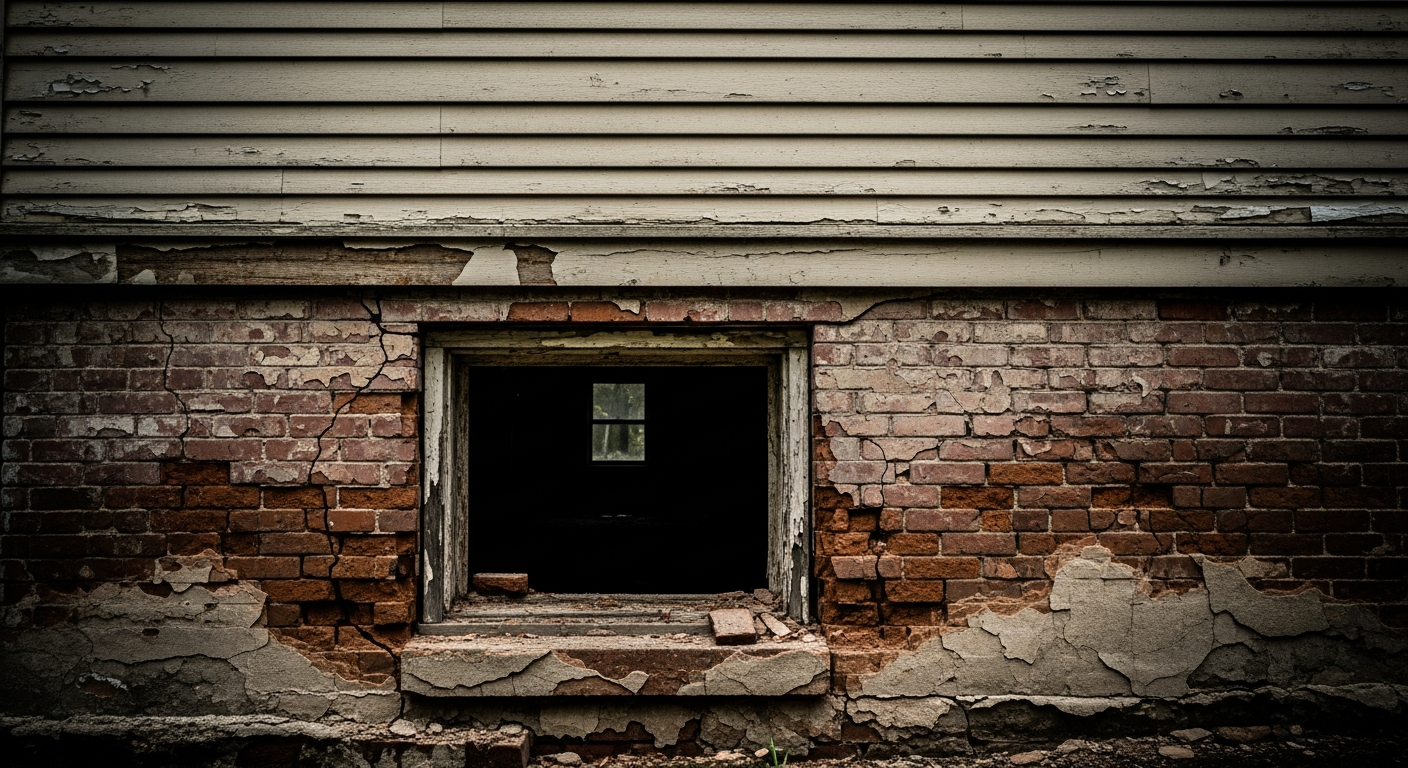

Because these transition spaces are frequently built directly atop or adjacent to the home’s original masonry footings, the historic brick foundation anchoring the mudroom is subjected to brutal mechanical stress. When the structural integrity of this substrate begins to fail, the symptoms do not appear overnight. They manifest as a powdery white rash on the brick, followed by aggressive cracking, flaking paint, and the eventual spalling of the masonry face itself.
Repairing historic brick in the Cuyahoga Valley requires absolute adherence to the laws of physics, chemistry, and substrate mechanics. To permanently stop moisture damage in its tracks, one must look beyond surface-level aesthetics and address the elemental forces attacking the foundation.
The Brutal Mechanics of the Akron Freeze-Thaw Cycle
Historic brick, particularly the softer, low-fired clay masonry common in century-old Akron architecture, operates as a rigid sponge. Driven by capillary action, moisture from the surrounding soil—and from snow-soaked boots melting on the mudroom floor above—wick continuously into the porous masonry matrix.

Work Directly with Torlando Hakes
Skip the color choice stress. Work directly with me as your personal Color Designer to select the perfect architectural palette for your home, and get a Complementary Color Consultation when you purchase paint through us.
Water expands by approximately nine percent when it freezes. In a climate defined by rapid temperature fluctuations, moisture trapped inside a brick foundation will freeze, expand, thaw, and contract dozens of times in a single winter. This hydrostatic pressure exerts thousands of pounds of force per square inch from within the brick itself. If the moisture is trapped by an improper surface coating, the expanding ice acts as a hydraulic wedge, violently shearing off the outer face of the masonry. In the trades, this structural failure is known as spalling, and it is irreversible.
Diagnosing Efflorescence: The White Powder of Structural Decay
Before spalling occurs, the foundation issues a clear chemical warning. As groundwater migrates through the brick and mortar, it dissolves naturally occurring alkaline salts. When this mineral-heavy moisture reaches the interior face of the mudroom foundation, the water evaporates into the conditioned air, leaving behind a crystalline deposit of salt on the surface.
This crystalline residue is called efflorescence. It is a critical diagnostic indicator of active moisture transmission. Novice contractors routinely make the catastrophic error of treating efflorescence as a mere stain. They wire-brush the surface and immediately apply a thick coat of standard acrylic latex paint. This ignores the substrate's mechanical reality. The salt deposits indicate that water is actively moving through the wall; applying a plasticized film over an active moisture channel guarantees future coating failure.
Substrate Remediation and Mortar Compatibility
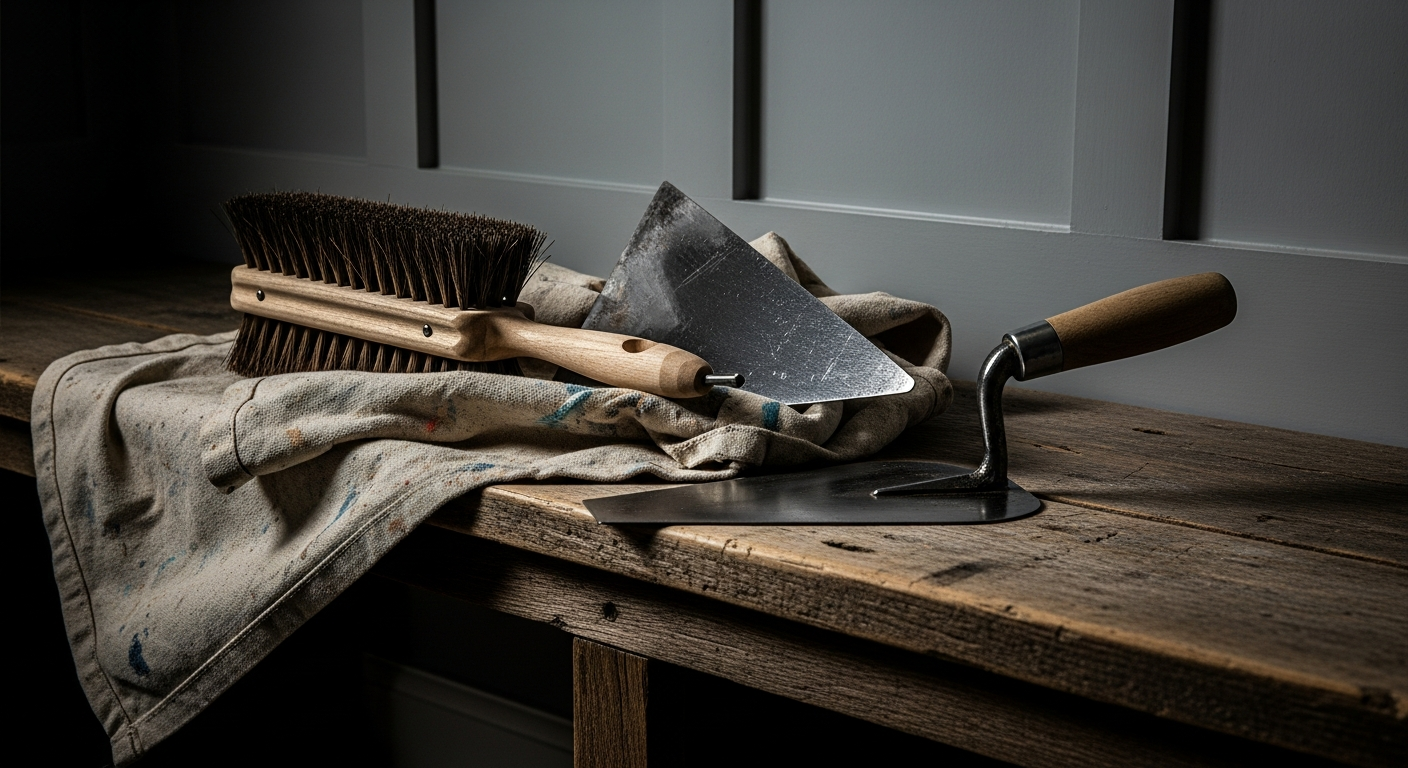
Proper remediation begins with the careful neutralization of the efflorescence and the restoration of the mortar joints. Chemical eradication requires scrubbing the affected masonry with an acidic masonry cleaner or white vinegar to break down the alkaline salt deposits, followed by a thorough neutralization with fresh water. Aggressive high-pressure washing must never be used on historic interior brick, as the extreme PSI will obliterate the delicate fired crust of the clay.
Once the substrate is chemically neutral and fully dry, the mortar joints must be inspected. Soft, crumbling joints must be raked out and repointed. The critical law of masonry repair states that the repair mortar must always be softer and more vapor-permeable than the surrounding brick.
Historic Akron foundations were built using highly breathable, flexible lime-based mortars (Type O or Type K). Patching these foundations with modern, rigid Portland cement creates a disastrous mechanical mismatch. Under the stress of the next freeze-thaw cycle, the inflexible modern cement will refuse to yield, forcing the softer historic brick to shatter under the thermal load.
The Chemistry of Vapor-Permeable Coatings
Once the mudroom’s foundation has been chemically neutralized and structurally repointed with compatible lime mortar, the final challenge is surface protection. Coating historic masonry in a space with high moisture loads requires a deep understanding of paint chemistry.
Standard acrylics and elastomeric paints form a continuous plastic membrane over the substrate. While excellent for exterior wood cladding, these non-breathable films trap migrating ground moisture inside the brick. When the Akron winter hits, the trapped water freezes behind the acrylic film, blowing the paint—and the face of the brick—off the wall entirely.
The only acceptable coating for historic brick in a freeze-thaw environment is a potassium silicate mineral paint. Unlike latex, which sits on top of the surface as a glued film, silicate paints undergo a chemical process called silicification. The liquid potassium silicate reacts violently with the mineral compounds in the brick and mortar, fusing at a molecular level to become a permanent, petrified extension of the masonry itself.
More importantly, silicate mineral coatings possess a remarkably high vapor permeability. They allow water vapor to freely pass through the coating and evaporate into the mudroom’s ambient air, preventing moisture accumulation within the brick matrix.
Craftsmanship That Outlasts the Elements
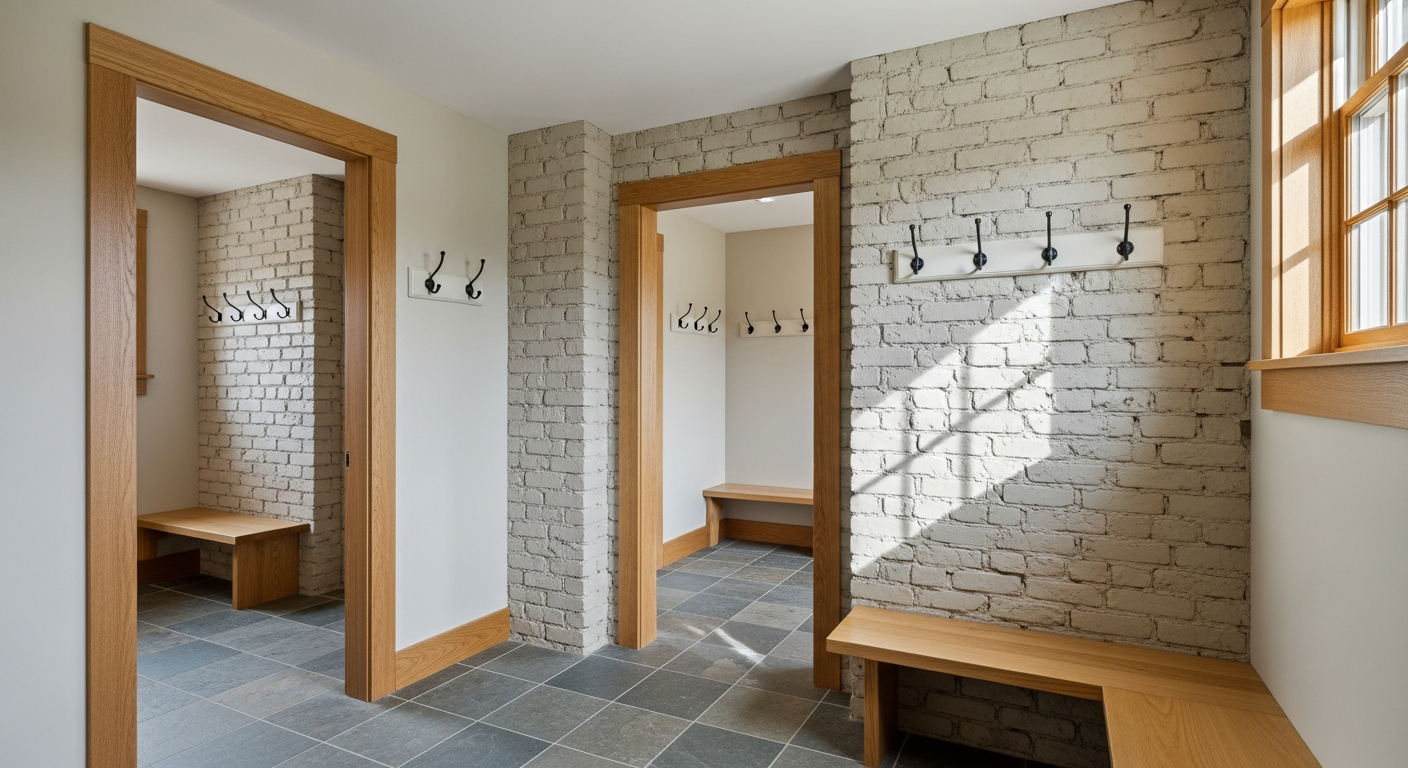
A mudroom transition engineered to survive the grueling realities of Northeast Ohio is not built on temporary cosmetic fixes. It is built on a foundation of unyielding craftsmanship and mechanical truth. By properly analyzing the substrate, respecting the chemistry of historic lime mortars, and utilizing highly permeable mineral coatings, a crumbling brick foundation can be permanently arrested. True home repair does not fight the physics of the environment; it adapts to them, ensuring the structure stands resolute against the storms to come.
 After
After Before
Visualize Your Space with Color Studio AI
Planning a project? Skip the paint chip guesswork. Use our Color Studio AI to instantly visualize these paint colors on your own walls, or take advantage of our aligned contractor pricing matching current Sherwin-Williams retail promotions.
Book Your Upcoming Paint Project
Craftsman Painter is now scheduling premium transformations. Secure your spot and elevate your property value.
Get an EstimateHelp Others Find Professional Color Insights
Share this story directly to your networks or copy the link to share with friends.