
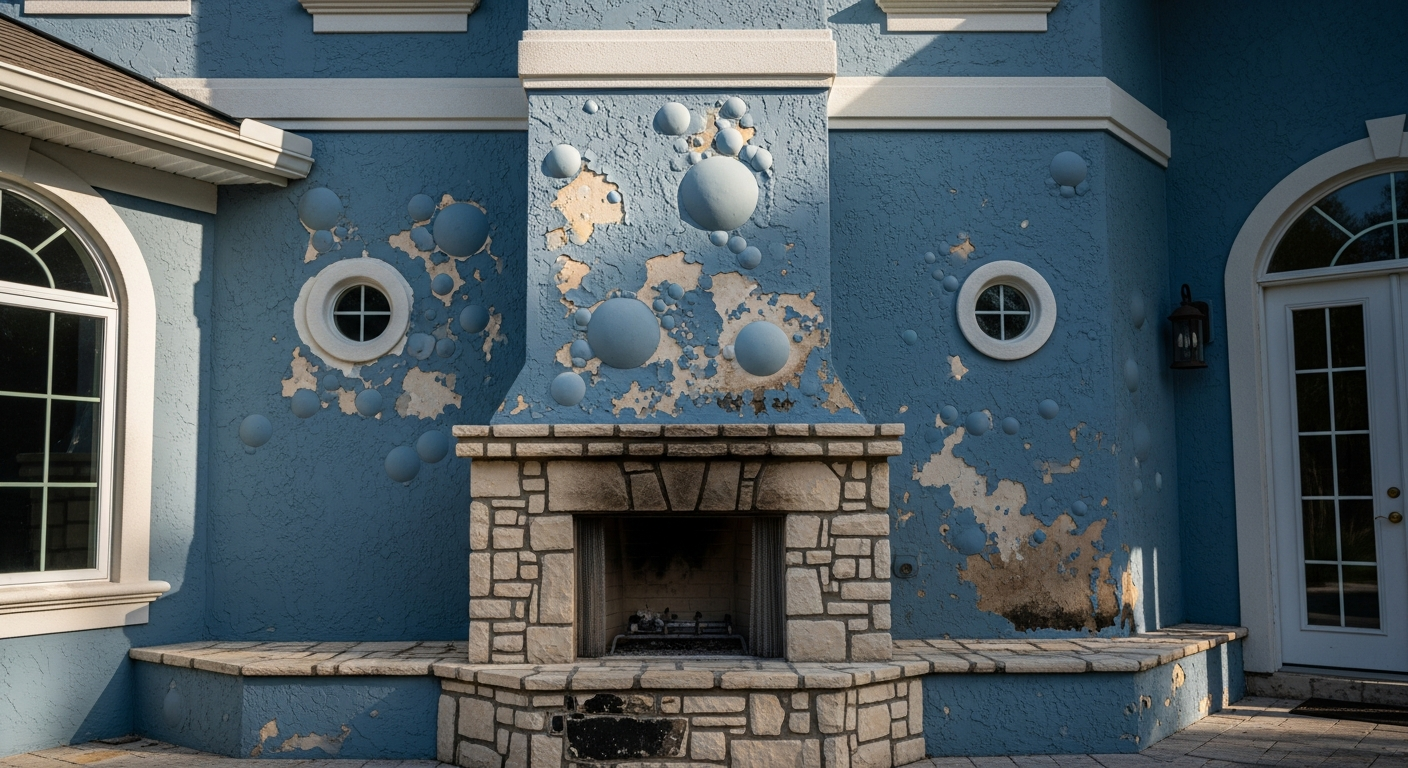

When the exterior walls fail to breathe, the interior architecture suffers. The most common and devastating manifestation of this failure in Central Florida is blistering elastomeric paint on exterior stucco. This is not merely an outside cosmetic issue; it is a profound structural failure that drives hydrostatic pressure directly into the home’s masonry core, threatening the very mortar and stone of the living room hearth. Understanding the mechanics of this failure is the first step in mastering the craft of permanent restoration.
The Physics of Trapped Vapor
Elastomeric coatings are frequently, and often incorrectly, applied to Ocala homes under the premise of waterproofing. The chemistry of an elastomeric paint creates a thick, rubberized membrane designed to stretch over active stucco cracks. However, this same elasticity comes with a fatal flaw in high-humidity climates: a drastically low perm rating.
A perm rating measures moisture vapor transmission—the ability of a substrate to breathe. Ocala’s relentless humidity and heavy afternoon rains guarantee that moisture will eventually infiltrate the stucco substrate, often through micro-fractures in the parapets, unsealed flashing, or failing window returns. Once moisture breaches the cementitious layer, the intense Florida sun turns the exterior wall into a thermal engine. The moisture transforms into vapor, expanding rapidly and seeking an exit.

Work Directly with Torlando Hakes
Skip the color choice stress. Work directly with me as your personal Color Designer to select the perfect architectural palette for your home, and get a Complementary Color Consultation when you purchase paint through us.
Trapped by the impenetrable elastomeric film, this vapor generates immense hydrostatic pressure. The paint film stretches, bubbles, and finally separates from the stucco. This is cohesive failure. Worse still, the trapped moisture, denied an exterior escape, reverses direction. Driven by capillary action, it migrates inward through the porous masonry, arriving precisely at the living room hearth, where it manifests as degrading mortar, efflorescence, and a cold, damp energetic sink in the center of the room.
Substrate Diagnostics and the Extraction Protocol
Master craftsmanship requires treating the disease, not merely painting over the symptom. Fixing blistered elastomeric paint demands a ruthless approach to surface preparation.
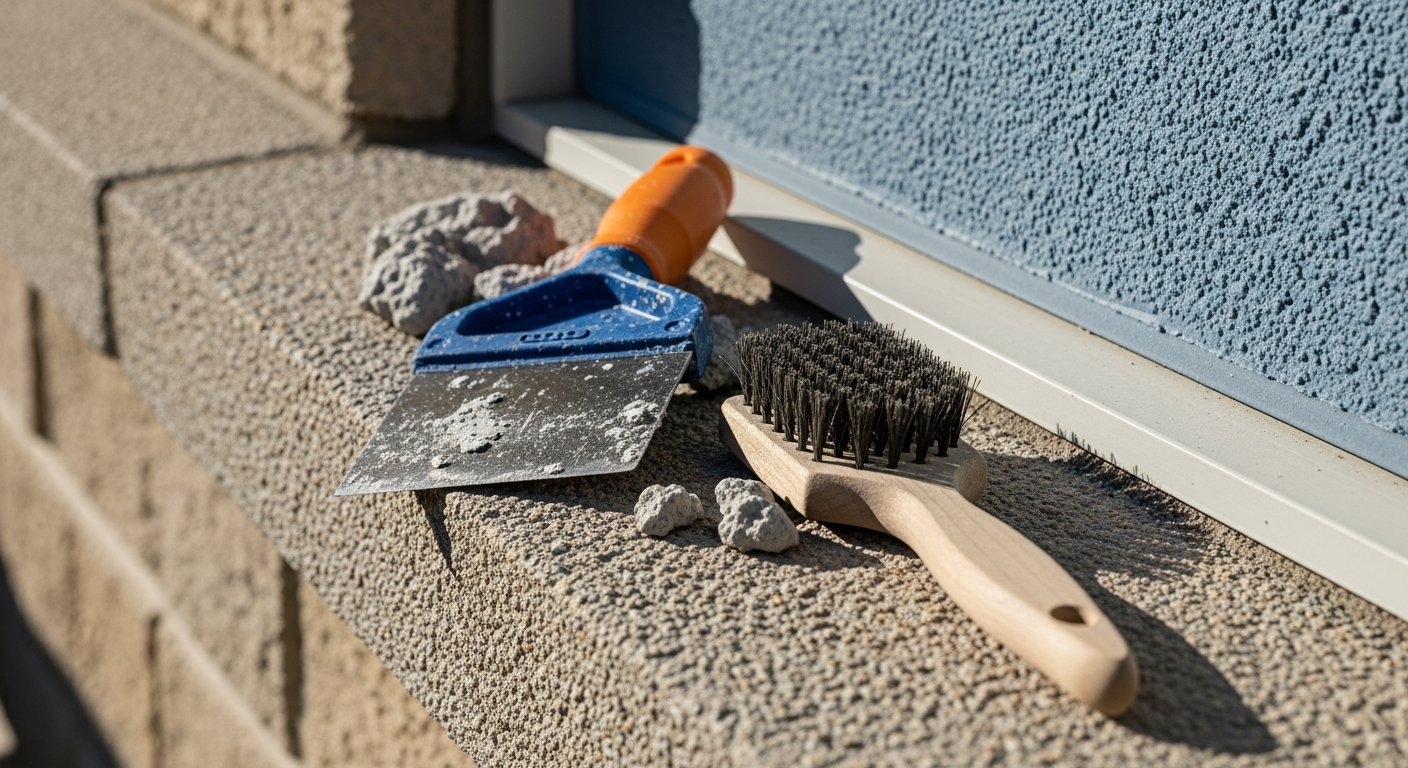
The immediate protocol is mechanical extraction. The failed elastomeric membrane must be removed completely from the affected stucco zones. This requires heavy-duty carbide scrapers, grinders equipped with diamond cup wheels, and aggressive wire profiling to tear away the rubberized film down to raw, sound cement. There is no shortcut here. Any remaining elastomeric material with compromised adhesion will simply act as a catalyst for future blistering.
Once the raw stucco is exposed, substrate analysis dictates a thorough assessment of the wall's pH and moisture content. Ocala’s damp microclimates often foster deep-seated organic growth and efflorescence—crystalline salt deposits left behind by evaporating moisture. These salts act as a bond-breaker. The masonry must be chemically neutralized and etched, typically using an aggressive masonry cleaner, followed by high-pressure washing to clear the pores of all laitance and organic debris.
Engineering a Permanent, Breathable Envelope
With the substrate sterilized, profiled, and structurally sound, the re-coating process must respect the physics of masonry. To permanently protect both the exterior envelope and the interior hearth, the substrate must be allowed to breathe.
The correct specification is a high-perm-rating masonry coating, such as a mineral silicate paint or a highly advanced, breathable 100% acrylic latex engineered specifically for alkaline substrates. Mineral silicate paints, in particular, do not merely sit on the surface; they undergo a chemical process called petrification, fusing integrally with the stucco.
These advanced breathable chemistries possess the specific gravity and surface tension necessary to shed driving liquid rain while maintaining a high perm rating. As vapor pressure builds inside the wall from Ocala’s afternoon heat, the coating allows the microscopic vapor molecules to pass safely through the film and into the atmosphere.
By restoring vapor transmission to the exterior envelope, the inward migration of moisture is abruptly halted. The capillary draw stops. The masonry mass dries out, returning the living room hearth to its rightful state—a dry, enduring, and structurally flawless center of the home. True craftsmanship is never just about what is applied to the surface; it is about understanding the unseen forces moving beneath it.
 After
After Before
Visualize Your Space with Color Studio AI
Planning a project? Skip the paint chip guesswork. Use our Color Studio AI to instantly visualize these paint colors on your own walls, or take advantage of our aligned contractor pricing matching current Sherwin-Williams retail promotions.
Book Your Upcoming Paint Project
Craftsman Painter is now scheduling premium transformations. Secure your spot and elevate your property value.
Get an EstimateHelp Others Find Professional Color Insights
Share this story directly to your networks or copy the link to share with friends.