
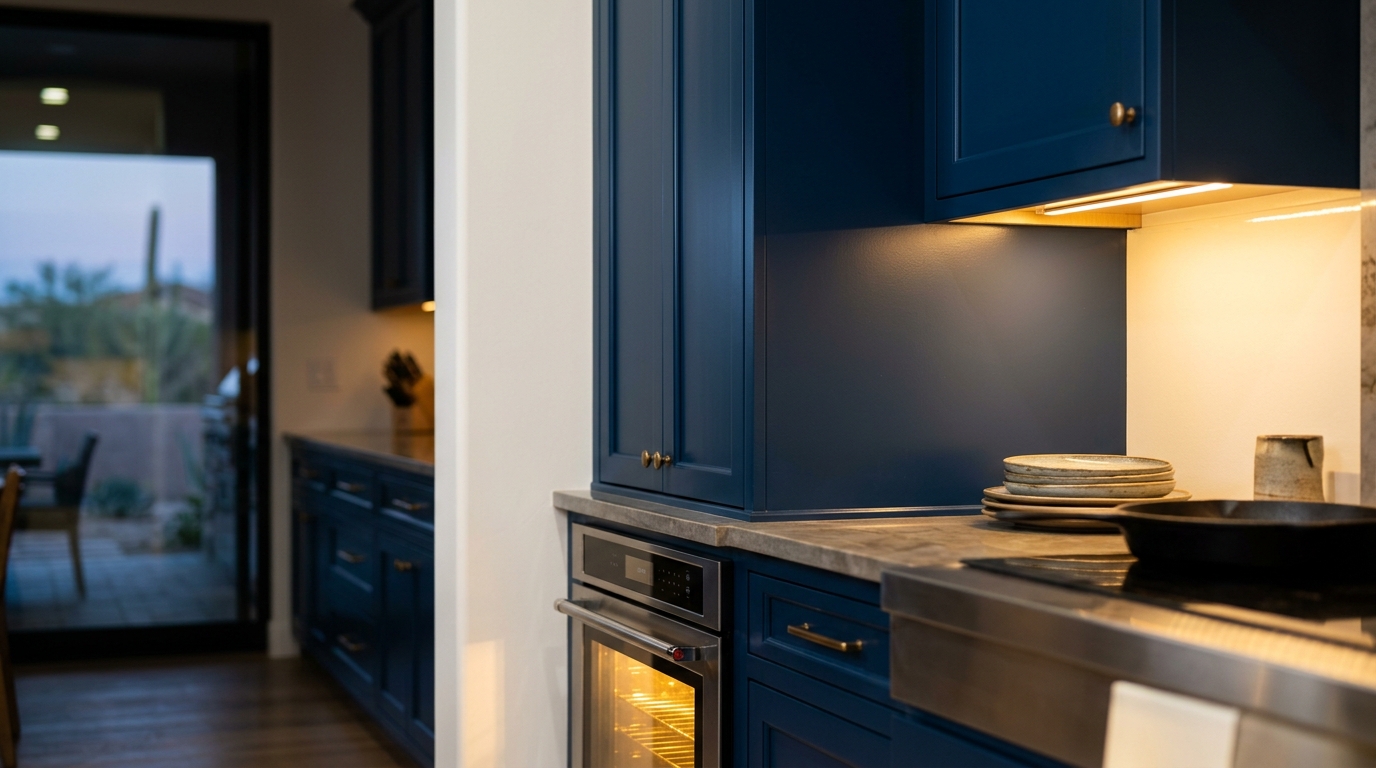

When the structural envelope of a kitchen fails, the operational hygiene of the space fails with it. Micro-fissures in a stucco backsplash harbor aerosolized grease, carbon, and organic matter, instantly degrading the cleanability of the hearth. Preserving this space requires looking past the high-end appliances and focusing entirely on the chemistry and mechanics of the masonry substrate.
The Physics of Substrate Failure in Extreme Heat
At 115 degrees ambient air temperature, the physics of thermal expansion begin to tear substrates apart. The surface temperature of exterior-facing stucco in direct Phoenix sunlight routinely exceeds 160 degrees. This extreme kinetic energy causes the underlying masonry block to expand.
When a sudden summer monsoon deluge hits that superheated wall, the temperature plummets instantly. This violent thermal shock forces rapid contraction. The sheer mechanical force of this movement translates directly into hairline cracking across the kitchen’s backsplash and storage perimeter. The substrate literally pulls itself apart.
Book Your Upcoming Paint Project
Craftsman Painter is now scheduling premium transformations. Secure your spot and elevate your property value.
Get an EstimateThe Vapor Trap and Elastomeric Blistering
The amateur instinct is to bury these masonry fractures under a heavy, high-build coat of elastomeric paint. This is the precise moment the structural failure accelerates.
Elastomeric coatings are engineered to bridge minor gaps through flexibility, but they possess specific perm ratings indicating their vapor permeability. The kitchen operational center is an inherently wet zone. Between sink splashback, food preparation moisture, and driving monsoon rains, water penetration is inevitable. If moisture breaches the system through an unsealed crack and is then painted over, a vapor trap is created.
When the desert sun strikes a wall holding moisture behind a low-perm elastomeric layer, the trapped water rapidly vaporizes into a gas. This expanding gas exerts massive hydrostatic pressure against the back of the paint film. The pressure eventually overcomes the tensile adhesion of the coating, stretching it outward until it pops off the wall. Blistering is rarely a defect in the paint itself; it is a mechanical failure of trapped vapor and compromised substrate preparation.
Master Craftsmanship for Permanent Hairline Repair
True repair requires structural intervention, not just a cosmetic topcoat. The substrate must be aggressively consolidated before any architectural coating is applied.
Hairline fractures around the culinary hearth must be mechanically routed to create a subtle "V" groove, exposing sound, uncontaminated masonry. All loose latency and efflorescence must be evacuated from the channel. Dust is the enemy of adhesion.
Crucially, the exposed stucco must be treated with a high-quality, alkali-resistant masonry primer. Freshly exposed stucco is highly alkaline. Applying an elastomeric coating directly to a high-pH, dusty substrate guarantees immediate delamination. The primer penetrates the microscopic pores of the stucco, balancing the surface pH and locking down chalky residue to create a chemically stable foundation.
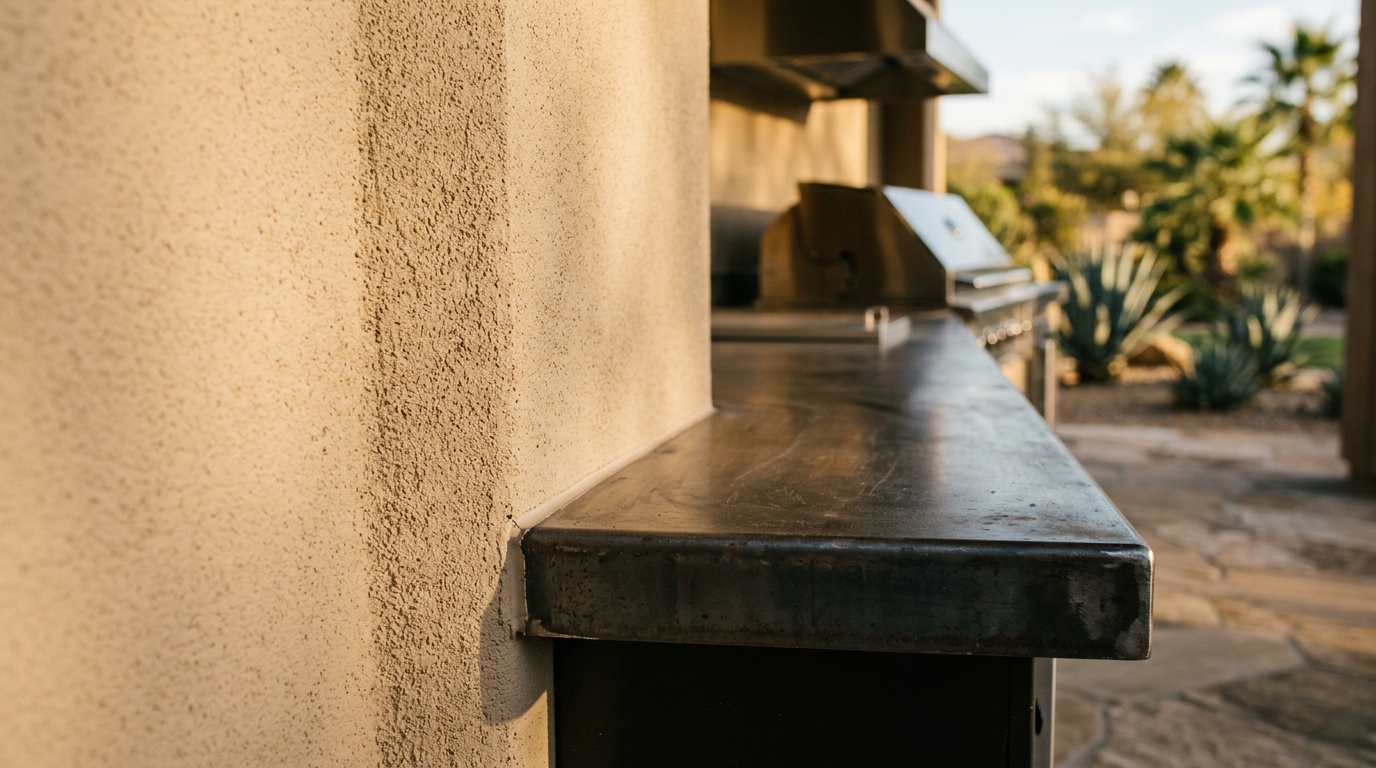
Bridging the Gap With Brush-Grade Mastics
Once properly primed, the routed crack requires the application of a highly engineered, brush-grade elastomeric patching compound. Unlike rigid spackle, this material possesses the exact tensile strength and elongation memory required to handle the daily micro-movements of the block wall without tearing.
This compound must be worked deeply into the routed channel and feathered seamlessly into the surrounding aggregate. Flawless execution here ensures the culinary workspace remains hygienic. Jagged, poorly patched cracks disrupt the ergonomics of the space, creating friction points that trap dirt and moisture, destroying the cleanability of the food preparation zone. A monolithic, perfectly transitioned surface is absolutely essential for both structural defense and culinary sanitation.
Executing the Monolithic Envelope
Applying the final architectural coating requires a strict adherence to mil thickness. Elastomeric paints must be applied at a precise wet film thickness (WFT) to achieve the dry film thickness (DFT) formulated by the paint chemist.
If applied too thin, the coating loses its elasticity and its ability to bridge future micro-fractures. If applied too thick, vapor permeability drops to near zero, increasing the risk of future blistering. The material must be applied via a high-pressure airless sprayer and immediately back-rolled by hand. The physical pressure of the roller forces the acrylic resin deep into the varied profile of the stucco, ensuring profound mechanical keying.
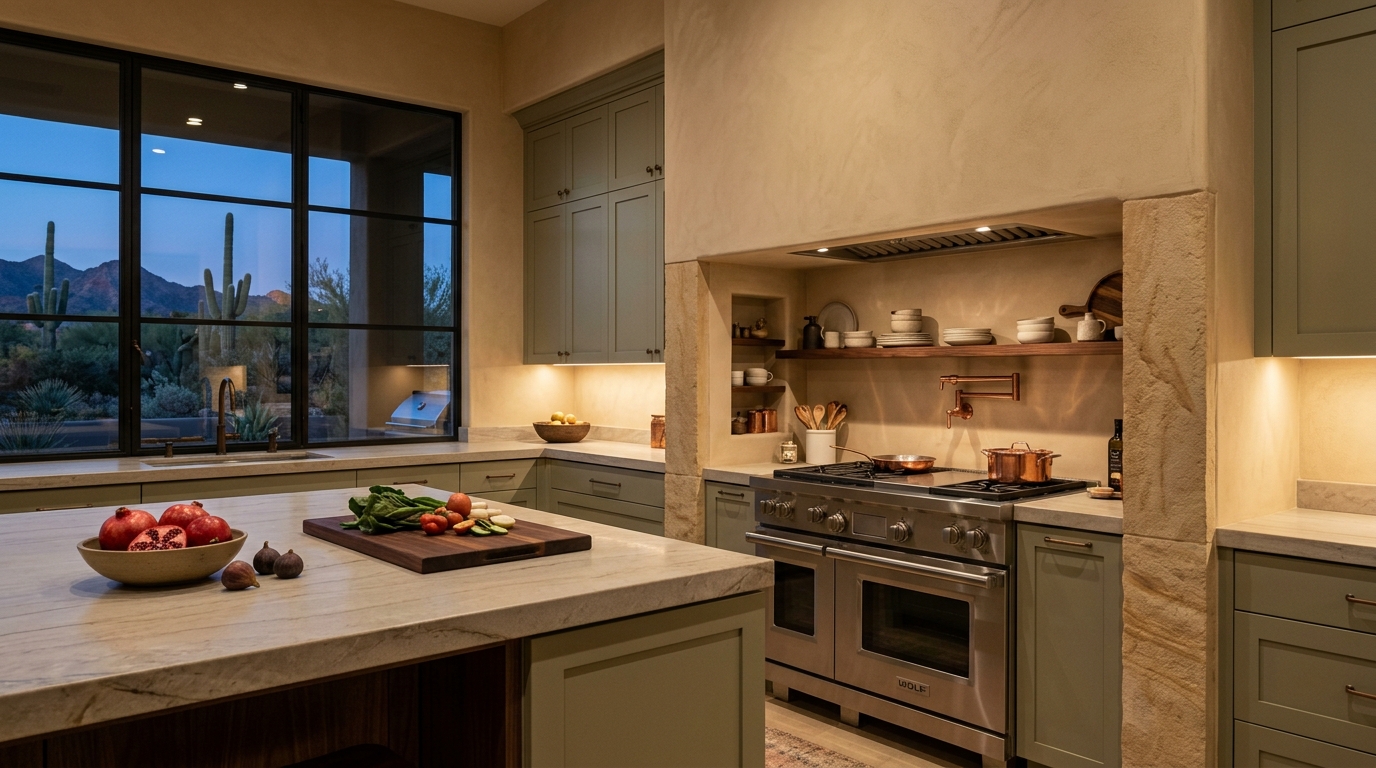
The integrity of the kitchen operational center relies entirely on the structural envelope protecting it. Mastery over substrate mechanics, a deep understanding of vapor drive, and an uncompromising approach to surface preparation are the only permanent defenses against the brutal physics of the Phoenix climate.