
Feeling stuck? It happens. One week you’re turning down work, and the next you’re staring at the phone, wondering where the leads went. This feast-or-famine cycle is one of the toughest parts of running a contracting business. The pressure can be overwhelming, leading to a kind of paralysis where you know you should be doing something, but you don’t know where to start.
The good news is you don’t need a massive marketing budget or a revolutionary new strategy to break out of a slump. Real, sustainable growth comes from small, consistent actions. Here are three things you can do this Monday to get unstuck and start building momentum.
1. Just Start Small (The 5-Minute Rule) ⏱️
When you’re discouraged, the thought of launching a huge marketing campaign feels impossible. So don’t.
During a recent coaching call, contractor Carlos Rubio of Rubio's Painting shared a brilliant piece of advice he learned from a book on exercise. He pointed out that the biggest barrier to working out isn’t the exercise itself, but the mental hurdle of starting. You don’t have to commit to a two-hour workout. The goal is simply to get to the gym.

Work Directly with Torlando Hakes
Skip the color choice stress. Work directly with me as your personal Color Designer to select the perfect architectural palette for your home, and get a Complementary Color Consultation when you purchase paint through us.
The magic is what happens once you’re there. You rarely just turn around and leave. You end up walking on the treadmill for 20 minutes, you lift a few weights, and before you know it, you’ve gotten a real workout in. The small commitment breaks the inertia.
The same principle applies directly to your business. The hardest part is getting out of the truck. Instead of telling yourself you need to knock on 100 doors, just commit to 10. Instead of planning to canvas an entire subdivision, just do one street.
Action Step for Monday: Commit to just 20 minutes of marketing. That’s it. Grab your business cards or door hangers, drive to a neighborhood you’d love to work in, and walk up and down one block. The goal isn’t to land a massive job in those 20 minutes. The goal is to break the cycle of inaction. You’ll be surprised — once you start, you’ll likely keep going. You’re building a habit, and that’s what creates results over time.
2. Go Analog: Boots-on-the-Ground Marketing Wins 🚶♂️
We get so caught up in digital ads and social media that we forget what actually works. I recently spoke with a contractor who finally hit the $1,000,000 mark. He spent $25,000 on paid ads, which brought in only 10% of that revenue — a whopping 25% customer acquisition cost ($25,000 cost for $100,000 revenue)…not to mention the cost of sales commissions, the time it took to go on all of those bids, and time spent writing proposals. The other 90% of his work came from word-of-mouth and referrals.
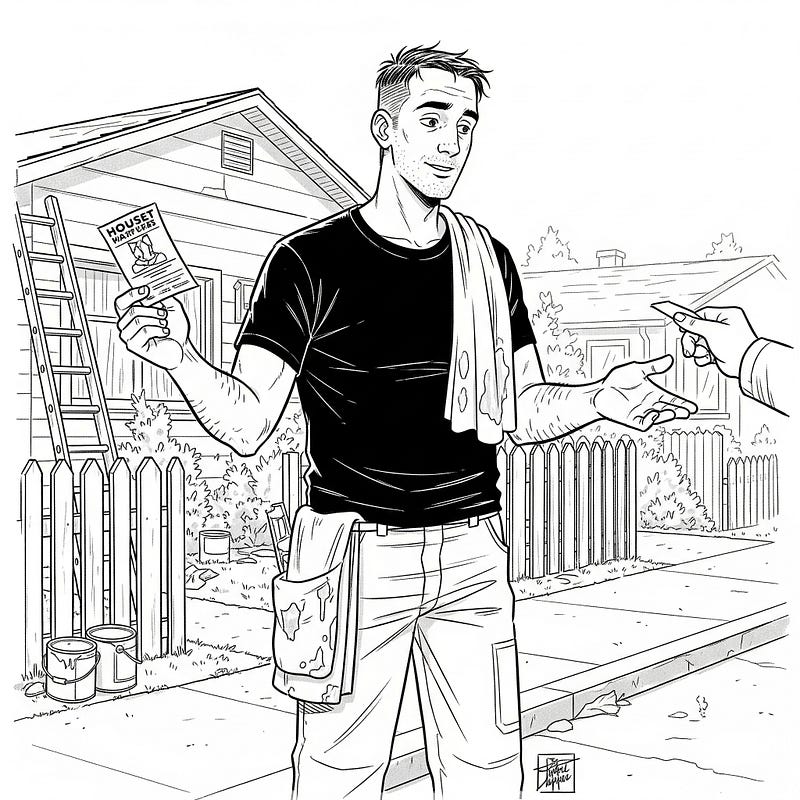
Traditional, boots-on-the-ground marketing is powerful because it’s targeted and builds genuine familiarity. When you leave a card on a door, you’re targeting a specific house you want to work on. There are no bad leads.
Action Step for Monday:
- Prime the Pump: If you have an active job, place yard signs in the area. Then, take 30 minutes to walk the surrounding streets leaving door hangers that say, “We’re working for your neighbor at [Address]!” This creates incredible social proof.
- Go Exploring: Don’t have an active job? No problem. Go to a desirable neighborhood, put out a yard sign at a major intersection, and canvas the street. A lead I got yesterday came from a business card I left on a door two months ago. It works.
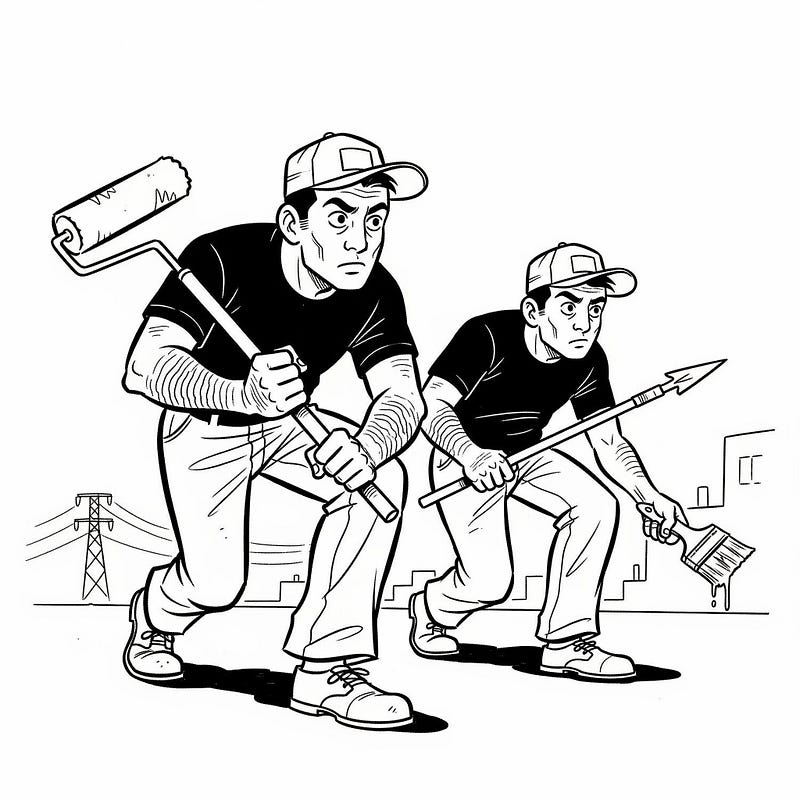
3. Hunt as a Pack, Not a Lone Wolf 🤝
In the Arctic, the Inuit have a cultural tradition that has ensured their survival for millennia: a hunter shares their catch. When a seal is brought back to the village, the food is distributed among the community. This isn’t just generosity; it’s a fundamental understanding that survival depends on the group, not the individual. A skilled hunter might be successful today, but empty-handed tomorrow. Sharing ensures everyone eats, every day.
This wisdom is directly applicable to our own feast-or-famine business. We can’t control the economy, the competition, or a sudden dip in demand. Relying solely on our own efforts leaves us vulnerable.
Stop viewing other quality contractors as your competition and start seeing them as your community. When you’re swamped with work, you can sub a project to a trusted peer. When they’re busy and you’re slow, they can do the same for you. This creates stability for everyone and smooths out the feast-or-famine cycle.
Action Step for Monday: Identify one other small contractor in your area whose work you admire. Give them a call and invite them for coffee. Don’t ask for anything. Just build a relationship. Float the idea of helping each other out when one of you is overwhelmed. Building this network is one of the most resilient things you can do for your business.
Success isn’t about grand gestures; it’s about the small, smart things you do every single day. So pick one of these, and go get it done.
P.S. This “hunt as a pack” mindset is the core principle behind the Craftsman Painter Collective*, a close-knit, referral-only community for professional painters dedicated to mutual growth and elevating the trade. While membership is by invitation from a current member, the best way to get on the path is to do exactly what this article suggests: build strong relationships and a reputation for excellence in your local market. You can learn more about our mission at* craftsmanpainter.com/collective.
 After
After Before
Visualize Your Space with Color Studio AI
Planning a project? Skip the paint chip guesswork. Use our Color Studio AI to instantly visualize these paint colors on your own walls, or take advantage of our aligned contractor pricing matching current Sherwin-Williams retail promotions.
Book Your Upcoming Paint Project
Craftsman Painter is now scheduling premium transformations. Secure your spot and elevate your property value.
Get an EstimateHelp Others Find Professional Color Insights
Share this story directly to your networks or copy the link to share with friends.