

But field marketing might tip the odds in your favor.
Pay an pray
In the early days of business I scoffed at other small businesses and trade companies that claimed all their work was word of mouth and that they didn’t need to do any marketing. I largely saw it as a recipe for being a one man show your entire life. I’d say things like hoping and praying isn’t a marketing strategy. I thought smart owners put their money to work for them and paid their way through growth. $50,000 later, and with horrible margins, I started to think prayer might be worth a shot.
Does a paid marketing strategy work? Of course. Is it just as easy to do bad with it as it is good? Absolutely. Are there ways to generate business without cash? Yes. It’s called effort.
Not enough business owners or sales professionals like the idea of effort. They see all their business friends and celebrity crushes posting pictures of vacationing all the time and touting how their systems do a great job of delegating all of their stresses onto their team. (More on that in a future post.) They paint a reality that looks like a lot of fun, but only represents a small portion of what leads to a fulfilling life. Hint: delegating yourself out of a job is not the epitome of self-fulfillment that we all thought it was.

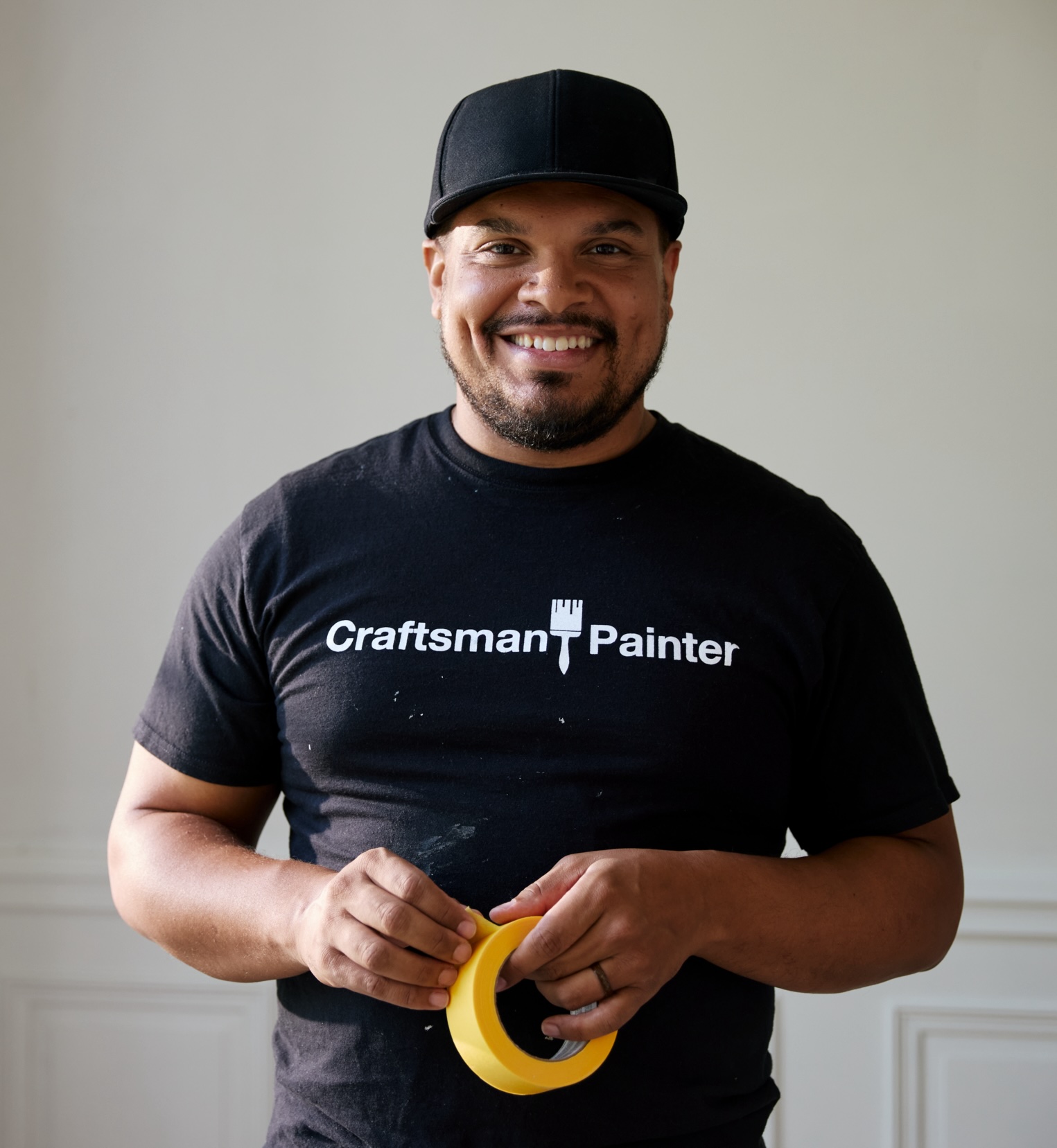
Work Directly with Torlando Hakes
Skip the color choice stress. Work directly with me as your personal Color Designer to select the perfect architectural palette for your home, and get a Complementary Color Consultation when you purchase paint through us.
In B2B sales, I always say business owners buy things because it will either make them money, save them money, or buy back their time. If your offer doesn’t do one of those three things you don’t have an offer. But the more balance sheets I stare at in B-School the more I realize that buying back your time rarely leads to a more profitable use of time. It usually leads to spending your morning “optimizing” so that you can gloat about it in a Facebook Group and spend the rest of the day arguing on a thread about whether you’re full of sh😬😬😬😬😬😬.
I’m all for balance. I like family, I like friends, I like fun, and fitness (I just threw that last one in because I realized I was alliterating and wanted to keep it going) but I also like work. Good hard work. And that’s a healthy part of life. If you’re running from it and calling it delegation or building a passive asset, I ask, what are you running from? Why have you built a business that’s so miserable for you that you’re working like a dog trying to figure out how to get out of it? I digress. This was supposed to be about marketing.
My point is, money doesn’t solve everything and it reaches the point of diminishing returns at varying levels. Sometimes it just doesn’t work. It’s the combination of capital and labor, judiciously applied, that ultimately gets the job done and leads to a life you can look back at and be proud of. If you really want a thrilling Friday night, look up the Cobbs-Douglas Function and prepare for the Kavorka Effect as it takes you over completely.
What the Heck is Field Marketing?
Have you heard of this one yet? It’s basically a rebrand of the old school. Events, passing sh* out, and lots of freaking doors. On a recent podcast, Lenny Gray told me that going D2D typically gets a 1–3% closing ratio, and that the goal needs to be talking to 7 people per hour. Lenny Gray wrote the book D2D Millionaire and has trained and deployed D2D teams all across the US. Let’s assume his data is true enough. This would mean talking to somewhere between 33 and 100 people would book you a job.
At first glance, that feels like a lot. And it feels kinda low. I mean, compared to inbound leads — which, the last 20 years have convinced us is the only way to market — that feels like a lot of work for a job.
But does the math work?
Well, if you have no marketing dollars, what choice do you have? Let’s start there.
Field marketing, in this sense, is your option. Target a neighborhood you want to paint, and get your 10,000 steps in for the day. Open your mouth and talk to people.
The math is, you don’t have money for marketing. You have an endless supply of your own effort though.
Mmm…CAC
But how does it compare to paid sources? Let’s start with the low end of results, for you worse-case-scenario people out there. You need to talk to 100 people to get a job. That’s just over 14 hrs of pounding the payment. If you’re in a hot streak that number is about 5 hrs.
The average hourly wage for an entry level marketer in the US is between $15–$25/hr. Let’s just assume that your higher skilled marketers would take less time to generate the lead than the lesser skilled. Is that fair? So if we put the $25/hr person generating a sale in 5hrs, then we’re looking at a $125 customer acquisition cost (5hrs x $25). But if they are on the opposite end of the spectrum (14hrs x $15) then you’re at a CAC of $210. Mind you, these are sales we are talking about. Not just leads. This would be the result of talking face-to-face with 100 people.
The threshold for CAC varies widely between industry and company. Benchmarks are helpful but they pose a threat in making you think that benchmarks are, by consequence, acceptable or a good reflection of what’s possible. They can be both or they can be neither. Sherwin-Williams is a good example where benchmarks are marginally beneficial simply because they are miles ahead of their competition. It makes for an apples to oranges comparison.
The best answer comes from your willingness to pay for new business. Since anything above marginal cost is what maximizes profit (from the most expensive jobs to acquire to the least expensive), anything above marginal cost is leaving money on the table.
If your profit per job can’t cover the CAC, the CAC is obviously too high. But if you can, the game now becomes how do we lower CAC? It comes on both ends. Better training for sales staff. Better at client profile targeting.
Or the most obvious, charging such that your CAC is a smaller relative portion of revenue. I’ve seen enough to know there is no right or wrong answer other than paying so much that you’re losing money. The goal is simply profit maximization. Getting top of the market, mid-range and bottom range while prioritizing capacity and deliverability as close to the top of the market as you can. Recognizing of course that if you lack the talent pool for top of the market offers you will be limited in your ability to command top of market prices. Also understanding that top of the market pricing yields slower sales. Slower sales means by necessity a smaller team.
This is the essence of strategy. What’s your play? Capture market share? Or capture higher margins?
Case Studies
But let’s not completely castrate benchmark data. Here’s a case study from two companies. The first, a traditional painting company in Nashville, TN.
Facebook Ad spend for the period captured was $1,566. They sold $35,008. Average job size was $7,001. CAC for Facebook Ads was $315.05 (4.5% of sale).
Google Ad spend for the same period was $4,481. They sold $45,766 through Google. Average job size was $6,538. CAC for Google ads was $640.14 (9.8% of sale).
Angi spend was $2,772. Total revenue = $24,694. Average job size, $6,173. CAC for Angi, $692.94 (11.2% of sale).
Finally, Direct Mail. Spend was $7,560. Sold was $53,160. Average job size, $8,860. CAC for Direct Mail = $1,260 (14.2% of sale).
In this case, none of the digital ad strategies produced a lower CAC than the numbers reflected in the data delivered by my gracious podcast guest. That doesn’t mean don’t use those sources. Remember we want to capture as much of the demand as we have capacity to produce. But even if we flipped our assumptions and paid an entry level marketer $25/hr to produce one sale every 14hrs, the CAC is still $350 which is right in the ball park of this case study’s performance with Facebook ads which was their highest performing lead source.
Let’s look at another company using Facebook Ads. In this case, the company is a startup painting company focusing on Facebook ads and virtual sales exclusively.
Facebook Ad spend for one month was $3,418. Revenue sold was $74,309. The average job size was $6,755. CAC was $310.71 (4.6% of sale).
That’s interesting, but what?
I’ll set aside the surprise I’m feeling that the Facebook marketer got the same results as the DIYing paint contractor and focus again on the fact that going door to door is just as effective if not better. Stop hiding behind the computer. It just takes effort.
If you’re strapped on cash, I’d venture to say that the effort is worth it. Especially if your cash issues are in any way related to how much free time you’re having these days.
There is nothing stopping you from doing both, by the way. Go to a job site, take some pictures. Then go canvassing. In between houses post the pictures and run the ad from your phone. That’s putting both capital and labor to work; and getting your 10,000 steps in will do you some good. We would all do ourselves a service if we walked more.
— Torlando
P.S. Check out this episode of PaintEd where Chris Moore from Elite Business Advisors gives MOORE ways to use your effort for marketing than you’ll ever have time for. It’s great stuff. Do a couple of these things and your world will change.
P.S.S. At the Collective, we’re doing really cool things with Estimate Rocket proposal documents and virtual selling on behalf of members of the collective. Not limited to ER users, we can work with any CRM. Join our next cohort of new members. Get 1-on-1 help cleaning up your data, reactivating your customer list, and implementing a virtual sales system.
 After
After Before
Visualize Your Space with Color Studio AI
Planning a project? Skip the paint chip guesswork. Use our Color Studio AI to instantly visualize these paint colors on your own walls, or take advantage of our aligned contractor pricing matching current Sherwin-Williams retail promotions.
Book Your Upcoming Paint Project
Craftsman Painter is now scheduling premium transformations. Secure your spot and elevate your property value.
Get an EstimateHelp Others Find Professional Color Insights
Share this story directly to your networks or copy the link to share with friends.