

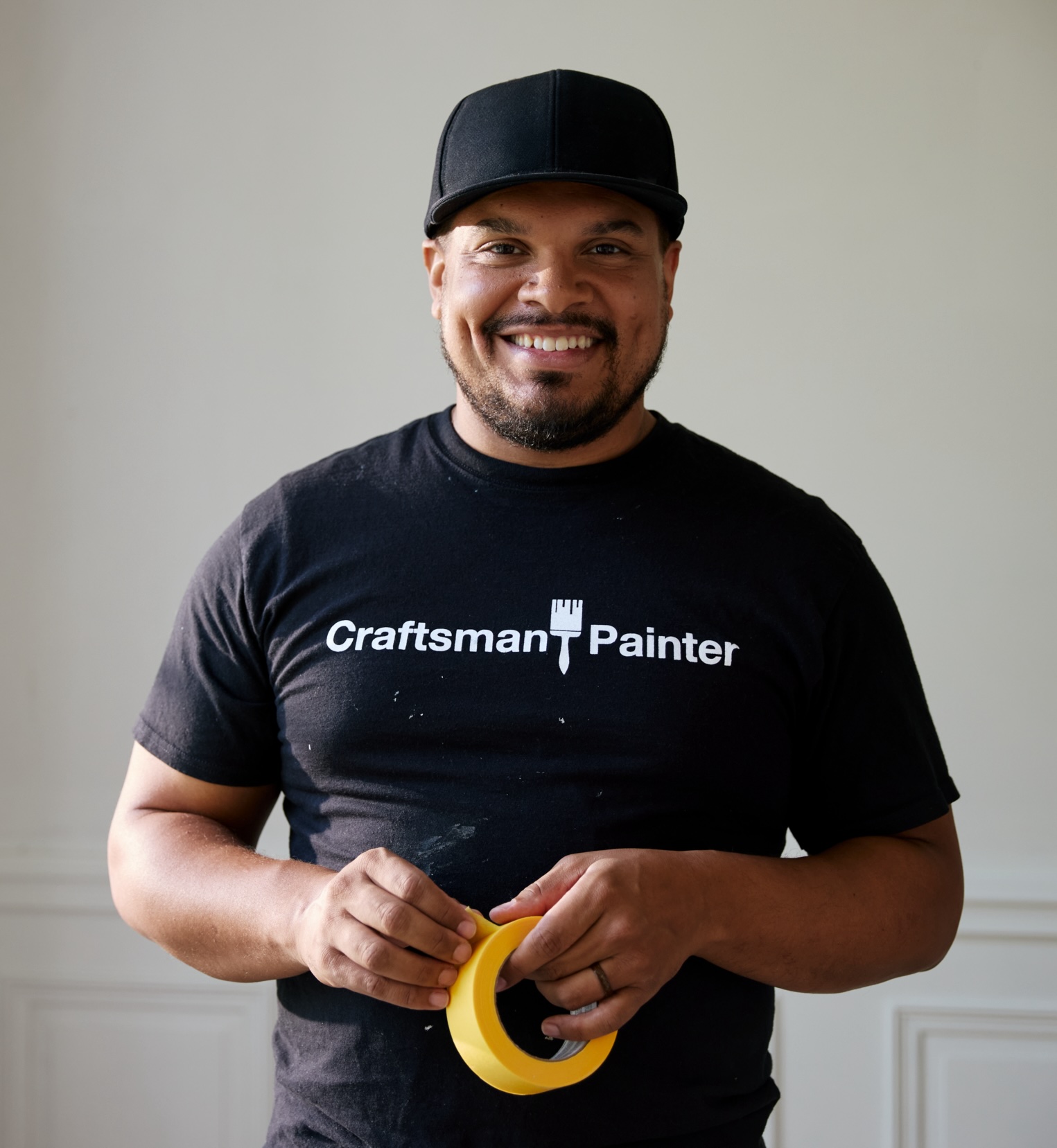
Thoughts from my conversation with JB Brown, M&A expert.
Listen to full PaintED episode: Apple Podcasts | Google Podcasts | Spotify
There are times in business where the work just really gets to you. You feel burnt out. Tired. Old. Ready to give in. But you’ve worked so hard to build this thing. Wouldn’t it be a shame to just walk away with nothing?
I’ve felt that at times in my career and I’ve even made the hard decision to walk away.

Work Directly with Torlando Hakes
Skip the color choice stress. Work directly with me as your personal Color Designer to select the perfect architectural palette for your home, and get a Complementary Color Consultation when you purchase paint through us.
Some of the greatest lessons we’ll ever learn are from our greatest moments of failure. From the book I’m reading right now, the Upside of Down:
“The business writer Harvey Mackay tells a story about Tom Watson, who was president of IBM during the first half of the twentieth century. A young executive was called in to Watson’s office after a string of bad decisions had cost the company a hefty sum. As he entered the office, the executive said, “I suppose after that set of mistakes you will be wanting to fire me.” Watson is said to have replied, “Not at all, young man. We have just spent a couple of million dollars educating you.”
The story may be apocryphal, but the sentiment is not. It’s why in Silicon Valley, having worked on a start-up that failed is viewed as a résumé enhancer. Good judgment, as the aphorism goes, comes from experience — and experience comes from bad judgment.”
At the very least, your good reputation and your hard earned wisdom must be worth something right?
It is! But, figuring out what it’s worth is one thing and finding a buyer is another. And knowing whether or not it’s right for you is something only you can answer.
I had the opportunity to sit down with JB Brown of White Buffalo Advising to talk about Mergers and Acquisitions in the contracting space and here are my top 3 take-aways:
Start with the end in mind
I often ask the people I lead and consult, “What do you want your life to look like?” That question has to be asked here. What do you want it to look like? Be honest but be real.
I can tell you that a life without work isn’t all that it’s cracked up to be. It sounds great to be on vacation all the time or to sleep in as long as you want to all day or not have to be anywhere. But when I commented on the show that if you eat Lobster everyday it starts to taste like soap, JB laughed and told a story about when he was a kid growing up in Maine, they had a weird season where Lobster meat was cheaper than ground beef and they had Lobster for two weeks straight and it did, in fact, lose its appeal.
I’ve talked to people who spend a lot of time vacationing and I don’t think I’ve heard one of them say, yes, I could do this full-time. They’ve all told me that at some point they were ready to get back to work.
Work is healthy. Work keeps us sharp. Work is a necessary part of life.
Know your numbers
I am not a valuation expert so it’s best to take direct advise from a professional on this one but here is my take from it in basic terms. The key numbers JB talks about are revenue and EBIT.
For revenue, he says that anything under a million annually is going to be a tough sell but that at the 5 million dollar mark things get interesting.
EBIT is a shortened version of a term you may have heard called EBITDA. EBITDA stands for Earnings Before Interest, Taxes, Depreciation, and Amortization. JB said to focus on the first four letters because it’s a little more simplified and for businesses in the contractor space it’s usually the most determinant factor.
In other words, what is the company profiting before you account for taxes being taken out?
For the vast majority of valuations, the EBIT is multiplied by a factor ranging from 1–4x. Meaning that if your business is profiting 100k then it’s value could be anywhere from $100k-400k. Again, I am not a professional in this specific arena, but this did give me a good idea of a ballpark range to shoot for, understanding that several factors contribute to the actual selling price including over all health of the business, current staff, physical assets, and current market share.
Of course, the biggest factor in being able to sell your business is being able to find a buyer.
Plan for acquisition
To find a buyer, you have to begin to prepare for acquisition long before you’re ready to sell. A business that isn’t prepared to be purchased is not an attractive asset to purchase. And if there aren’t a lot of potential buyers you’ll have to manage your expectations or find alternative options.
To plan for acquisition, you have to first get your business less reliant on yourself.
For most owners, the business running depends on their own efforts, ideas, and direction. The business gets stuff done by the owner instigating forward motion. However, a more sellable business is going to have people hired into decision making positions, and processes for every role and function, and healthy cash flow, so that the acquiring partner isn’t inheriting more problems than they want to solve. In short, they are looking for a turnkey operation.
To get to that point, you have a few options. The first is to sit down and get all the stuff you’re doing that you just keep in your head or know instinctually, and get it down on paper and into a job description and operations manual. You can do that on your own or you can work with a company that helps you put that together. (For example, being a member of the Craftsman Painter Collective gives you access to loads of resources like operating playbooks, and training playbooks.)
Then you want to get your team completely trained and have a system for keeping your people fine tuned and continually educated as new people get hired. Again, you can do this yourself or work with a collective like ours to get access to those done for you resources.
Finally, pay attention to the cash. While your tax accountant is going to look for ways to reduce your tax liability by having you reinvest into the company by acquiring more assets (both a smart thing to do in growth mode and in terms of tax strategy) when you are getting ready to sell, you’ve got to reduce expenses, and increase profitability for 3 consecutive years in order to look attractive.
According to JB, the sale of a business usually takes anywhere from a year to three years. It’s a slow process but it comes with an exciting payoff.
Deciding whether or not the sale of your company is something you want to pursue or not is a big decision and it may not be right for you.
When you sell your painting company you have to think about whether or not it’s going to provide enough of a return to be financially viable for you.
If you’re nearing retirement, the likelihood of the sale of your company making you independently wealthy enough depend on that money long into your retirement years is not likely if your business is hovering around the million dollar mark. You’ll have to think about how you might reinvest the sale of the business into other investment vehicles that are more passive and require less attention than running a painting business, such as rolling that money into real estate.
You also have to be prepared for the idea that the best buyer option may only offer a seller financed offer, meaning that they make gradual payments from the profits of the company until they pay off the agreed sale price. If this is the case, and it’s more common than not, you’ll end up taking the extra cash over time.
If your business is sellable, but you’re not quite retirement age, you have to look at what you want to do with the rest of your life. Is there something other than painting that you’d like to do? If not, you may want to consider building a business around the things you enjoy and where you are most talented.
Building a business with the future in mind, gives you options for the future. Whether that is to pad your retirement, build wealth to propel you into future ventures, or get the added help to take your business to the next level, selling a portion or all of your company may be the route you want to go.
It takes study, and following that little voice that guides you to know what’s best for your business.
Final Note
If you’ve got your eyes on a future sale but aren’t sure about how to get their own your own, taking on a fractional partner may an interesting alternative. A fractional partner will come in as your other half and work for part salary and part sweat equity.
As your fractional partner gets acquainted with the business and takes on more and more responsibilities, one of three things can happen, they can buy you out, help find a buyer, or manage the company and hire staff for your day to day responsibilities.
The benefit to a fractional partner is that if things don’t work out you can make contingency plans for a peaceful exit.
The Craftsman Painter Collective offers fractional partnership with a plan for helping lighten your load while you’re in the business and getting you on the path to profitability.
Go to CraftsmanPainter.com/collective if you’re curious.
 After
After Before
Visualize Your Space with Color Studio AI
Planning a project? Skip the paint chip guesswork. Use our Color Studio AI to instantly visualize these paint colors on your own walls, or take advantage of our aligned contractor pricing matching current Sherwin-Williams retail promotions.
Book Your Upcoming Paint Project
Craftsman Painter is now scheduling premium transformations. Secure your spot and elevate your property value.
Get an EstimateHelp Others Find Professional Color Insights
Share this story directly to your networks or copy the link to share with friends.